
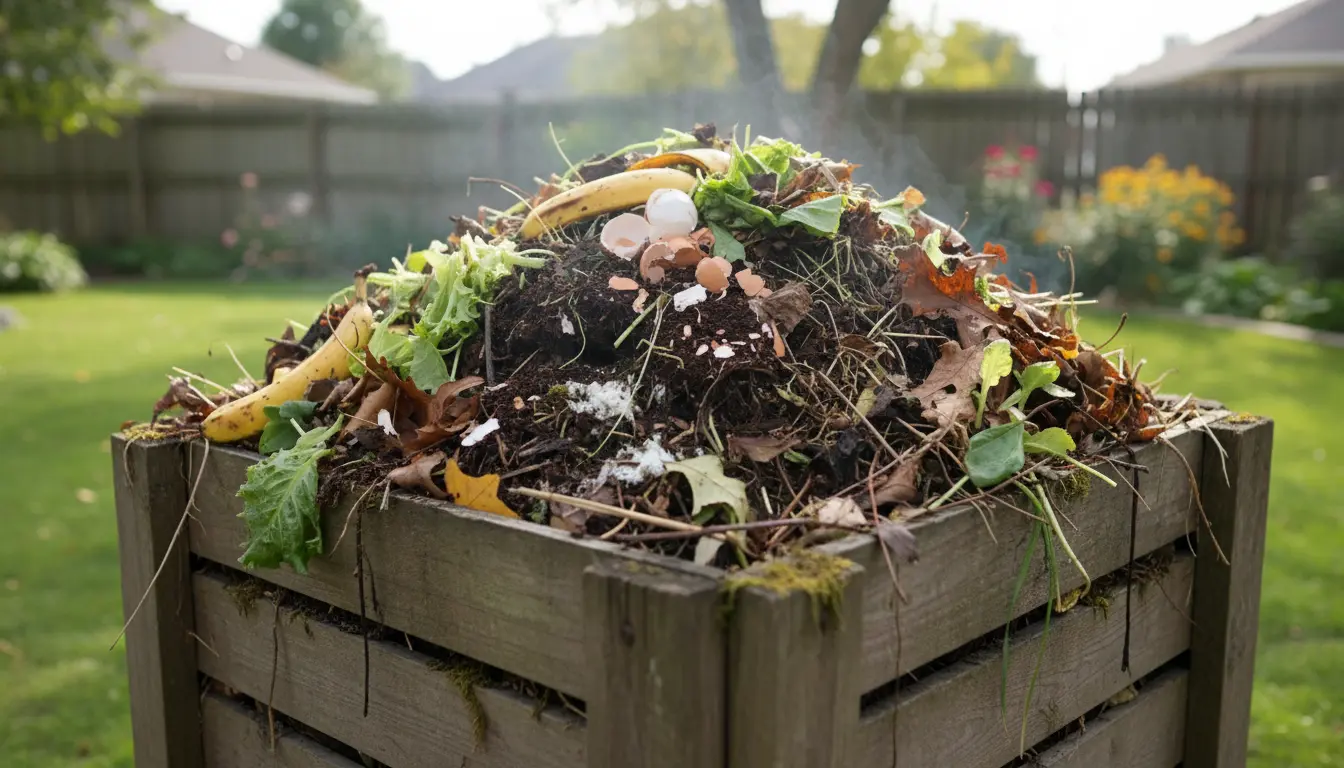
Home composting converts kitchen and yard waste into useful soil that improves plants and reduces trash. This guide gives clear, practical steps a beginner can follow to set up and maintain a compost bin at home.
Why Home Composting Matters
Home composting reduces landfill waste and returns nutrients to the garden. It lowers household trash volume and cuts methane emissions from organic waste in landfills.
Compost improves soil structure, water retention, and plant health. Many gardeners see stronger growth and lower need for chemical fertilizers when they use finished compost.
Choose the Right Compost System for Home Composting
Select a system that fits your space, budget, and effort level. Common choices include open piles, tumblers, and contained bins.
- Open pile: Low cost, works well if you have outdoor space and don’t mind a messy look.
- Compost bin: Contained, neater, and easier to manage heat and pests.
- Tumbler: Faster results with regular turning, ideal for small yards and convenience.
Placement and Size
Place your compost in a partly shaded, accessible spot with good drainage. A 3×3 foot pile is a practical minimum for steady decomposition.
What to Compost at Home
Home composting depends on balancing green (nitrogen) and brown (carbon) materials. Greens add nitrogen and moisture, browns add carbon and structure.
- Greens: Fruit and vegetable scraps, coffee grounds, fresh grass clippings, tea bags.
- Browns: Dry leaves, shredded paper, cardboard, straw, wood chips.
- Avoid: Meat, dairy, oily foods, diseased plants, and pet waste in most home systems.
Examples of Common Home Inputs
Kitchen scraps are the most frequent input: fruit peels, vegetable trimmings, egg shells, and coffee grounds. Add sawdust or shredded cardboard if the pile gets too wet.
How to Start Home Composting: Step-by-Step
Starting a compost pile is simple when you follow a clear routine. Balance, moisture, and airflow are the three key factors for success.
- Choose a bin or location and prepare a base of browns for drainage.
- Alternate layers of greens and browns, aiming roughly for a 2:1 ratio of browns to greens by volume.
- Moisten each layer; the pile should feel like a damp sponge, not soaking wet.
- Turn the pile every 1–2 weeks to add oxygen and speed decomposition. Use a pitchfork or tumbler as appropriate.
- Monitor temperature: active piles heat to 120–160°F (50–70°C). When heat drops, add green material and turn.
Maintain and Troubleshoot Your Home Composting System
Maintenance is light but regular checks prevent problems. Address odors, pests, and slow decomposition early.
- Bad smells: Usually from too much wet green material or poor airflow. Add browns and turn the pile.
- Pests: Avoid meat and fatty foods. Use a closed bin or bury new scraps deeper in the pile.
- Slow breakdown: Check moisture and particle size. Chop large pieces and ensure the pile is warm enough.
When Is Compost Ready?
Compost is ready in 2–12 months depending on method and care. Finished compost looks dark, crumbly, and smells earthy. There should be few recognizable food scraps.
Adding more brown material than green helps prevent odors and reduces pest attraction. Shredded cardboard and dry leaves are excellent brown sources.
Small Case Study: A Family Turns Kitchen Waste into Garden Soil
One urban family with a small backyard began home composting using a 60-gallon tumbler. They added kitchen scraps and shredded paper, turning the tumbler twice weekly.
Within six months they collected about 50 liters of finished compost. Their vegetable beds retained moisture better and yield improved in the following growing season.
Tips and Practical Examples for Home Composting
- Keep a small countertop pail with a tight lid to collect scraps and reduce trips outside.
- Freeze smelly items like onion peels before adding to an outdoor bin to avoid flies.
- Use finished compost as a top dressing around plants or mixed into potting soil at 10–20% by volume.
- For apartment dwellers, consider bokashi or worm composting (vermicomposting) to handle food waste indoors.
Quick Troubleshooting Checklist
- Pile smells ammonia: add more browns and turn.
- Pile is dry and slow: add water and more greens.
- Pests visiting: remove meat and seal the bin.
Home composting is a low-cost, high-impact way to manage waste and nourish your garden. Start small, monitor the pile weekly, and adjust materials for balance. With a little practice, you can produce rich compost that benefits both plants and the planet.