
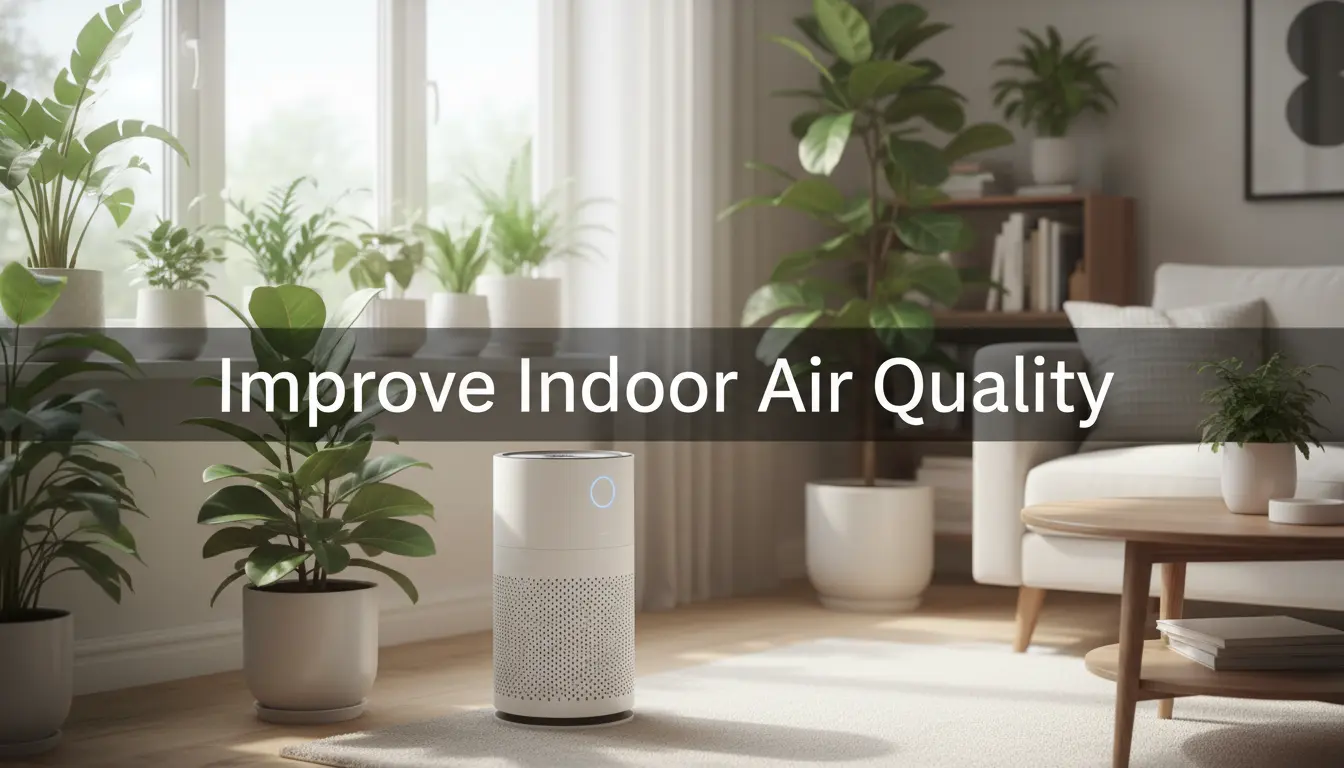
Indoor air quality affects comfort, health, and energy use. Small, consistent actions can reduce pollutants and improve breathing for everyone in your home.
Understand indoor air quality basics
Indoor air quality refers to the air inside buildings and how polluted or fresh it is. Typical measures include particulate matter (PM2.5), volatile organic compounds (VOCs), carbon dioxide (CO2), and humidity.
Identify your main concerns first: dust and particles, odors and VOCs, moisture and mold, or CO2 buildup from poor ventilation.
Common indoor pollutants
- Particulate matter (PM2.5 and PM10) from cooking, candles, and outdoor smoke.
- VOCs from paints, cleaners, and new furniture.
- Carbon monoxide from faulty combustion appliances.
- Mold and allergens from high humidity and leaks.
Prioritize actions to improve indoor air quality
Work through a priority list: eliminate sources, improve ventilation, add filtration, and control humidity. These steps are inexpensive and effective when combined.
1. Source control
Remove or reduce pollutant sources first. This is the most effective long-term step and often costs little.
- Choose low-VOC paints and furniture labeled low-emission.
- Store solvents, paints, and cleaning products in sealed containers or outside the living area.
- Avoid indoor smoking and limit candles and incense.
2. Ventilation: bring in fresh air
Ventilation dilutes indoor pollutants. Use natural ventilation when outdoor air quality is good and mechanical ventilation otherwise.
- Open windows for 10–15 minutes daily, more in mild weather.
- Use exhaust fans while cooking and in bathrooms. Run for 10–20 minutes after use.
- Consider installing a heat recovery ventilator (HRV) or energy recovery ventilator (ERV) for continuous, efficient fresh air in tight homes.
3. Filtration: cleaners for particles
Filtration removes particles from the air. Select the right size and CADR for the room.
- Choose HEPA filters or air purifiers rated to remove 99.97% of particles 0.3 microns in size.
- Match CADR to room size: CADR (smoke) should be at least two-thirds of the room area in square feet. For example, a 150 sq ft room needs ~100 CADR.
- Change filters per manufacturer guidance—usually every 6–12 months for HVAC filters and more often for portable units under heavy use.
Humidity control and mold prevention
Keep indoor humidity between 30% and 50% to limit mold growth and dust mite populations. Use dehumidifiers in damp basements and ensure bathrooms and kitchens have working exhaust fans.
Fix leaks promptly and dry wet materials within 24–48 hours to prevent mold formation.
Monitor indoor air quality
Measurement helps target actions. Low-cost sensors and monitors give real feedback on PM2.5 and CO2 levels.
- Use a PM2.5 sensor to track smoke and cooking pollution. Aim for readings under 12 µg/m3 for good air.
- Use a CO2 monitor to gauge ventilation; indoor CO2 consistently under 1000 ppm usually indicates adequate ventilation.
- Log readings for a week to find patterns by time of day or activity.
Practical weekly action plan
- Daily: Use kitchen exhaust while cooking and briefly open windows when weather permits.
- Weekly: Vacuum with a HEPA vacuum, dust surfaces, and check humid areas for dampness.
- Monthly: Check and replace HVAC and portable purifier filters as needed.
- Seasonally: Service combustion appliances and inspect for leaks or mold after heavy rains.
Simple changes with big impact
- Cook with lids on and use range hoods vented outside to cut cooking particles and gases.
- Run portable HEPA purifiers in bedrooms during sleep to reduce nighttime exposure.
- Switch to fragrance-free cleaning products to reduce VOCs.
Indoor air can be 2–5 times more polluted than outdoor air due to enclosed spaces and indoor sources. Simple ventilation and a HEPA filter can cut particle levels by more than half in many rooms.
Real-world example: case study
A two-adult, one-child household in a midwestern city tracked PM2.5 with a low-cost sensor for two months. They used a kitchen exhaust fan, ran a HEPA purifier in the living room, and replaced an old HVAC filter with MERV 8.
Results: average indoor PM2.5 fell from 25 µg/m3 to 8 µg/m3 within three weeks. The family reported fewer evening coughing episodes and better sleep quality. The measures cost under $300 in one-time purchases and minimal ongoing expense.
When to call a professional
If you detect strong chemical odors, suspect carbon monoxide, see persistent mold, or have unexplained health symptoms, contact a qualified technician. HVAC inspections, mold remediation, and gas appliance servicing are best handled by professionals.
Summary: key steps to improve indoor air quality
- Control sources: use low-VOC products and avoid indoor smoking.
- Ventilate regularly and use exhaust fans when needed.
- Filter air with HEPA purifiers sized for each room.
- Keep humidity in the 30–50% range and fix leaks quickly.
- Monitor air quality and adjust actions based on data.
Follow these focused, practical steps and monitor results. Small investments in ventilation and filtration typically yield measurable improvements in comfort and health.