
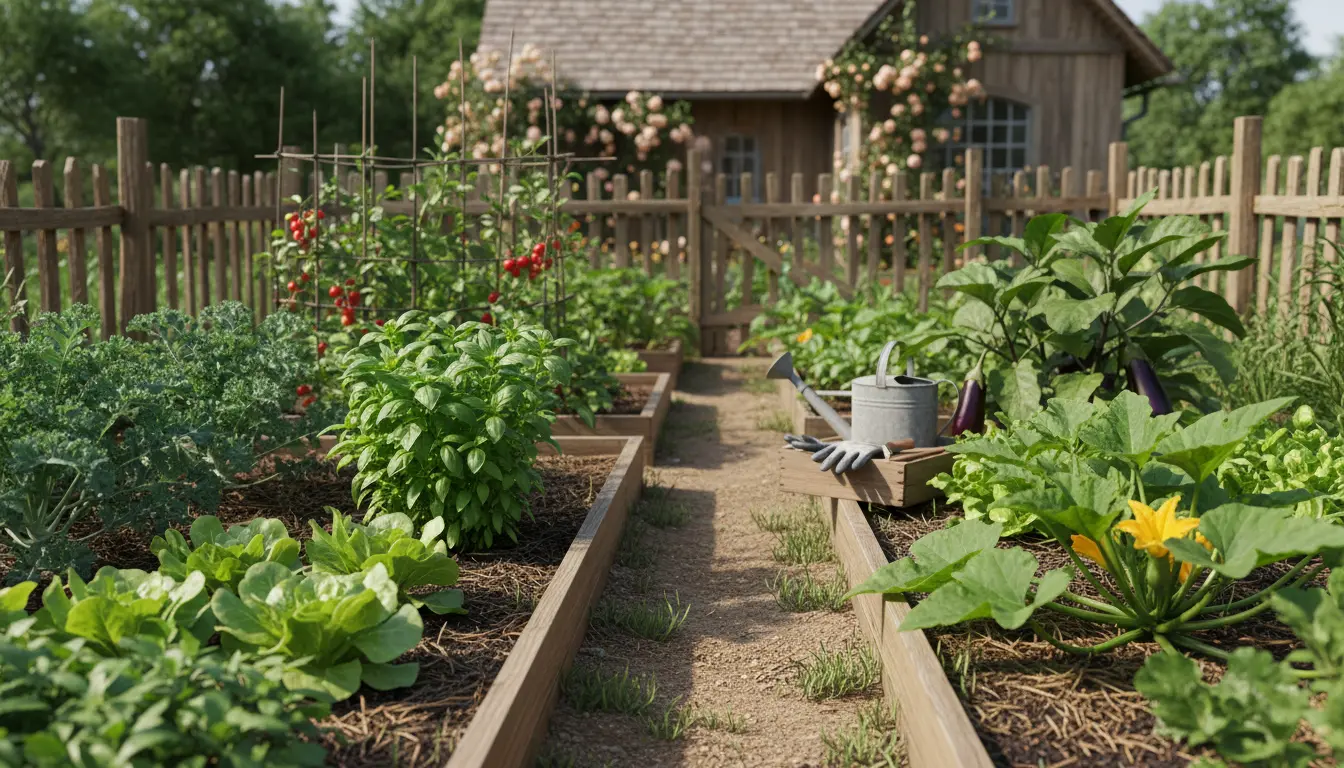
Why Start a Small Vegetable Garden
Starting a small vegetable garden is a practical way to grow fresh food, learn gardening basics, and save money. It fits tight spaces like balconies, patios, or a small backyard.
This guide gives step-by-step instructions you can use to design, plant, and maintain a productive small vegetable garden.
Planning Your Small Vegetable Garden
Good planning reduces wasted effort. Begin by choosing a location that gets at least 4 to 6 hours of direct sun daily. Most vegetables need full sun, but some leafy greens tolerate partial shade.
Measure and map the area for your small vegetable garden
Decide on the garden size based on space and time you can commit. Common small options include:
- One or two 4 x 4 ft raised beds
- A single 4 x 8 ft raised bed
- Several containers or window boxes for a balcony
Sketch a simple map showing bed dimensions, sun exposure, and access paths. This helps with spacing and rotation planning.
Soil and compost for a small vegetable garden
Soil quality is the foundation of a productive garden. For raised beds, use a mix of high-quality topsoil, compost, and a light amendment like perlite or coarse sand for drainage.
- Target a rich, crumbly soil with good drainage.
- Add 2 to 3 inches of compost annually to rebuild fertility.
- Test soil pH; most vegetables prefer pH 6.0 to 7.0.
Choosing Plants for a Small Vegetable Garden
Select vegetables that match your climate, taste, and available space. Focus on high-yield, space-efficient crops to maximize productivity.
Best vegetables for a small vegetable garden
- Leafy greens: lettuce, spinach, swiss chard
- Compact fruiters: determinate tomatoes, dwarf peppers
- Root crops: radishes, carrots, beets
- Vining crops on supports: bush beans, bush cucumbers
Mix quick harvest crops (radishes, lettuce) with longer-season crops (tomatoes) to maintain continuous production.
Planting Layout and Spacing for a Small Vegetable Garden
Efficient spacing prevents overcrowding and reduces disease pressure. Use these simple layout rules for a small vegetable garden:
- Use narrow beds (3 to 4 ft wide) so you can reach the center from either side.
- Place taller plants on the north side of the bed to avoid shading low plants.
- Interplant fast and slow crops to optimize space (e.g., lettuce between tomato seedlings).
Example planting plan
For a 4 x 8 ft bed, try this layout:
- Row A (north): determinate tomatoes with stakes every 18 inches
- Row B (center): bush beans and a row of basil
- Row C (south): alternating lettuce and radish pairs for quick turnover
Watering and Maintenance for a Small Vegetable Garden
Consistent watering is more important than frequent shallow watering. Aim for deep, infrequent watering to encourage healthy roots.
- Water early in the morning to reduce evaporation and disease risk.
- Mulch with straw or shredded leaves to conserve moisture and suppress weeds.
- Monitor pests and remove them early using handpicking or targeted organic controls.
Fertilizing a small vegetable garden
Use a balanced organic fertilizer at planting and side-dress with compost or fish emulsion mid-season for heavy feeders like tomatoes and peppers.
Intercropping fast-growing radishes with slow-growing carrots can improve land use and help identify carrots during thinning.
Seasonal Care and Succession Planting
Succession planting keeps your small vegetable garden producing throughout the season. When a short-season crop finishes, replace it with another crop in the same spot.
Succession planting schedule example
- Early spring: sow peas and lettuce
- Late spring: transplant tomatoes and peppers
- Mid-summer: sow fall carrots and spinach in cleared beds
Small Vegetable Garden Case Study
Case study: A 6-month practical example from a 4 x 8 ft raised bed. Sarah, a beginner, followed a simple plan: lettuce and radishes in spring, tomatoes in late spring, bush beans mid-summer, and fall spinach in August.
Her results: three harvests of lettuce, continuous tomatoes through summer, and a final spinach crop. She used compost twice and a single application of organic fertilizer. Time investment was about three hours per week during peak season.
Key takeaways: modest space yielded enough salad greens for a family of two and several pints of cherry tomatoes, emphasizing that planning and simple care pay off.
Quick Checklist to Start Your Small Vegetable Garden
- Choose a sunny 4 to 8 ft area or suitable containers
- Prepare soil with compost and good drainage
- Select compact, high-yield varieties
- Plan spacing and succession planting
- Mulch, water deeply, and monitor pests
Conclusion: Keep It Simple and Learn
A small vegetable garden is ideal for beginners and busy households. Start small, focus on a few reliable crops, and gradually expand as you gain confidence.
With basic planning, consistent watering, and seasonal succession, even a tiny bed can deliver regular fresh produce and valuable gardening experience.