
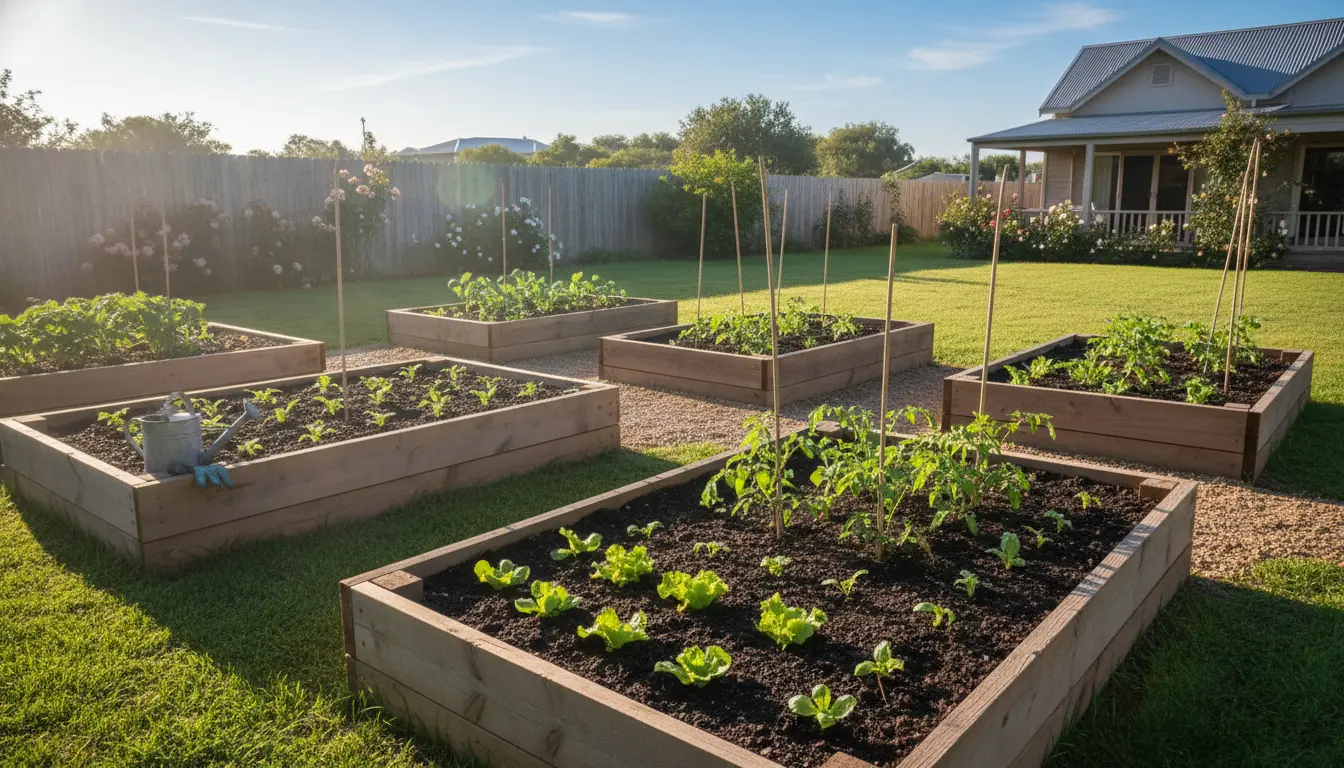
Raised bed vegetable gardens are an efficient way to grow food in small spaces. They improve drainage, concentrate soil amendments, and make planting and harvesting easier.
Raised Bed Vegetable Garden: Plan Your Space
Choose a location with at least 6 hours of direct sunlight for most vegetables. Look for level ground and easy access to water.
Decide bed size and layout. Common sizes are 4×4, 4×8, and 3×6 feet to keep planting reachable from both sides without stepping on beds.
Key planning considerations for a raised bed vegetable garden
- Sun exposure and shade patterns
- Access to water and tools
- Wind protection and microclimate
- Path width for a wheelbarrow and comfortable movement
Raised Bed Vegetable Garden: Build the Beds
Use rot-resistant wood like cedar, composite lumber, or galvanized metal for bed frames. Avoid treated wood that can leach chemicals into the soil for edible crops.
Assemble beds on a prepared surface. You can place beds directly on grass, but removing grass or lining with cardboard reduces weed pressure.
Materials and tools
- Measuring tape, saw, drill, screws
- Wood boards (2×6 or 2×8 recommended) or metal panels
- Landscape fabric or cardboard for base (optional)
- Soil, compost, and mulch
Raised Bed Vegetable Garden: Soil and Filling
Good soil is the most important element. Aim for a loose, fertile mix with good drainage and water retention.
A simple, effective mix is 60% topsoil, 30% compost, and 10% coarse sand or perlite for improved drainage. Adjust ratios based on your local soil quality.
Soil tips and amendments
- Test soil pH; most vegetables prefer 6.0–7.0.
- Add compost annually to maintain fertility.
- Mix in slow-release organic fertilizer if needed according to soil test.
Raised Bed Vegetable Garden: Planting Strategies
Choose vegetables suited to your climate and season. Group plants by height and water needs to simplify care.
Use succession planting to maximize yield: plant quick crops like radishes and lettuce between slower crops like tomatoes.
Companion planting and spacing
- Tall plants (tomatoes, corn) on the north side to avoid shading others.
- Interplant fast growers (radish, scallions) with slower ones (cabbage).
- Follow spacing recommendations on seed packets but consider square-foot gardening to increase density.
Watering and Maintenance for a Raised Bed Vegetable Garden
Water deeply and less frequently rather than shallow daily watering. Deep watering encourages strong root systems.
Install a drip irrigation or soaker hose for even moisture and water savings. Mulch with straw or shredded leaves to retain moisture and suppress weeds.
Routine tasks
- Weekly check for pests, disease, and water stress
- Pinch or prune as needed to improve airflow
- Top-dress with compost mid-season for long-producing crops
Raised Bed Vegetable Garden: Pest and Disease Control
Start with prevention: clean tools, crop rotation, and healthy soil reduce most problems. Avoid overhead watering to cut leaf diseases.
For pests, use physical barriers like row covers, hand-picking larger insects, and beneficial insects for biological control.
Safe treatments
- Neem oil or insecticidal soap for soft-bodied pests
- Bacillus thuringiensis (Bt) for caterpillars on brassicas
- Organic slug traps or diatomaceous earth for slugs
Harvesting and Crop Rotation in a Raised Bed Vegetable Garden
Harvest regularly to encourage continued production. Pick vegetables at peak ripeness for best flavor and nutrition.
Rotate plant families annually to reduce pests and nutrient depletion; for example, follow heavy feeders like tomatoes with legumes to replenish nitrogen.
Small Case Study: One Season in a Suburban Raised Bed Vegetable Garden
Case study: A homeowner installed two 4×8 raised beds in spring. They filled beds with a 60/30/10 mix of local topsoil, homemade compost, and sand, then planted tomatoes, peppers, lettuce, and beans.
By mid-summer, regular drip irrigation and weekly compost top-dressing produced a continuous harvest. The beds yielded enough salad greens for a family of four and surplus tomatoes for canning. Pests were managed with row covers and manual removal, avoiding chemical sprays.
Final Tips for a Successful Raised Bed Vegetable Garden
Start small and expand after one season to learn your microclimate and workload. Good planning, soil management, and consistent watering are the keys to success.
Track what you plant and where to refine rotation and improve yields each year. With basic setup and care, a raised bed vegetable garden can provide fresh produce with less effort than traditional rows.
Additional resources: local extension services, seed catalogs, and gardening forums offer region-specific advice and variety recommendations.