
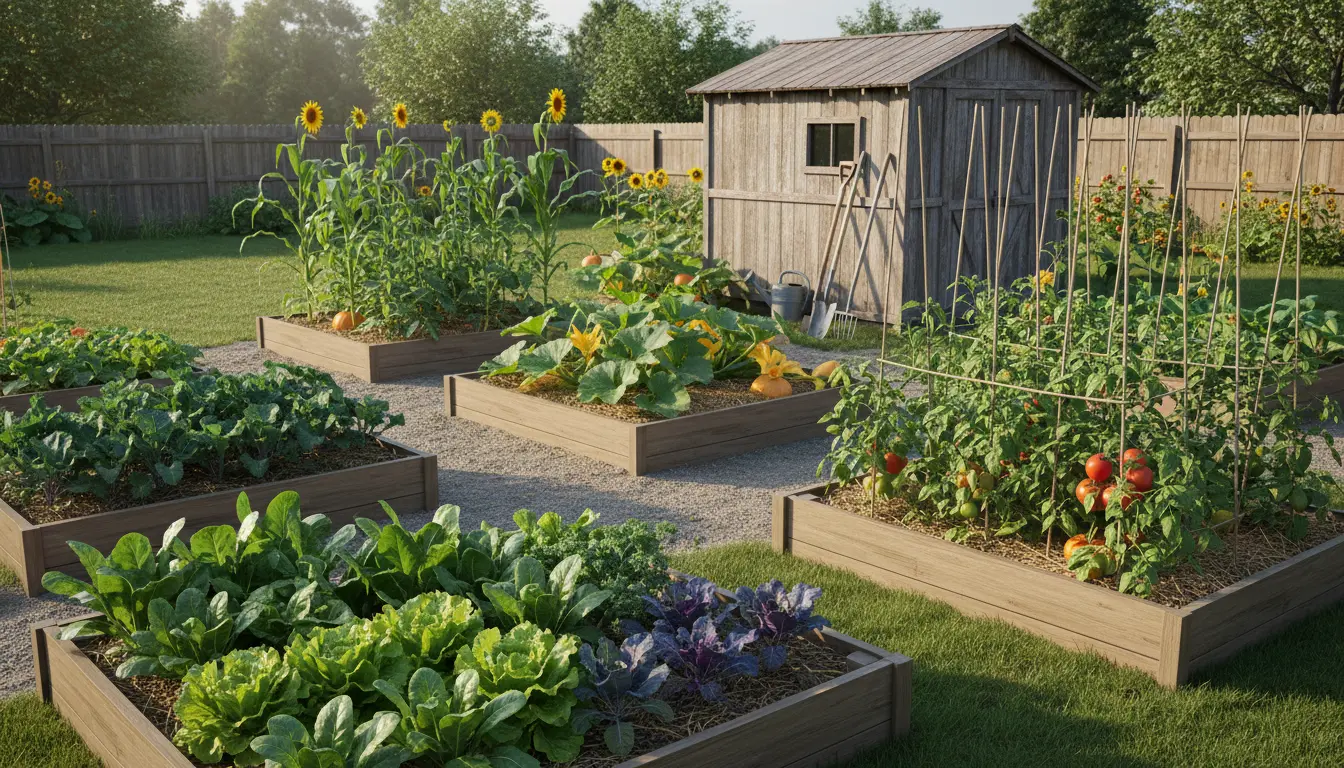
Starting a vegetable garden can be simple and rewarding. This guide covers practical steps you can follow to plan, plant, and maintain a productive garden at home.
Plan Your Space to Start a Vegetable Garden
Begin by choosing the best location to start a vegetable garden. Look for a spot that gets at least 6 hours of direct sunlight and has good drainage.
Decide on bed type: in-ground rows, raised beds, or containers. Each option works, but raised beds warm faster and drain well for beginners.
Choose Vegetables When You Start a Vegetable Garden
Select easy-to-grow crops for your first season. Consider local climate and your eating preferences.
- Good starter vegetables: tomatoes, lettuce, radishes, beans, zucchini.
- Plant herbs like basil and parsley for quick success and flavor.
- Check frost dates and choose varieties suited to your zone.
Soil and Compost for Your Vegetable Garden
Healthy soil is the foundation when you start a vegetable garden. Test the soil to check pH and nutrient status.
Improve soil with organic matter. Add compost or well-rotted manure to increase fertility and structure.
Soil Preparation Steps
- Clear weeds and debris from the planting area.
- Loosen the soil to 8–12 inches for most vegetables.
- Work in 2–3 inches of compost and a balanced organic fertilizer if needed.
Planting and Care When You Start a Vegetable Garden
Follow seed packet or plant tag instructions for spacing and depth. Proper spacing reduces disease and improves yields.
Water wisely: give deep, infrequent waterings rather than light daily watering. This encourages strong roots.
Daily and Weekly Tasks
- Water in the morning to reduce evaporation and disease risk.
- Mulch around plants to retain moisture and suppress weeds.
- Thin seedlings to recommended spacing to avoid overcrowding.
Pest Control and Maintenance for a Vegetable Garden
Monitor plants regularly for pests and disease. Early detection makes control easier and less chemical-dependent.
Use integrated pest management: physical barriers, beneficial insects, and selective treatments as needed.
Common Issues and Simple Solutions
- Aphids: spray with a strong stream of water or introduce ladybugs.
- Slugs: use beer traps or handpick at dusk; keep area tidy.
- Powdery mildew: ensure good air circulation and avoid overhead watering.
Harvesting and Season Extension
Harvest vegetables when they reach recommended size for best flavor. Frequent harvesting often encourages more production.
Extend the season with row covers, cold frames, or by selecting fast-maturing varieties for late plantings.
Small Real-World Example: Case Study of a Beginner Garden
Anna, a city renter, started a 3-bed raised garden on her patio. Each bed was 4×2 feet and filled with a mix of potting soil and compost.
She chose tomatoes, leaf lettuce, and bush beans for their simplicity. After weekly watering and occasional fertilizer, her beds produced enough for weekly family salads within two months.
The key changes she made were mulching to keep moisture, staking tomatoes early, and harvesting regularly to boost yield.
Simple Tools and Supplies to Start a Vegetable Garden
You don’t need many tools to begin. A few reliable items make gardening easier and more efficient.
- Hand trowel, garden fork, and pruning shears.
- Watering can or hose with a gentle nozzle.
- Measuring tape, garden gloves, and organic compost.
Budget Tips
- Reuse containers and pallets for raised beds to save money.
- Start seeds indoors to avoid higher nursery costs for transplants.
- Share seeds and cuttings with neighbors to try new varieties cheaply.
Starting a vegetable garden is a manageable project when you break it into clear steps: plan the space, prepare the soil, plant suitable crops, and maintain regularly. With simple tools and consistent care you can enjoy fresh produce and a satisfying hobby.