
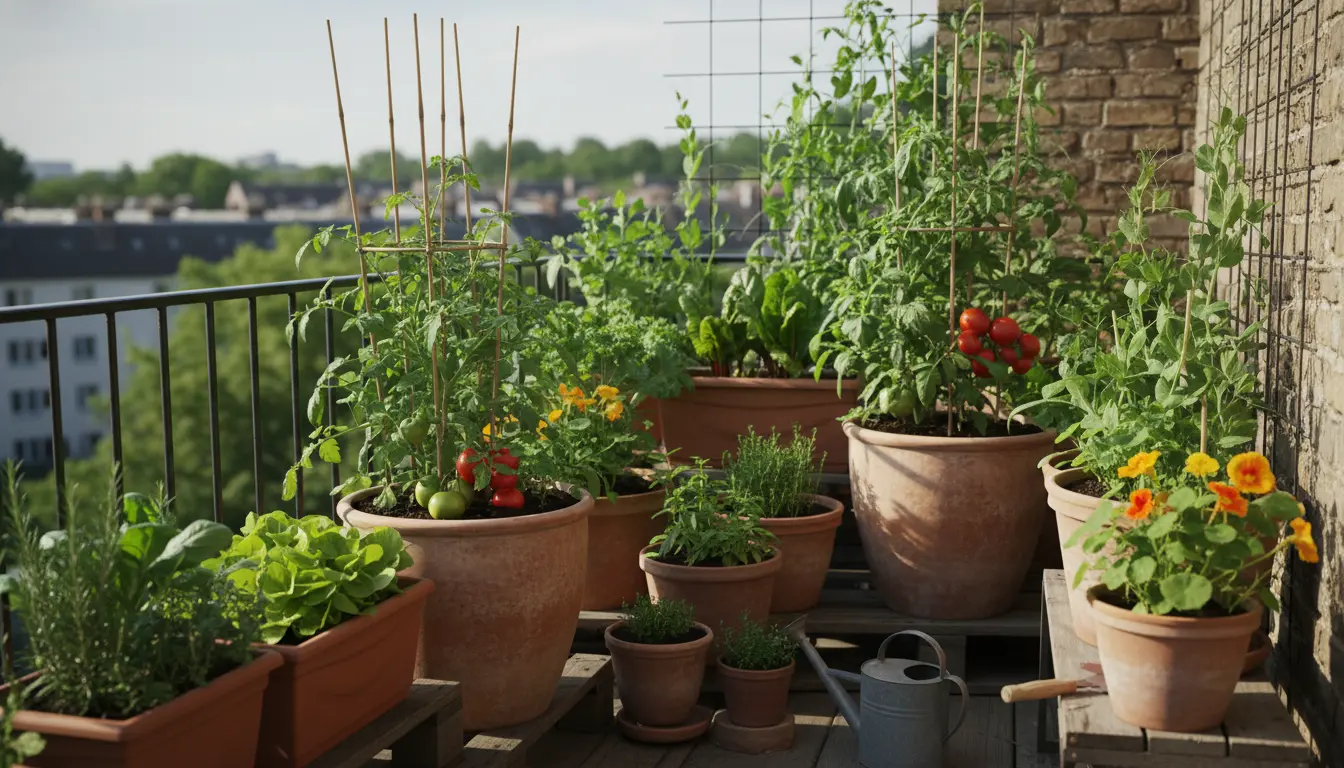
Why Choose a Container Vegetable Garden
A container vegetable garden is ideal for people with limited space, poor soil, or renters. Containers let you grow fresh vegetables on balconies, patios, or small yards with controlled conditions.
This approach reduces soil pests, allows targeted watering, and makes crop rotation easy. It is also beginner-friendly and scalable as you gain experience.
How to Start a Container Vegetable Garden
Starting a container vegetable garden requires five practical steps: pick containers, find a sunny spot, use the right mix, choose crops, and plan watering. Follow these steps to get a consistent start.
Select Containers and Location
Pick containers with drainage holes to prevent root rot. Size matters: larger pots hold more soil and stay moist longer, which helps larger vegetables like tomatoes and peppers.
Choose a location that gets at least 6 hours of direct sunlight for most vegetables. If sunlight is limited, prioritize leafy greens and herbs that tolerate partial shade.
Choose Soil and Fertilizer
Use a commercial potting mix rather than garden soil. Potting mixes are lighter, drain well, and often include ingredients that support root health.
Mix in a slow-release fertilizer at planting and supplement with balanced liquid feed every 3–4 weeks during the growing season. A 10-10-10 or 14-14-14 starter is a reliable baseline for most vegetables.
Select Vegetables for Containers
Not all vegetables perform the same in containers. Select varieties labeled compact, patio, or determinate for space-efficient growth.
- Best for beginners: cherry tomatoes, salad greens, radishes, herbs, bush beans.
- Good in medium containers: peppers, eggplants, dwarf cucumbers.
- Require large containers: indeterminate tomatoes, potatoes, squash (use very large or grow bags).
Care and Maintenance for a Container Vegetable Garden
Container gardens need consistent care. Because soil volume is limited, nutrition and moisture fluctuate faster than in-ground beds.
Watering Schedule
Check containers daily during hot weather. Water when the top 1–2 inches of soil feel dry. Deep, infrequent watering encourages strong root systems.
Use drip irrigation or self-watering containers to reduce daily attention and prevent over or under-watering. Mulch the surface to slow evaporation.
Pest Control and Pruning
Inspect plants weekly for pests like aphids, whiteflies, or spider mites. Remove affected leaves and use insecticidal soap for small outbreaks.
Prune leggy growth and remove yellowing leaves to maintain airflow and reduce disease risk. For vining crops, provide stakes or trellises to save space.
Common Mistakes and How to Avoid Them
- Using garden soil in pots: it compacts and drains poorly. Always use potting mix.
- Choosing containers that are too small: small pots dry out quickly and limit root growth. Err on the side of larger containers.
- Ignoring fertilizer needs: container soil depletes faster. Follow a feeding schedule and observe plant vigor.
- Overwatering: soggy soil leads to root rot. Ensure good drainage and check soil moisture before adding water.
Quick Real-World Example
Case study: Maria, a city renter with a 6-foot balcony, grew a successful container vegetable garden using five 12-inch pots and two 20-inch planters. She planted cherry tomatoes, basil, leaf lettuce, and peppers.
By using potting mix with slow-release fertilizer and a simple drip line on a timer, she harvested salad greens every 10 days and 18 pounds of tomatoes over the season. Regular pruning and morning watering kept pests in check.
Container vegetables often mature faster than in-ground crops because soil in pots warms earlier in the season. This can give you an earlier harvest.
Practical Tips and Seasonal Timeline
Plan your season to maximize yield from limited space. Stagger plantings of quick crops and replace finished crops with new seedlings.
- Early spring: start seeds indoors for tomatoes and peppers, sow radishes and lettuce directly.
- Late spring: transplant warm-season crops after frost risk passes.
- Mid to late summer: harvest regularly, add shade cloth on very hot days to protect sensitive plants.
- Fall: plant cool-season crops like spinach or kale for a second harvest.
Tools and Materials Checklist
- Containers with drainage
- Quality potting mix
- Slow-release fertilizer and liquid feed
- Drip irrigation or watering can
- Stakes or trellises for vining plants
Starting a container vegetable garden is practical and rewarding. With the right containers, soil, and routine care, even small spaces produce steady harvests. Follow the steps above, adjust for your microclimate, and keep records to improve each season.