
Why Home Composting Matters
Home composting reduces kitchen and yard waste while producing nutrient-rich soil for gardens and potted plants. It lowers landfill contributions and cuts household methane emissions.
This guide explains how to start composting at home with simple tools and daily habits.
Choose a Method for Home Composting
Pick a composting method that fits your space and lifestyle. Common options include backyard bins, tumblers, vermicomposting, and bokashi. Each has pros and cons depending on space, odor tolerance, and speed.
Backyard Bin Composting
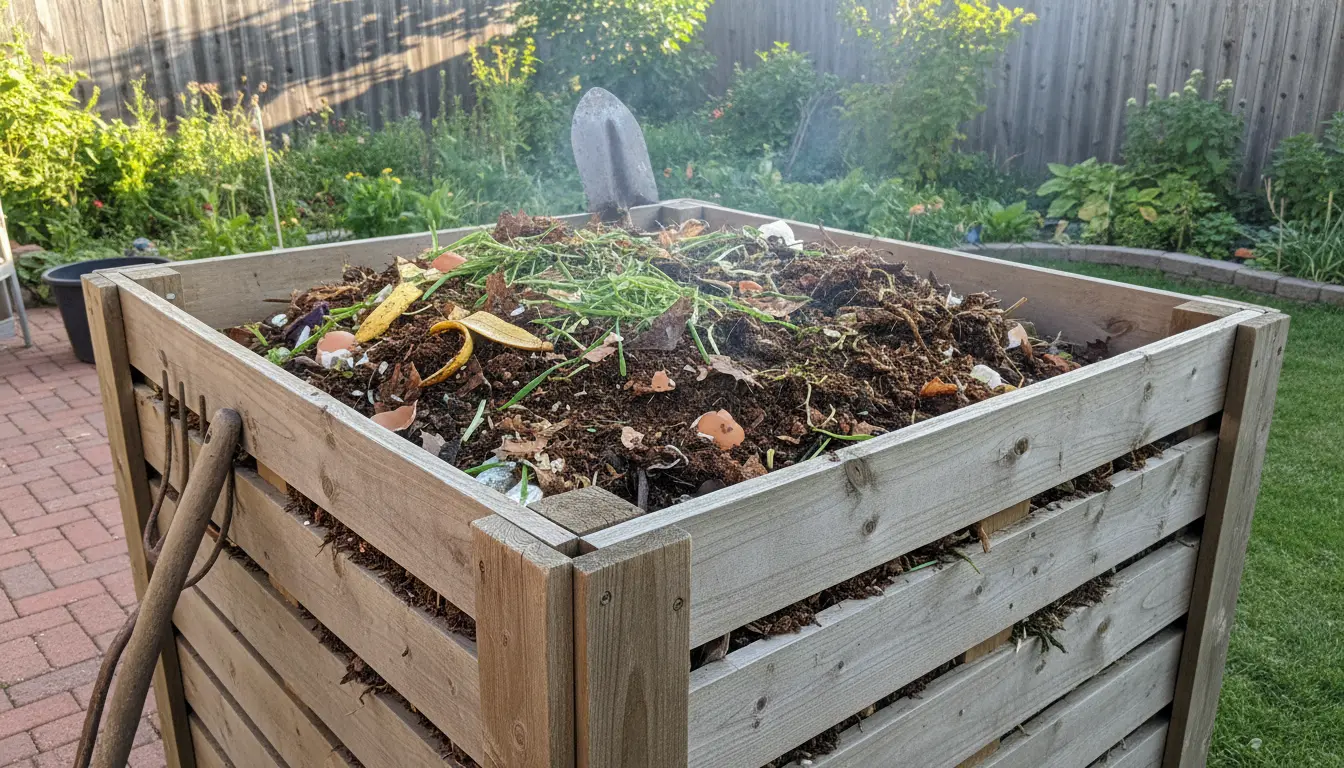
Backyard bins are low-cost and require minimal maintenance. They work well for yards and produce good quality compost over months.
Compost Tumblers
Tumblers speed up decomposition by making turning easy. They suit people who prefer low-effort aeration and quicker results.
Vermicomposting for Small Spaces
Worm bins are ideal for apartments and small balconies. Red wigglers consume kitchen scraps quickly and produce a fine, concentrated compost called worm castings.
Materials to Compost and Avoid
Successful home composting depends on a balanced mix of materials. Think in terms of greens (nitrogen) and browns (carbon).
- Acceptable Greens: Fruit and vegetable scraps, coffee grounds, tea bags, fresh grass clippings.
- Acceptable Browns: Dry leaves, shredded paper, cardboard, straw, wood chips.
- Avoid: Meat, dairy, oils, diseased plants, pet waste, and large amounts of citrus or onion scraps if using worms.
Keep pieces small — chop or shred materials to speed decomposition and reduce pests.
Step-by-Step Home Composting Process
Follow these simple steps to set up and maintain a healthy compost pile.
- Choose a location with partial shade and good drainage.
- Start with a layer of coarse browns like twigs to improve airflow.
- Add alternating layers of greens and browns, keeping a roughly 1:2 ratio (greens to browns) by volume.
- Keep the pile moist like a wrung-out sponge; not soggy, not dry.
- Turn the pile every 1–2 weeks to add oxygen and speed decomposition.
Monitoring Temperature and Moisture
A well-working compost pile will warm up in the center. Use a compost thermometer or feel the heat by hand. If the pile is cold, add more greens and turn. If it’s too wet and smells, add browns and improve aeration.
Troubleshooting Common Problems
Here are quick fixes for frequent compost issues.
- Bad Odor: Usually from too much moisture or too many greens. Add dry browns and turn the pile.
- Pests: Avoid meat and dairy, bury food scraps in the center, and use a closed bin if needed.
- Slow Decomposition: Increase surface area by chopping scraps and adding nitrogen-rich greens, then turn more often.
Food scraps and yard waste make up about 30% of household trash. Composting can cut that waste significantly and return nutrients to your soil.
Using Finished Compost
Finished compost is dark, crumbly, and earthy-smelling. It typically takes 3–12 months depending on method, materials, and how often you turn.
- Mix compost into garden beds at a 1:4 ratio to improve soil structure.
- Use as a top dressing for lawns or potted plants.
- Make compost tea by steeping compost in water for a gentle liquid feed.
Small Real-World Case Study: Apartment Vermicompost
Maria, a city renter, started a small worm bin under her kitchen sink using a plastic container and red wigglers. She collected only fruit and vegetable scraps and shredded paper.
Within three months she harvested dark worm castings and reduced her trash by half. She used the castings to revive two balcony planters, which showed stronger growth and better flowering within six weeks.
Tips to Keep Composting Simple
- Keep a small countertop caddy with a tight lid to collect scraps.
- Freeze scraps if you can’t empty them often — this reduces pests and odors.
- Start slow. Add new types of materials gradually to learn how your system reacts.
- Label bins and keep a simple log of when you turn and add material.
Final Checklist for Beginners
- Choose the right method for your space (bin, tumbler, worm bin).
- Balance greens and browns; keep materials chopped.
- Monitor moisture and aerate by turning.
- Use finished compost to improve soil and plant health.
Home composting is a small habit with big environmental and gardening benefits. Start with manageable steps and adjust as you learn what works in your space.