
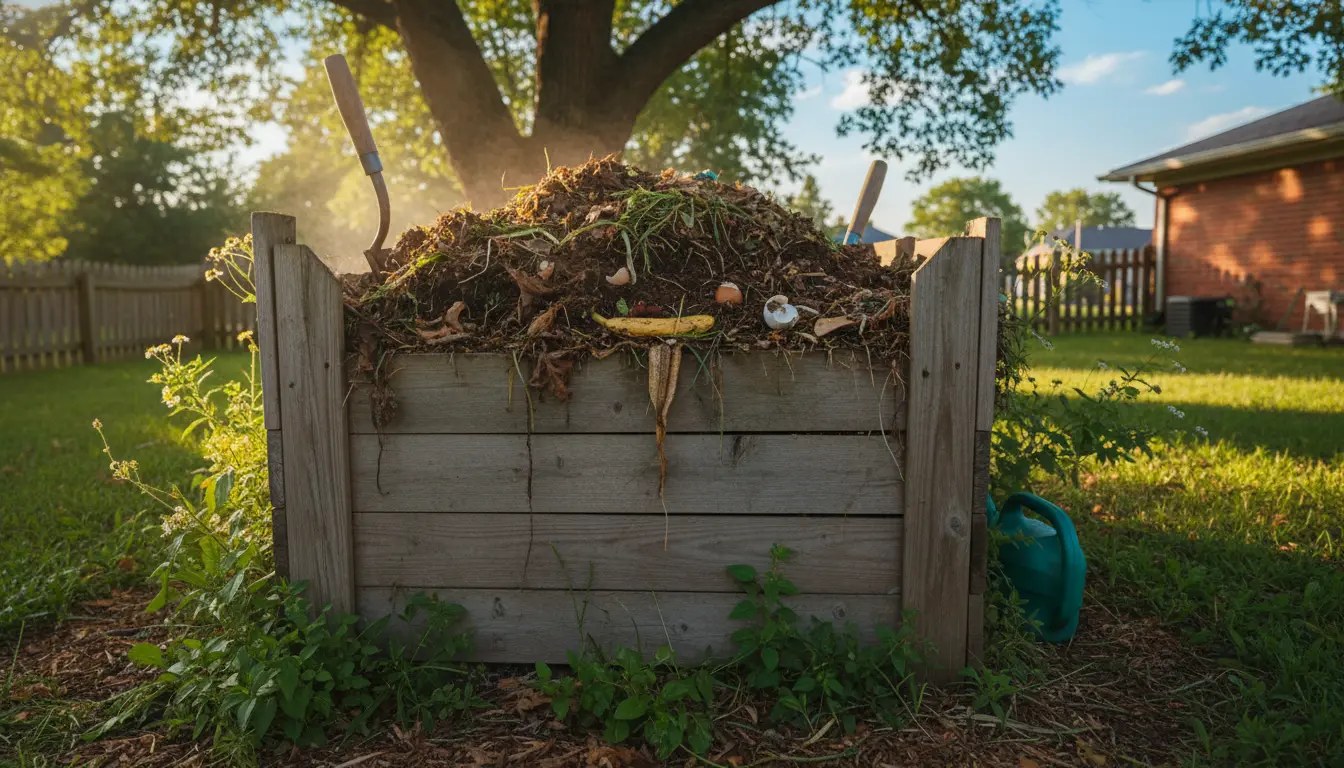
Composting at home reduces waste and creates nutrient-rich soil for gardens. This guide walks beginners through practical steps, common problems, and realistic expectations for a successful composting routine.
Why Home Composting for Beginners Is Worth Doing
Composting lowers household trash and returns organic matter to the soil. It improves soil structure, water retention, and plant health when applied as a topdressing or soil amendment.
For beginners, the process is flexible: you can use a small bin, a tumbler, or a simple pile depending on space and goals.
What You Need to Start Home Composting for Beginners
Starting is mostly about choosing a container and understanding materials. You do not need expensive equipment to get good results.
Simple Materials Checklist
- Compost bin, tumbler, or a marked corner of the yard
- Kitchen scraps (fruit and vegetable peels, coffee grounds)
- Bulky brown material (dry leaves, shredded paper, straw)
- Garden waste (grass clippings, small prunings)
- Water source and a pitchfork or turning tool
Basic Rules: Balance, Air, and Moisture
A reliable compost pile follows three simple rules: maintain a balance of green and brown materials, keep it aerated, and keep moisture similar to a wrung-out sponge.
Balance Green and Brown
Green materials are high in nitrogen (kitchen scraps, fresh grass clippings). Brown materials add carbon (dry leaves, straw, shredded cardboard).
A common beginner ratio is roughly 2 parts brown to 1 part green by volume. This prevents odors and supports steady decomposition.
Aeration and Turning
Oxygen supports the microbes that break down organic matter. Turn or mix the pile every 1–2 weeks to introduce air and speed up decomposition.
Tumblers make regular turning easy, but a simple pitchfork works well for a static bin or pile.
Moisture Control
Compost should feel like a damp sponge. If it’s dry, add water and green materials. If it’s soggy or smelly, add more brown material and increase turning to introduce air.
Step-by-Step: How to Compost at Home
Follow these steps to establish a routine that fits your household.
- Choose a bin or spot: pick a level, sheltered location with good drainage.
- Start with a base layer of coarse brown material to help airflow.
- Add kitchen scraps and garden waste in alternating layers with browns.
- Water occasionally so the pile is moist but not dripping.
- Turn the pile every 1–2 weeks to mix and aerate.
- Monitor temperature—active piles heat up; if it cools, increase turning or add greens.
- Harvest finished compost when dark, crumbly, and earthy-smelling (usually 3–12 months).
Troubleshooting Common Problems for Home Composting for Beginners
Some issues are easy to fix with small changes in routine.
Problem: Foul Odor
Cause: Too much wet green material or poor aeration. Fix: Add dry brown material and turn the pile.
Problem: Slow Decomposition
Cause: Dry pile, incorrect balance, or lack of microbes. Fix: Add water, chop large pieces, or introduce fresh greens and turn more often.
Problem: Pests
Cause: Meat, dairy, or oily foods in the pile. Fix: Keep these out of backyard compost or use a secure tumbler. Bury kitchen scraps under several inches of brown material.
Composting can cut household waste volume by up to 30 percent. Even small urban compost systems can divert significant organic waste from landfills.
How to Use Finished Compost
Finished compost is dark, crumbly, and smells earthy. Use it as a soil amendment, topdressing, or mix it into potting soil.
- Vegetable gardens: work compost into the top 2–4 inches of soil before planting.
- Lawns: apply a thin layer as a topdressing to improve soil health.
- Potted plants: mix 10–30 percent compost into potting mixes for added nutrients.
Small Real-World Example
Case study: A family of four in a suburban home started a 200-liter tumbling composter. They added daily kitchen scraps and weekly yard waste, following a 2:1 brown-to-green ratio.
After six months, they harvested about 60 liters of finished compost. They used it to improve two raised beds, which showed noticeably healthier tomato plants the following season.
Tips for Long-Term Success with Home Composting for Beginners
- Keep a small countertop bin to collect kitchen scraps—empty it daily into the outdoor pile.
- Shred large items to speed decomposition.
- Rotate between active and resting bins if you want continuous supply of finished compost.
- Record additions and changes in a simple log to track what works in your climate.
With routine and a few simple adjustments, home composting is accessible and rewarding. Start small, observe the pile, and adjust balance, aeration, and moisture until decomposition proceeds smoothly.