
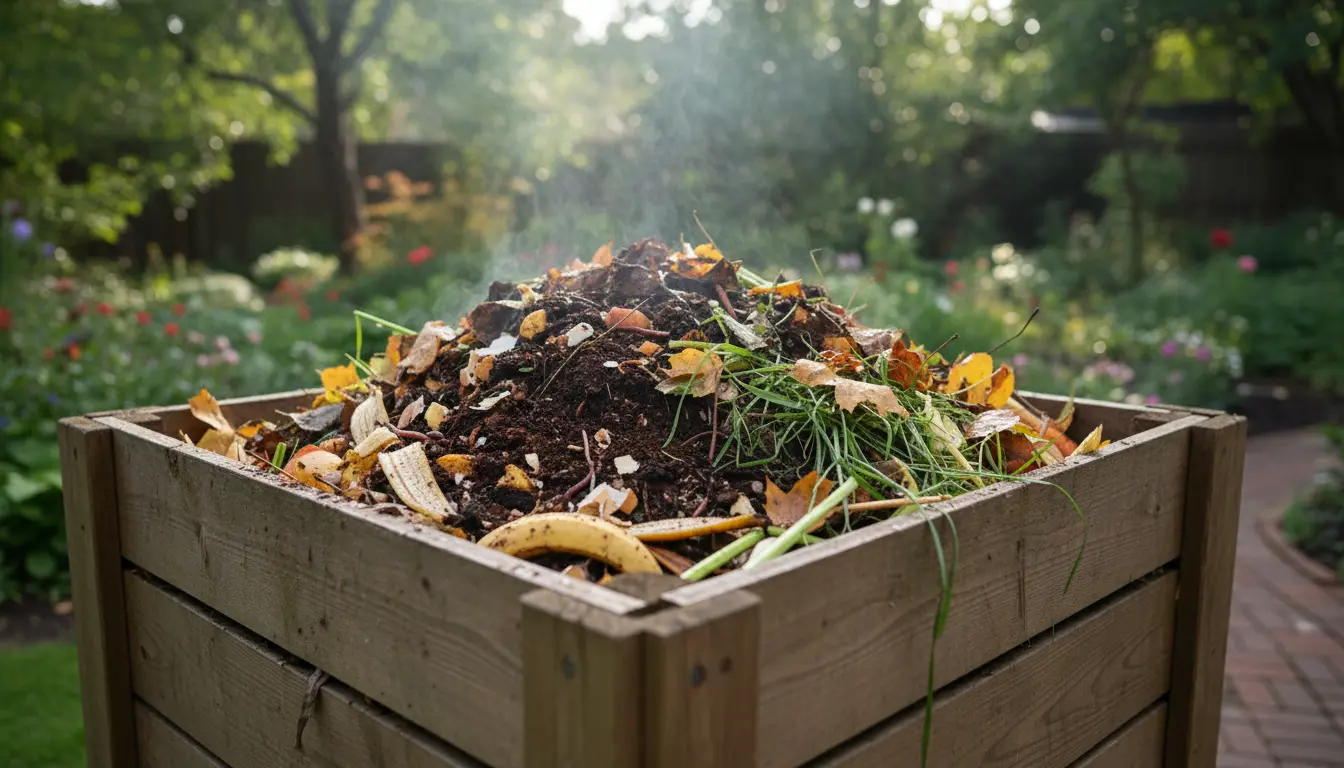
Composting at home turns kitchen and yard waste into a valuable soil amendment. This guide explains straightforward steps and choices for home composting for beginners so you can get started quickly and avoid common mistakes.
Why Home Composting for Beginners Matters
Composting reduces household waste and improves garden soil structure and fertility. For beginners, it is an affordable and practical way to recycle organic material and support healthy plants.
Starting small makes the process manageable and increases the chance of success. You do not need a large yard or specialized equipment to create usable compost.
What You Need to Start Home Composting for Beginners
Choose a container, gather materials, and learn simple maintenance tasks. Below are the essentials to begin home composting for beginners.
Compost Bin Options
- Open pile: Best for larger yards. Cheap and easy to turn with a pitchfork.
- Plastic or metal bin: Keeps pests out and looks neater for small spaces.
- Compost tumbler: Speeds decomposition by making turning easier; good for small batches.
Materials to Compost
Balance carbon-rich browns with nitrogen-rich greens to create ideal conditions.
- Greens (nitrogen): Vegetable scraps, fruit peels, coffee grounds, fresh grass clippings.
- Browns (carbon): Dry leaves, shredded paper, cardboard, straw, sawdust (small amounts).
Materials to Avoid
- Meat, dairy, and oily foods — these attract pests and create odors.
- Diseased plants, invasive weeds with seeds, and pet waste — these can spread pathogens.
- Large woody branches — slow to break down unless chipped.
Step-by-Step Home Composting for Beginners
Follow these steps to build and maintain a successful compost pile or bin. Each step is simple and practical for someone new to composting.
- Pick a location: Choose a level, partially shaded spot with good drainage near the garden or kitchen for easy access.
- Start the base: Lay coarse materials like small twigs or straw to promote airflow at the bottom.
- Layer materials: Alternate greens and browns in 2–4 inch layers. Aim for roughly a 1:3 green-to-brown volume ratio if possible.
- Moisten: The pile should feel like a slightly damp sponge. Add water if dry, or cover if too wet.
- Turn regularly: Every 1–2 weeks for faster composting. For lower-effort methods, turning once a month will still work.
- Wait and monitor: Compost is ready in 2–12 months depending on method and conditions. Finished compost is dark, crumbly, and smells earthy.
Troubleshooting Home Composting for Beginners
New composters encounter common problems that are easy to fix. Here are practical solutions to keep your system healthy.
Bad Odors
Smelly compost usually means too much green material or not enough air.
- Add more browns (dry leaves, shredded paper) and turn the pile to introduce oxygen.
- Ensure the pile isn’t waterlogged; cover during heavy rain.
Slow Decomposition
If the pile is not breaking down, check these factors:
- Particle size: Chop or shred larger pieces to speed breakdown.
- Moisture: Add water if dry; add dry browns if soggy.
- Temperature: A hot pile (cycle above 130°F/54°C) breaks down faster. Increase the pile size or add more greens to warm it up.
Small Real-World Example
Case study: A family in a suburban home started a 3×3 foot compost bin. They used kitchen scraps and yard leaves, aiming for weekly turns. Within six months they produced a wheelbarrow of dark compost, which they mixed into vegetable beds. The garden produced healthier plants and saved on commercial soil amendments.
This example shows that modest, consistent effort produces useful results within one growing season.
Household food waste makes up roughly 20–30% of residential trash by weight in many regions. Composting that material can cut landfill waste while creating nutrient-rich soil for gardens.
Practical Tips for Long-Term Success
- Keep a small counter container with a lid for kitchen scraps to reduce trips outside.
- Shred or chop materials before adding to speed decomposition.
- Use finished compost as a top dressing, soil amendment, or potting mix ingredient.
- Consider worm composting (vermicomposting) for indoor or apartment setups.
Home composting for beginners is a low-cost, low-tech activity with tangible rewards for your garden and the environment. Start with a simple system, adjust based on what you observe, and scale up as you gain confidence. With regular, small actions you’ll produce nutrient-rich compost that improves soil health and reduces waste.