
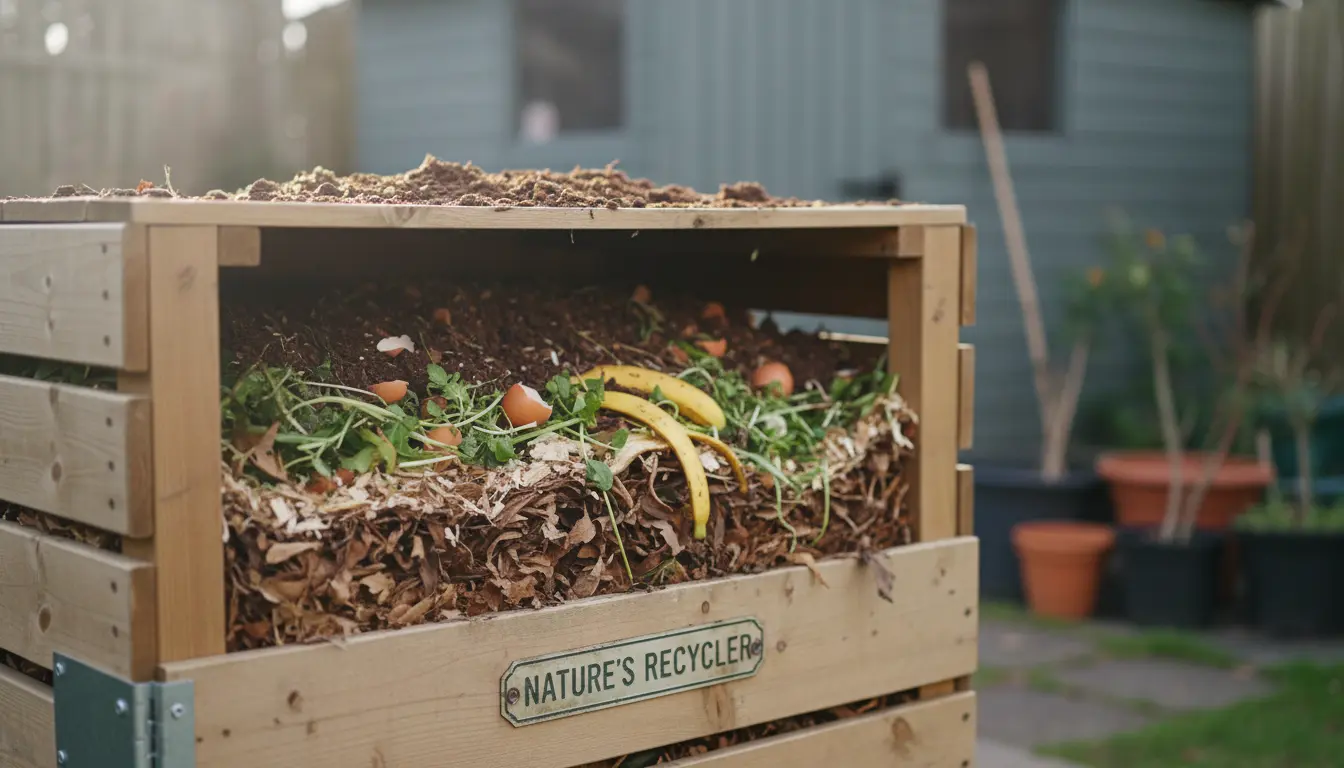
Composting at home turns kitchen scraps and yard waste into nutrient-rich soil for plants. This guide explains home composting for beginners in clear, practical steps anyone can use.
Why Choose Home Composting for Beginners
Home composting reduces household waste and creates a free soil amendment for gardens. It is a low-cost, low-effort way to improve soil structure and plant health.
For beginners, the process can be simple and forgiving. With a few basic practices, you can produce finished compost within a few months.
Benefits of Home Composting for Beginners
- Reduces landfill waste and lowers trash costs.
- Improves soil fertility and water retention.
- Cuts the need for store-bought fertilizers and soil conditioners.
- Teaches sustainable habits for the whole household.
What You Need to Start Home Composting for Beginners
Starting is mostly about selecting a container and gathering the right materials. You do not need expensive equipment to begin.
Choose a location with good drainage and some shade to maintain steady moisture and temperature.
Materials to Use
Compost ingredients fall into two categories: brown (carbon) and green (nitrogen). A balanced mix encourages decomposition.
- Greens (nitrogen): vegetable peels, fruit scraps, coffee grounds, fresh grass clippings.
- Browns (carbon): dry leaves, shredded paper, cardboard, straw, wood chips.
A good rule: aim for roughly 3 parts brown to 1 part green by volume. Adjust as needed if the pile is too wet or slow.
Compost Bin Options
Beginners can choose from open piles, plastic tumblers, or simple wooden bins. Each type has trade-offs in maintenance and speed.
- Open pile: cheapest, flexible size, slower and can attract pests if not managed.
- Plastic tumbler: easier to turn and faster results, but limited capacity.
- Wooden bin: durable and breathable, suitable for backyard setups.
Step-by-Step Guide to Home Composting for Beginners
Follow these basic steps to maintain a healthy compost system. Keep tasks simple and consistent to avoid common problems.
1. Build the Base
Start with a layer of coarse material like small branches or straw to aid drainage and airflow. This helps prevent odors and compaction.
2. Add Layers
Alternate layers of greens and browns. Aim for thin, even layers rather than one large deposit of a single material.
3. Maintain Moisture and Air
Compost should be as damp as a wrung-out sponge. Add water during dry periods and cover or add browns if it becomes soggy.
Turn the pile every 1–2 weeks if possible. Turning adds oxygen, which speeds decomposition and reduces smell.
4. Monitor Temperature
Active compost heats up as microbes work. A hot center (between 120–160°F or 50–70°C) indicates rapid decomposition. Allow it to cool and cure before using on delicate plants.
5. Harvest Finished Compost
Finished compost looks dark, crumbly, and earthy. Sift out large undecomposed pieces and return them to the pile.
Use finished compost as a soil top dressing, potting mix ingredient, or garden amendment.
Troubleshooting Common Issues in Home Composting for Beginners
New composters often face a few common problems. Simple adjustments usually solve them quickly.
Problem: Bad Smell
Cause: Too much green or poor aeration. Solution: Add more browns, turn the pile, and ensure drainage.
Problem: Slow Decomposition
Cause: Too dry, too cold, or imbalanced materials. Solution: Add water and greens, chop materials smaller, and insulate the bin in cold weather.
Problem: Pests
Cause: Exposed food scraps attract rodents or flies. Solution: Use a closed bin or bury food scraps in the center and avoid meat, dairy, and oily foods.
Small Case Study: Apartment Balcony Composting
Maria, an apartment renter, started composting using a small bokashi bucket and a sealed tumbling bin. She collected coffee grounds and vegetable scraps for bokashi and then buried the fermented material in a community garden bin.
Within four months she had enough compost to top three planter boxes of herbs and tomatoes. Her setup produced no odors and kept pests away.
Key takeaways: choose a method that fits your living situation, and use a two-step system if space is limited.
Food waste makes up about 20% of household trash by weight. Composting can cut that portion significantly and return nutrients to the soil.
Practical Tips for Ongoing Success
- Chop or shred materials to speed breakdown.
- Keep a small kitchen caddy with a tight lid for daily scraps.
- Record what you add and how often you turn the pile to learn what works.
- Use finished compost sparingly at first, then increase as plants respond.
Home composting for beginners is a manageable, rewarding habit. Start with the basics, observe how your pile behaves, and make small adjustments. Within a few months you can produce valuable compost that improves your garden and reduces waste.