
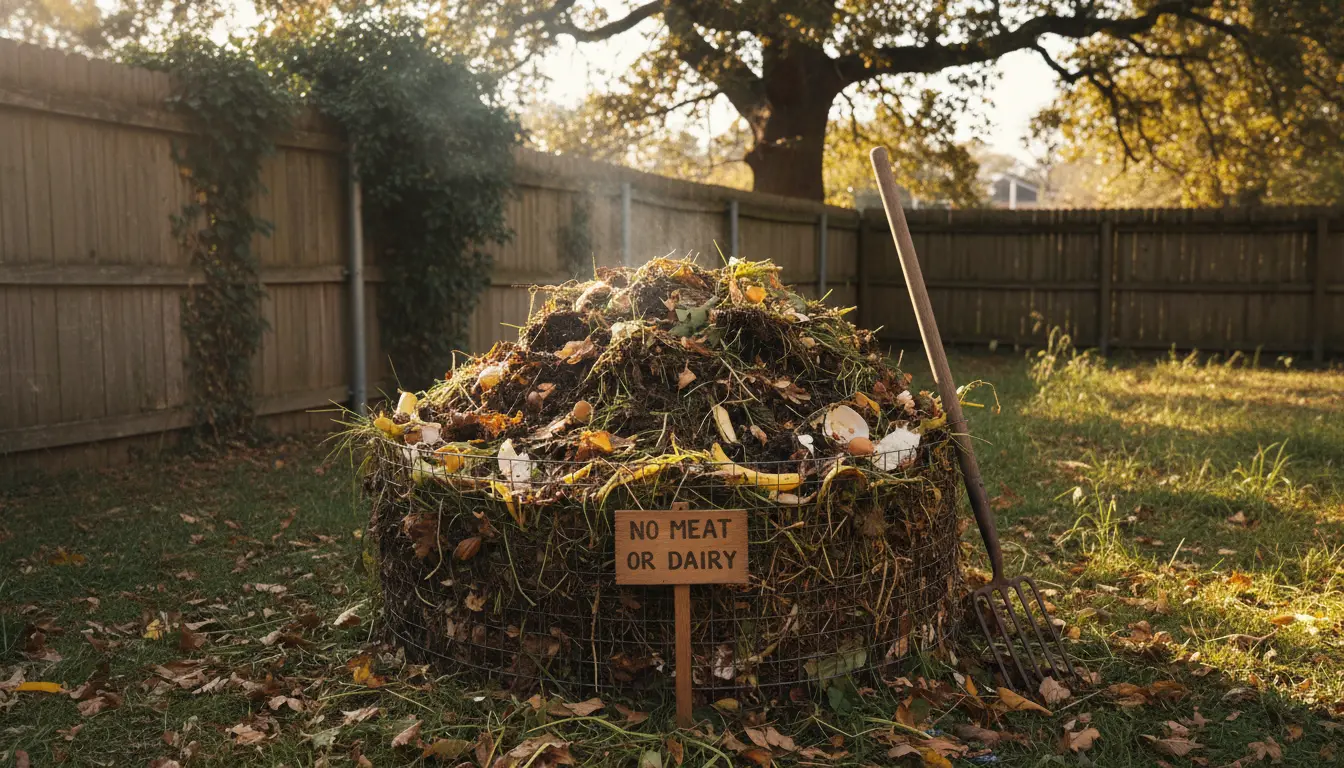
Composting at home turns everyday kitchen scraps and yard waste into productive soil. This guide explains practical steps, basic tools, and simple troubleshooting so you can begin composting with confidence.
Why composting at home matters
Composting reduces household waste and returns nutrients to the soil. It lowers landfill use and greenhouse gas emissions while improving garden health.
For many households, a small compost system can divert 20–30% of kitchen and yard waste from trash bins. That is both an environmental and a cost-saving action.
Benefits of composting at home
- Improves soil structure and water retention.
- Feeds plants naturally without synthetic fertilizers.
- Reduces household waste and collection fees.
- Encourages biodiversity in the garden.
How to start composting at home
Starting is straightforward: pick a system, gather materials, and follow simple maintenance routines. Most beginners succeed with minimal tools and a basic plan.
Quick setup steps for composting at home
- Choose a location with some shade and easy access.
- Select a composting method (bin, tumbler, pile, or worm composting).
- Collect brown and green materials and chop larger items.
- Layer materials and maintain moisture and airflow.
Choosing a compost system for home
Your choice depends on space, effort, and what you want to compost. Each system has pros and cons for a home environment.
Home composting system options
- Open pile: Low cost and flexible, best with ample yard space.
- Stationary bin: Neat and contained; ideal for suburban yards.
- Tumbler: Faster mixing and less manual turning, good for small yards.
- Vermicompost (worms): Excellent for kitchen scraps and indoor use, produces high-quality compost.
What to compost and what to avoid
Successful compost requires a balance of carbon-rich “browns” and nitrogen-rich “greens.” Knowing what to include and exclude will keep the pile healthy.
Compostable items
- Greens: fruit and vegetable scraps, coffee grounds, fresh grass clippings.
- Browns: dry leaves, straw, shredded paper, cardboard, wood chips.
- Small amounts of garden trimmings and dead plants (avoid diseased plants).
Items to avoid
- Meat, dairy, oils, and bones (they attract pests).
- Diseased plants and weeds with mature seeds.
- Pet waste from carnivores and treated wood.
Maintaining your compost at home
Maintaining compost means managing three basics: aeration, moisture, and particle size. Proper balance speeds decomposition and prevents odors.
Practical maintenance tips
- Turn the pile every 1–2 weeks to add oxygen. Tumblers simplify this step.
- Keep compost damp like a wrung-out sponge; add water or dry browns as needed.
- Chop or shred larger items to increase surface area and speed breakdown.
Common problems and fixes
- Bad odors: Add more browns and turn the pile to aerate.
- Slow decomposition: Increase greens or moisture, and shred materials.
- Pests: Avoid meat and seal bins; use a closed tumbler or indoor worm bin.
Compost can reduce household waste volume by up to 40 percent and sequester carbon in soil, helping reduce your home’s climate impact.
Case study: Small suburban compost success
Maria, a homeowner with a small yard, installed a two-bin compost system and used a kitchen caddy for scraps. She separated greens and browns and turned the active bin weekly.
After six months she produced enough compost to top-dress flower beds and feed vegetables. Her household waste to landfill dropped by 30 percent, and she stopped buying bagged soil amendments.
How to use finished compost
Finished compost is dark, crumbly, and earthy-smelling. Use it to improve garden beds, potting mixes, and lawn top-dressing.
- Mix into garden soil at 10–30% by volume.
- Use as a mulch layer to conserve moisture and suppress weeds.
- Blend with potting soil to boost seedlings and container plants.
Simple checklist to start composting at home
- Pick a system that fits your space and time.
- Collect greens and browns and keep a small caddy at your sink.
- Maintain moisture and aerate regularly.
- Monitor for pests and odors and adjust materials when needed.
- Wait several months for finished compost and then use it in the garden.
Composting at home is a manageable habit with tangible benefits. Start small, observe your pile, and adjust as you learn. Over time you will create nutrient-rich compost that reduces waste and strengthens your garden.