
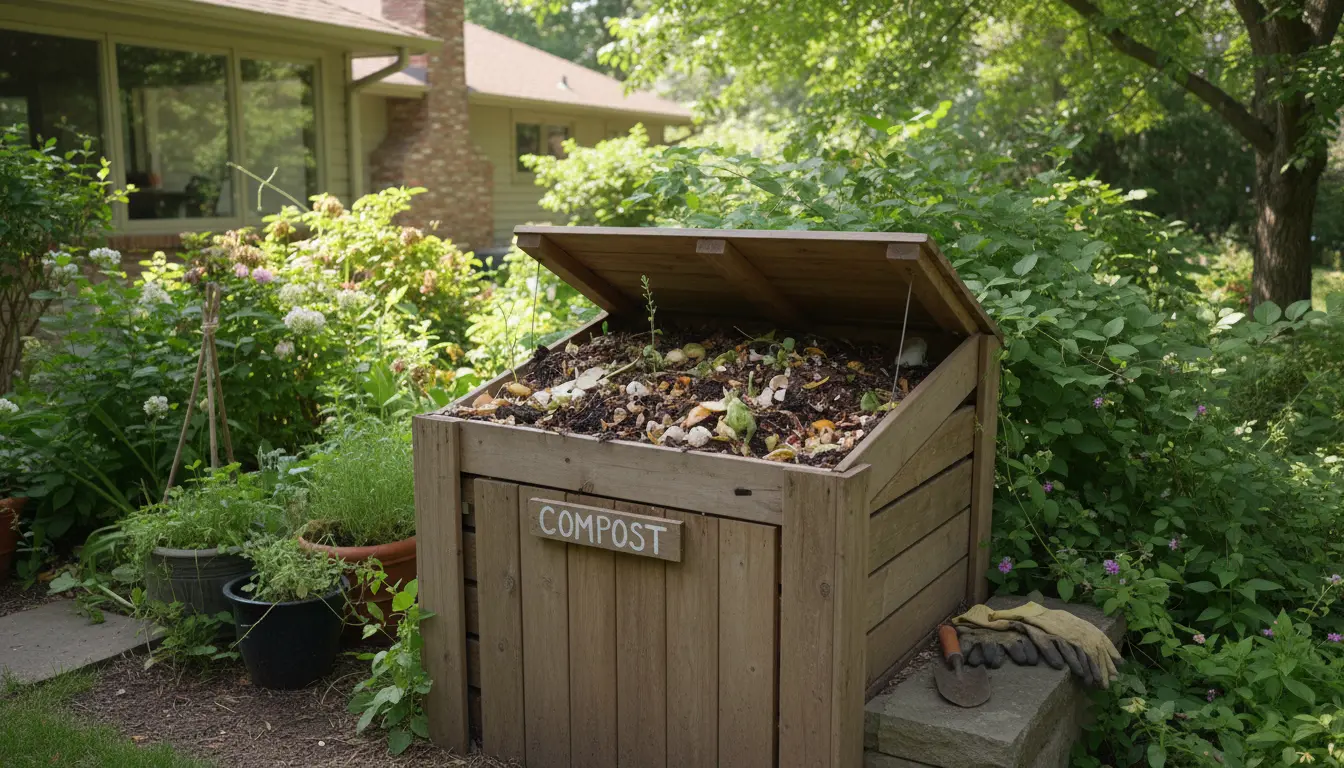
Home composting turns kitchen scraps and yard waste into rich soil. This guide explains simple, practical steps you can use to start composting at home and avoid common mistakes.
How Home Composting Works
Composting is a biological process where microbes break down organic matter into humus. The right mix of materials, moisture, air, and time produces usable compost for gardens and potted plants.
Key Elements of Home Composting
Successful home composting balances four elements: carbon, nitrogen, oxygen, and moisture. Carbon-rich materials give structure, while nitrogen-rich items feed microbes.
- Carbon (browns): dry leaves, shredded paper, cardboard.
- Nitrogen (greens): kitchen scraps, coffee grounds, fresh grass clippings.
- Oxygen: provided by turning or a breathable bin.
- Moisture: similar to a wrung-out sponge.
Choosing a Bin for Home Composting
Pick a compost bin that suits your space and needs. Options include open piles, tumblers, and stationary bins.
Bin Types and When to Use Them
- Backyard pile: Low cost, best for larger yards and patient composters.
- Compost tumbler: Easier to turn and faster results, ideal for small yards.
- Bokashi or worm bin: Good for apartments or indoor composting of food waste.
Step by Step Home Composting Setup
Follow these steps to set up a basic backyard bin. Each step is short and action-oriented so you can start quickly.
- Choose your bin and site: partial shade on soil is best to allow drainage and earthworm access.
- Create a base: lay coarse materials like twigs to improve airflow.
- Add materials in layers: alternate browns and greens about 3:1 by volume.
- Maintain moisture: add water if the pile feels dry and cover if too wet.
- Turn regularly: every 1–2 weeks speeds up decomposition in a hot pile.
Tips on Material Size and Mixing
Chop or shred large pieces to speed breakdown. Smaller pieces increase surface area for microbes and reduce decomposition time.
Troubleshooting Home Composting Problems
Common issues are easy to fix when you know what to look for. Below are quick diagnostics and solutions.
- Bad smell: add more browns and turn to add oxygen.
- Slow breakdown: increase nitrogen (greens) or size-reduce materials.
- Pests: avoid adding meat, dairy, or oily foods; use a closed bin if needed.
- Too wet: mix in dry browns and improve drainage.
When Is Compost Ready?
Finished compost is dark, crumbly, and earthy-smelling. It usually takes 2–6 months for backyard systems and can be faster with frequent turning and a balanced mix.
Adding crushed eggshells to your compost supplies calcium and helps balance acidity. They break down more quickly if rinsed and crushed before adding.
Small Case Study: Urban Balcony Composting
Maria, an apartment dweller, started a small worm bin on her balcony. She used a 10-liter plastic bin, shredded newspaper, and food scraps only.
After three months she had about 8 liters of worm castings and reduced her weekly trash by half. She uses the castings to top-dress potted herbs and reports stronger plant growth within a month.
Why This Worked
- Consistent feeding schedule and keeping the bin moist helped worm activity.
- Shredded paper provided enough carbon to prevent odors.
- Location on a shaded balcony maintained stable temperatures.
Practical Home Composting Examples
Here are simple setups for different spaces so you can choose the right approach.
- Large yard: open pile with a compost thermometer, turned weekly.
- Small yard: 200–300 liter stationary bin with alternating layers.
- Apartment: bokashi bucket for all food waste or a small worm bin for fruit and vegetable scraps.
Quick Start Checklist for Home Composting
- Select bin type and location.
- Gather browns and greens before starting.
- Build layers and maintain moisture.
- Turn or aerate on schedule.
- Harvest finished compost and reuse in gardens and pots.
Home composting is a practical way to reduce waste and improve soil. Start small, monitor your materials, and adjust as you go. With basic care, you can produce nutrient-rich compost that supports healthier plants and a greener household.