
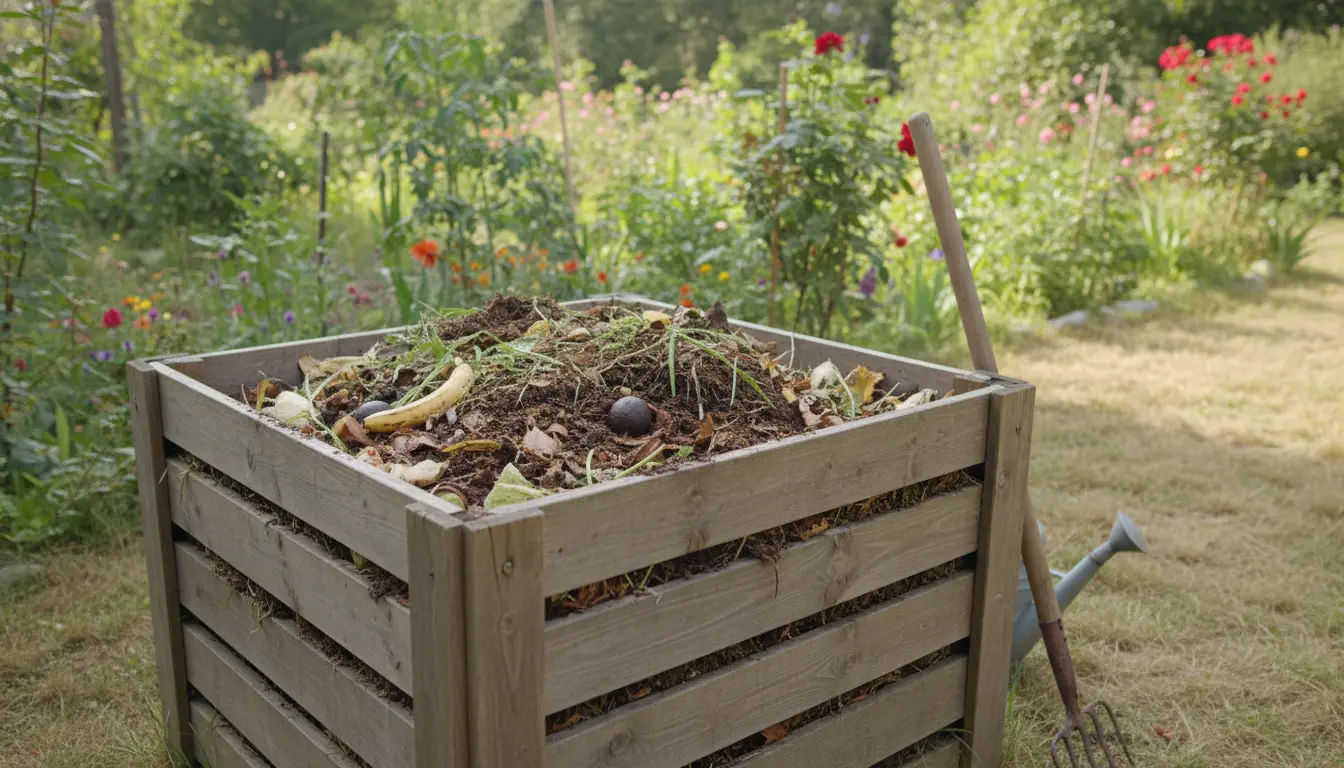
What is home composting for beginners and why start?
Home composting turns kitchen scraps and yard waste into nutrient-rich soil. It reduces landfill waste and improves garden soil quality.
For beginners, composting is an easy way to cut household waste and support plants without synthetic fertilizers. This guide focuses on simple, practical steps you can follow today.
Getting started with home composting for beginners
Start by choosing a composting method that fits your space and time. Options include a backyard bin, a tumbler, or a small indoor worm bin. Each method has pros and cons based on size, smell control, and speed.
Gather basic supplies: a bin, a garden fork or aerator, and a small shovel. You do not need fancy equipment to begin.
Choose the right location
Select a level spot with some drainage and partial shade. Good airflow helps decomposition and keeps odors down.
If you have limited space, a compact tumbler or vermicompost (worm bin) works well on a balcony or patio.
Tools, materials, and the carbon to nitrogen balance
Composting depends on balancing “browns” (carbon-rich) and “greens” (nitrogen-rich) materials. A roughly 3:1 ratio of browns to greens is a good starting point.
- Browns: dry leaves, shredded paper, cardboard, straw
- Greens: kitchen vegetable scraps, coffee grounds, fresh grass clippings
Never add meat, dairy, or oily foods to a standard backyard compost; these attract pests. For those items consider a sealed bokashi system.
Step by step: how to compost at home
Follow these simple steps to build and maintain your compost pile.
- Start with a layer of coarse browns for drainage (2–4 inches).
- Add a mix of greens and browns in alternating layers. Chop larger pieces to speed decomposition.
- Keep the pile moist like a wrung-out sponge. Water occasionally during dry spells.
- Aerate by turning the pile every 1–2 weeks to introduce oxygen.
- Monitor temperature: an active pile will heat up, accelerating breakdown.
How long does composting take?
Time varies by method and management. A well-maintained hot compost can be ready in 2–3 months. A passive pile may take 6–12 months. Tumblers speed the process by making turning easy.
Troubleshooting for home composting for beginners
Problems are common but easy to fix. Smells, pests, slow decomposition — these have simple solutions.
Common problems and fixes
- Bad odor: Add more browns, turn the pile, and check moisture. Too wet and anaerobic conditions cause smells.
- Pests: Avoid adding meat or dairy. Use a closed bin or bury scraps when adding them.
- Slow decomposition: Chop materials smaller, add greens for nitrogen, and increase turning to raise temperature.
- Dry pile: Water lightly and cover to retain moisture.
How to use finished compost
Finished compost looks dark, crumbly, and smells earthy. Sift out large undecomposed pieces and return them to the pile.
Use compost as a soil amendment, top dressing for lawns, or mix into potting soil. A general guideline: mix 1 part compost to 3 parts soil for garden beds.
Adding crushed eggshells adds calcium to your compost and helps reduce acidity. Rinse shells and crush before adding to speed breakdown.
Small case study: a real-world beginner success
Sarah, a city apartment gardener, started a 55-liter tumbler on her balcony. She added kitchen scraps and shredded cardboard in a 2:1 brown to green ratio. She turned the tumbler twice weekly and kept it slightly moist.
Within four months she had usable compost. She mixed the compost into her container vegetable beds and reported healthier tomato plants and reduced need for store-bought fertilizer.
Tips for consistent success with home composting for beginners
- Keep a small kitchen caddy to collect scraps and reduce trips to the bin.
- Shred or chop waste to speed decomposition.
- Rotate materials: add fresh greens and cover with browns to control odor.
- Use a thermometer if you want to monitor the hot composting process closely.
Frequently asked questions
Can I compost in winter? Yes. Activity slows but continues. Insulate your bin or continue using a tumbler to retain heat.
Is composting safe for food gardens? Properly finished compost is safe and benefits plant health by improving soil structure and nutrient content.
Final checklist for home composting for beginners
- Choose a bin type that fits your space
- Balance browns and greens
- Keep the pile moist and aerated
- Monitor and correct common issues
- Harvest finished compost and use it in your garden
Home composting is a low-cost, practical way to reduce waste and create valuable soil. With a few basic tools and regular attention, beginners can produce compost that benefits plants and the planet.