
Why Home Composting Matters
Home composting turns kitchen and yard waste into a useful soil amendment. It reduces landfill waste and improves garden soil structure and nutrient content.
For many households, composting is a low-cost way to cut waste and grow healthier plants. This guide explains how home composting works and how to start simply.
How Home Composting Works
Composting is a biological process where microorganisms break down organic matter into humus. The process needs carbon, nitrogen, moisture, and oxygen.
Balance and conditions determine speed and quality. Too wet or too dry, and decomposition slows. Too much of one material can create odors or pests.
Key Ingredients for Home Composting
- Greens: Food scraps, fresh grass clippings, and green leaves (provide nitrogen).
- Browns: Dry leaves, shredded paper, cardboard, and straw (provide carbon).
- Air: Aeration is needed so microbes can breathe.
- Moisture: The pile should be as damp as a wrung-out sponge.
How to Start Home Composting Step by Step
Choose a bin or pile location that is convenient and has good drainage. A shaded spot helps maintain moisture and temperature.
Start with a base layer of coarse browns like twigs or straw to improve airflow. Add greens and browns in alternating layers.
Basic Method for Home Composting
- Layer 3–4 inches of browns, then 1–2 inches of greens.
- Mix or turn the pile every 1–2 weeks to add oxygen.
- Monitor moisture and add water or dry material as needed.
- Wait 2–6 months for finished compost depending on conditions.
Choosing a Composting System for Home Composting
Select a system based on space, effort, and output needs. Options include open piles, tumblers, and stationary bins.
Tumblers speed up decomposition and are easier to turn. Open piles work well for larger gardens but require more effort to manage pests.
Common Systems
- Open pile: Low cost, suits yards with space.
- Bin: Neat and contained, good for urban yards.
- Tumbler: Faster processing and easy turning.
- Worm composting (vermicompost): Best for small spaces and kitchen scraps.
Troubleshooting Home Composting Problems
Bad smells usually mean too much nitrogen or too little air. Add more browns and turn the pile.
Pest problems often come from exposed food scraps. Bury food under browns or use a closed bin. Avoid meat, dairy, and oily foods if pests are an issue.
Quick Fixes
- Smelly pile: Add dry leaves or shredded paper and aerate.
- Slow decomposition: Chop materials finer, increase moisture, and turn more often.
- Fruit flies: Bury fruit scraps and cover surface with a dry layer.
Household food waste makes up about 20–30% of municipal solid waste in many countries. Composting at home can divert a significant portion of that waste and reduce methane emissions from landfills.
What You Can and Cannot Compost at Home
Most plant-based kitchen scraps and yard waste are compostable. Here are easy lists to follow for home composting.
Good to Compost
- Vegetable and fruit peels, coffee grounds, and eggshells.
- Grass clippings, leaves, small branches, and garden trimmings.
- Shredded paper, cardboard, and natural fiber yard waste.
Avoid Composting
- Meat, dairy, and oily foods unless you use a hot compost system or secure bin.
- Diseased plants, pet waste, and treated wood products.
Small Real-World Example: A Simple Case Study
Case study: A two-person household started a 50-liter tumbler in spring. They added kitchen scraps and shredded newspaper at a 1:2 green-to-brown ratio.
By autumn they had about 30 liters of finished compost. They used it to top-dress potted herbs and noticed better growth and water retention.
Lessons learned: Regular turning and chopping scraps small helped speed the process. A secure tumbler kept pests away.
Using Finished Compost
Finished compost looks dark, crumbly, and earthy-smelling. It no longer resembles the original materials.
Use finished compost as a soil amendment, potting mix component, or mulch. Mix into topsoil at 5–20% by volume for best results.
Final Tips for Successful Home Composting
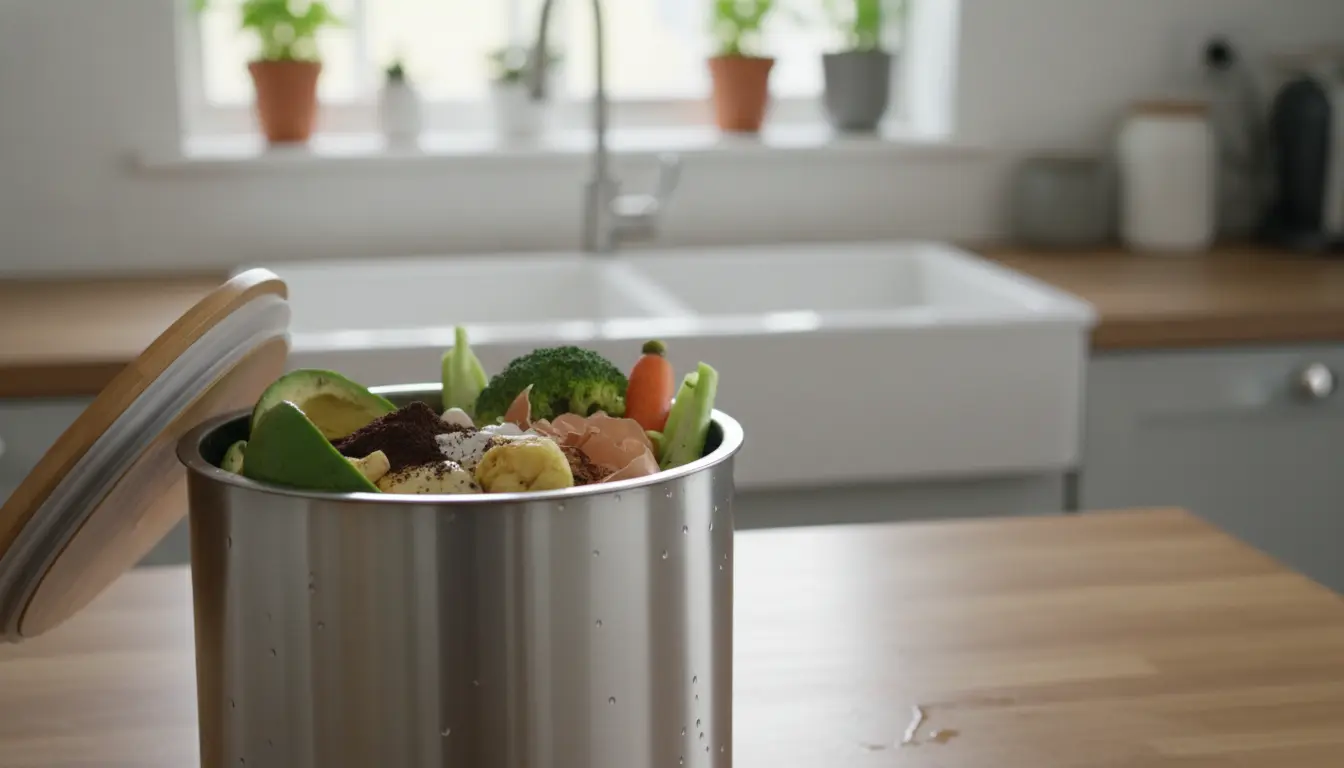
- Keep a small countertop container to collect kitchen scraps and empty it daily into your compost system.
- Chop materials into smaller pieces to speed decomposition.
- Learn by doing: monitor smell, moisture, and texture and adjust accordingly.
Home composting is accessible for almost any household. With a simple system and a basic understanding of balance and maintenance, you can turn waste into valuable compost and support a greener home.