
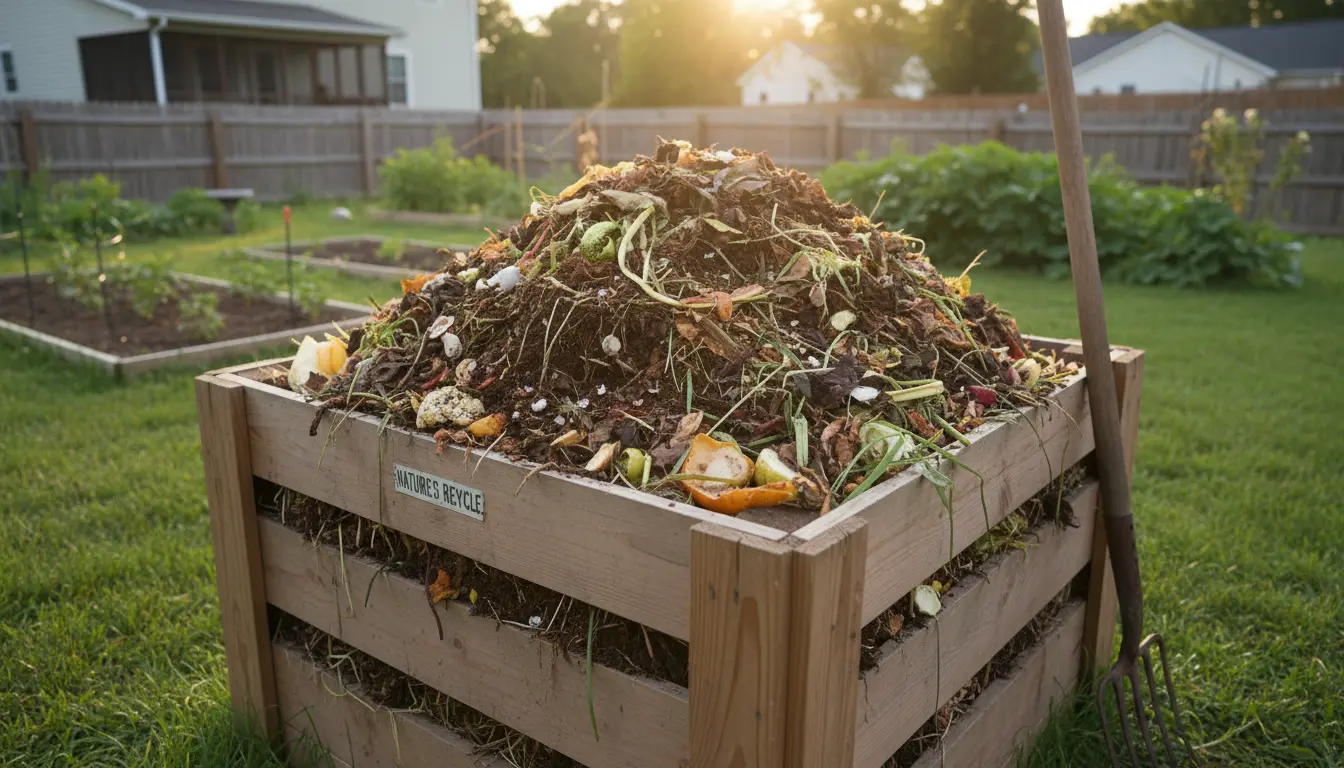
Composting at home turns food scraps and yard waste into rich soil for gardens and potted plants. This guide explains practical steps to set up and maintain a home compost bin so beginners can get results without extra tools.
Why start a home compost bin
A home compost bin reduces household waste and produces nutrient-rich compost for soil improvement. It lowers landfill contribution and saves money on store-bought soil amendments.
Home composting is suitable for apartments with small bins or houses with backyard piles. You can adapt the method to the space and time you have available.
Materials for your home compost bin
Choose a container that fits your space and budget. Common options include tumblers, plastic bins with holes, wooden pallets, or a simple pile in a corner of the yard.
Browns and Greens for a healthy compost mix
Balance carbon-rich “browns” and nitrogen-rich “greens” for efficient decomposition. Aim for about 3 parts browns to 1 part greens by volume.
- Greens: fruit and vegetable scraps, coffee grounds, fresh grass clippings.
- Browns: dry leaves, straw, shredded cardboard, paper towels (unsoiled).
What to avoid in your home compost bin
Exclude meat, dairy, fats, and oils to prevent odors and pests. Avoid diseased plants, coal ash, and pet waste from carnivores.
Large branches take long to break down. Chop or chip woody material before adding to speed composting.
Step-by-step: How to start a home compost bin
Follow these steps to start composting at home with predictable results. Keep each step simple and repeatable.
- Pick a location: Choose a shaded, level spot with good drainage and easy access for turning and adding material.
- Prepare the base: Lay a 4–6 inch layer of coarse browns like twigs or straw to improve airflow at the bottom.
- Add materials in layers: Alternate thin layers of greens and browns to maintain balance. Keep layers no more than a few inches thick.
- Maintain moisture: The pile should be as damp as a wrung-out sponge. Add water if it gets too dry or more browns if it becomes soggy.
- Turn the pile: Every 1–2 weeks, mix or turn contents to add oxygen and speed decomposition. Use a pitchfork or compost turning tool.
- Monitor temperature: A properly balanced pile heats to 55–65°C (130–150°F) in the active phase. If you don’t have a thermometer, notice steam or warmth in the center.
- Harvest finished compost: After a few months to a year, dark crumbly compost is ready. Sift out large pieces and return them to the bin for further breakdown.
Troubleshooting and tips for a healthy home compost bin
Common issues can be fixed with small adjustments. Regular checks avoid long-term problems.
- Bad odor: Add more dry browns and turn the pile. Odors indicate too much nitrogen or poor aeration.
- Pests or flies: Bury food scraps under browns or use a closed bin. Avoid meat and dairy entirely.
- Slow breakdown: Chop material into smaller pieces and increase turning frequency.
- Too dry: Add water in small amounts and mix. Covering the bin during hot weather reduces evaporation.
- Too wet: Mix in dry browns and improve drainage. Keep the pile loosely packed to increase airflow.
Composting one household’s organic waste can divert hundreds of pounds from landfill each year and reduce methane emissions, a potent greenhouse gas.
Small real-world example: One-family home composting case
Sarah, a homeowner with a small backyard, started a 50-gallon tumbler and a 3-foot compost pile in spring. She used kitchen scraps, shredded paper, and autumn leaves.
By maintaining a 3:1 brown-to-green ratio and turning the tumbler weekly, Sarah produced usable compost in six months. She used it to topdress vegetable beds and reported healthier soil and reduced grocery waste.
Tips to fit a home compost bin to your lifestyle
If you have limited outdoor space, try a small indoor worm bin (vermicomposting). Worm bins handle many kitchen scraps and are odor-safe when managed properly.
For apartment dwellers, sealed bokashi systems ferment food waste for later burial in soil or addition to an outdoor compost pile.
Final checklist for your home compost bin
- Choose a bin type that fits your space and pest-control needs.
- Maintain a rough 3:1 ratio of browns to greens.
- Keep moisture at sponge-like levels and turn regularly for oxygen.
- Monitor for odors, pests, and slow decomposition and adjust accordingly.
- Harvest compost when it is dark, crumbly, and soil-like in texture.
Starting a home compost bin is an easy way to reduce waste and improve garden soil. With the right balance of materials and simple maintenance, most households will see finished compost in months rather than years.