
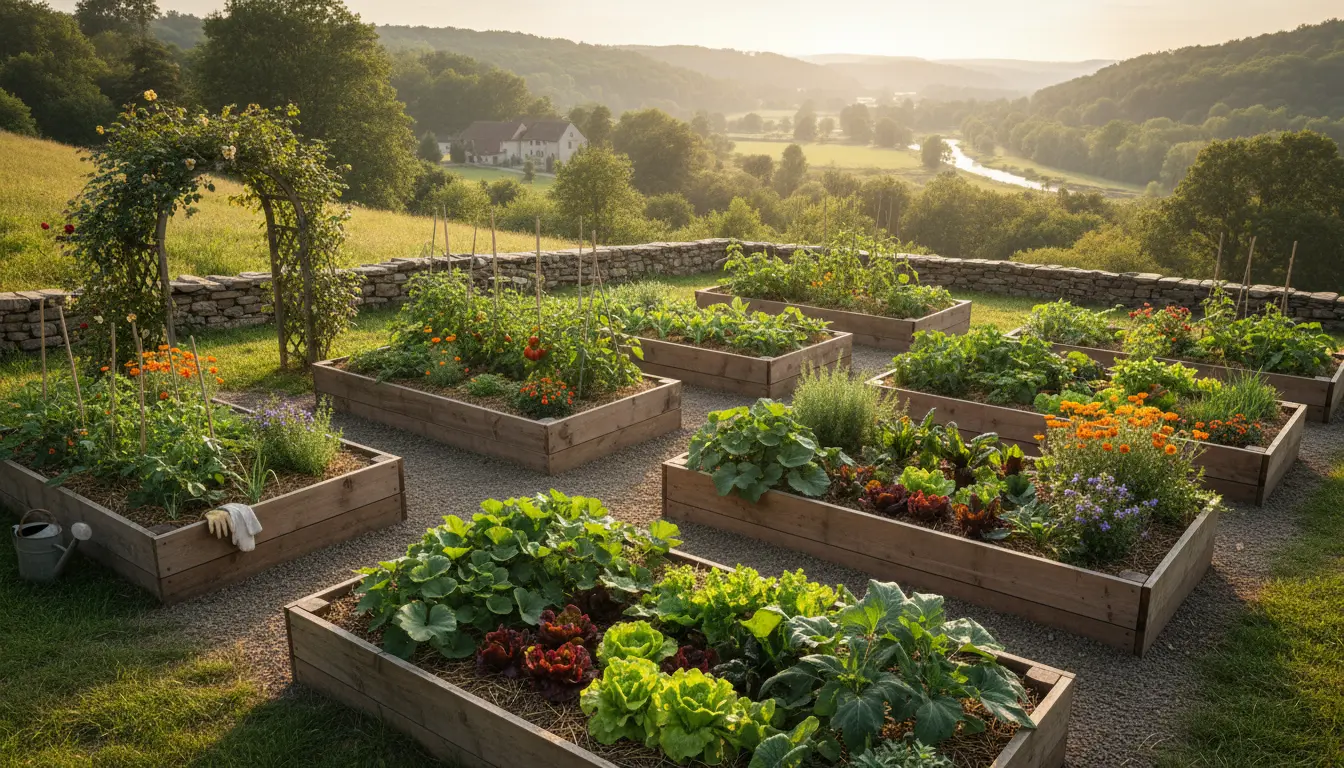
Why start a vegetable garden at home
Growing vegetables at home saves money, improves freshness, and increases food security. It also offers a low-impact way to eat seasonally and learn plant care techniques.
This guide provides clear steps to plan, plant, and maintain a productive vegetable garden at home, with practical examples and troubleshooting tips.
Plan your vegetable garden at home
Start by deciding the goals for your garden: fresh salad greens, staple vegetables, herbs, or canning crops. Define the available space and how much time you can commit each week.
- Space options: containers, raised beds, or in-ground plots.
- Time commitment: 1–3 hours per week for small plots; more for larger areas.
- Budget: starting costs include soil, seeds, tools, and irrigation.
Choose a layout and size
Select a layout that matches your access and ergonomics. Raised beds of 4×4 or 4×8 feet are common for beginners because they are easy to reach and manage.
For balconies or patios, use large containers (minimum 12 inches deep) and group them for easier watering.
Choose location and prepare soil for a vegetable garden at home
Vegetables need at least 6 hours of direct sunlight for good yields. Observe sunlight patterns for several days before choosing the final spot.
Good drainage is essential. Avoid low spots where water pools after rain.
Soil testing and improvement
Test soil pH and nutrient levels with a simple kit or a lab service. Most vegetables prefer pH 6.0 to 7.0.
Improve soil fertility by adding compost and well-rotted organic matter. For heavy clay, add coarse sand and compost to improve texture and drainage.
Select plants and create a planting schedule
Choose vegetables suited to your climate and season. Start with easy, fast-yield crops if you are new to gardening.
- Beginner-friendly vegetables: lettuce, radish, green beans, cherry tomatoes, kale, and herbs.
- Succession planting helps provide continuous harvests by staggering planting dates every 2–3 weeks.
Companion planting and crop rotation
Use companion planting to deter pests and maximize space. Examples: basil near tomatoes, marigolds to reduce nematodes.
Rotate crop families each season to reduce disease buildup. Avoid planting nightshades in the same bed year after year.
Planting, watering, and maintenance
Plant seeds or transplants at the depth and spacing recommended on seed packets. Firm soil gently around seedlings to remove air pockets.
Watering is critical: establish a deep, infrequent routine rather than shallow daily watering to encourage strong roots.
- Water early in the morning to reduce evaporation and disease risk.
- Mulch with straw or shredded leaves to keep soil cool and retain moisture.
- Use drip irrigation or soaker hoses to reduce water waste and wet foliage less.
Routine maintenance tasks
Regular tasks include weeding, staking or trellising vining crops, and checking for pests and diseases. Prune indeterminate tomatoes and remove yellowing leaves promptly.
Feed plants with balanced organic fertilizer according to crop needs. Leafy greens benefit from nitrogen; fruiting crops need more phosphorus and potassium.
Growing beans in the same bed as corn (the traditional Three Sisters method) improves nitrogen levels and supports taller plants. Beans fix nitrogen from the air into the soil, which benefits heavy feeders planted later.
Common pests and organic solutions
Identify pests early by inspecting leaves and stems. Many problems are easier to solve when caught early.
- Slugs and snails: use beer traps or remove by hand at dusk.
- Aphids: blast with water, introduce ladybugs, or use insecticidal soap.
- Fungal diseases: improve air circulation, avoid overhead watering, and remove infected plants.
Small real-world example: 10×10 raised bed case study
Maria, a beginner gardener, converted a 10×10 foot backyard patch into two 4×8 raised beds. She filled them with a mix of topsoil and compost, then planted tomatoes, lettuce, carrots, and bush beans.
Her routine: 30 minutes every other day for watering and inspection, with weekly 1-hour checkups for weeding and staking. After the first season, she expanded to herbs and peppers after seeing improved soil and steady yields.
Harvesting and planning next season for your vegetable garden at home
Harvest vegetables at peak ripeness to encourage more production. Leafy greens can be cut-and-come-again for multiple harvests.
At season end, add compost and cover crops to rebuild soil. Plan crop rotation and seed order based on what performed well.
Quick checklist to start this weekend
- Choose the site with at least 6 hours of sun.
- Decide container, raised bed, or in-ground layout.
- Buy seeds or seedlings and compost for soil improvement.
- Plant fast crops like lettuce and radish to get early success.
Starting a vegetable garden at home is a process of small improvements. Follow these steps, track what works in your space, and expand gradually. With consistent care, even a small plot can supply fresh vegetables through the season.