
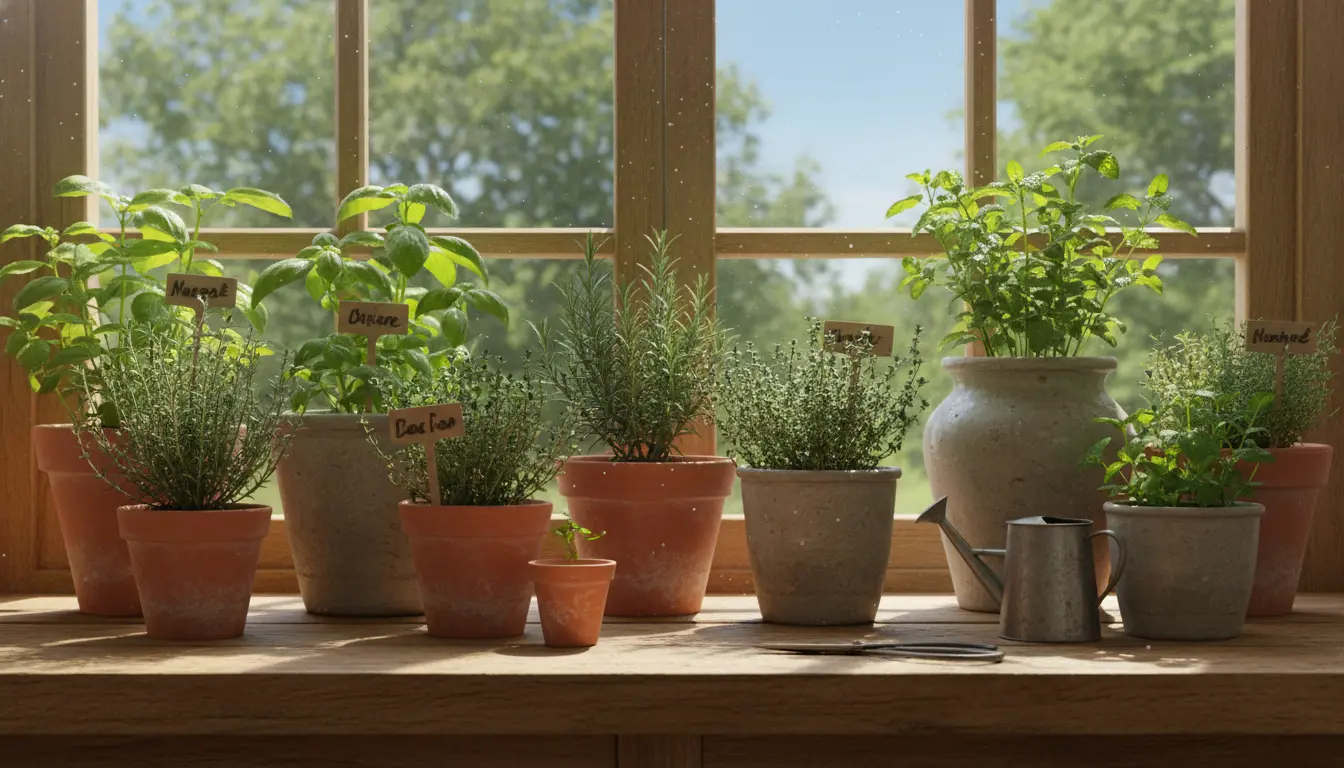
Growing herbs indoors is a practical way to add fresh flavor to meals and green life to tight spaces. This guide explains how to build and care for an indoor herb garden in a small apartment using simple materials and routines.
Why Choose an Indoor Herb Garden in a Small Apartment
An indoor herb garden saves money and reduces waste by providing fresh herbs on demand. Herbs like basil, mint, and rosemary also improve air quality and bring natural fragrance into your home.
Small-space gardening requires low-cost solutions and a bit of planning. With the right choices, even a windowsill or a balcony shelf can supply several culinary herbs year-round.
Benefits of an indoor herb garden
- Fresh herbs for cooking without store trips.
- Compact and low-maintenance compared to full vegetable gardens.
- Controlled environment reduces pests and seasonal loss.
- Improves kitchen aesthetics and indoor air.
Many common kitchen herbs like basil, chives, and parsley can thrive with just 4–6 hours of bright indirect light daily.
How to Start an Indoor Herb Garden in a Small Apartment
Starting an indoor herb garden is a sequence of straightforward choices: pick herbs, pick containers, and set up light and soil. Follow the steps below to reduce mistakes and speed up success.
1. Choose the right herbs for your space
Not all herbs have the same light or space needs. Choose varieties that suit your apartment’s conditions.
- Low-light options: mint, parsley, chives.
- Bright-light options: basil, rosemary, thyme, oregano.
- Fast growers for beginners: basil and chives.
2. Select containers and placement
Containers should have drainage holes and be proportional to each plant’s root system. Use saucers to protect surfaces from water.
- Small pots (3–4 inches) for herbs like chives and thyme.
- Medium pots (6–8 inches) for basil and parsley.
- Use window sills, narrow shelving, or hanging planters to save floor space.
3. Use the right soil and drainage
Choose a high-quality potting mix designed for containers, not garden soil. Good drainage prevents root rot in confined pots.
- Mix in perlite or coarse sand for extra drainage.
- Add a 1–2 inch layer of gravel only if the pot lacks sufficient holes.
4. Lighting for your indoor herb garden
Light is often the limiting factor in apartments. Herbs need bright indirect light; 4–8 hours daily is ideal depending on the herb.
If light is insufficient, use a full-spectrum LED grow light. Position the light 6–12 inches above plants and run it 10–14 hours a day on a timer for consistent results.
5. Watering and humidity
Overwatering is the most common mistake for indoor herbs. Let the top 1 inch of soil dry before watering again for most varieties.
- Check moisture with your finger or a small moisture meter.
- Water thoroughly until water flows from drainage holes, then discard excess water from saucers.
- Maintain moderate humidity; misting or a small tray with pebbles and water helps in dry apartments.
6. Feeding and maintenance
Feed herbs lightly with a balanced water-soluble fertilizer every 4–6 weeks during active growth. Avoid heavy feeding for delicate herbs like basil.
Pinch back flowering tops to encourage leafy growth and prevent herbs from becoming woody.
7. Pest prevention and common problems
Indoor herbs are less exposed to pests but can still get spider mites, whiteflies, or fungus. Inspect leaves weekly and remove damaged foliage promptly.
- For small insect issues, use insecticidal soap or wipe leaves with a mix of water and mild soap.
- Improve air circulation with a small fan to reduce mold risk.
Practical Layouts for a Small Apartment Indoor Herb Garden
Layout should match available light and space. Here are three simple setups that work well in tight homes.
- Windowsill row: Place 3–5 small pots on a south- or west-facing sill for best light.
- Tiered shelf: A narrow plant shelf beside a bright window allows layering without blocking light.
- Hanging planters: Use trailing herbs like mint in hanging pots to save surface area and create vertical interest.
Real-World Example: Small Apartment Herb Case Study
Sara, who lives in a 1-bedroom apartment, started with three 6-inch pots on her east-facing windowsill. She chose basil, parsley, and chives because her window gets morning sun and bright indirect light all afternoon.
After using a basic potting mix with added perlite and running a small LED grow light for two hours during cloudy weeks, she harvested fresh basil weekly for six months. Regular trimming kept the plants bushy and productive, and she reduced grocery herb purchases by half.
Quick Start Checklist for an Indoor Herb Garden
- Pick 3 beginner herbs (basil, chives, parsley).
- Use pots with drainage; choose 4–6 inch sizes for starters.
- Fill with quality potting mix and add perlite for drainage.
- Place in a bright spot or add a full-spectrum LED light.
- Water when the top inch of soil is dry; avoid constant wetness.
- Feed lightly every 4–6 weeks and pinch back flowers.
With modest effort and a few simple supplies, an indoor herb garden in a small apartment can supply fresh flavors and a pleasant green corner. Start small, observe how your herbs respond, and expand as you gain confidence.