
How to Start a Vegetable Garden: Quick Overview
Starting a vegetable garden is a practical way to grow fresh food and learn basic horticulture. This guide gives clear, step-by-step instructions to help beginners get started with smart planning and low-cost tools.
Choose a Location for Your Vegetable Garden
Sunlight is the most important factor when you start a vegetable garden. Most common vegetables need at least 6 to 8 hours of direct sun per day.
Consider access to water, drainage, and convenience. A garden close to the house is easier to monitor and water, and it encourages regular care.
Location Checklist
- Sunny exposure: 6–8 hours/day
- Flat or gently sloped ground for drainage
- Close to a water source
- Not shaded by large trees or buildings
Prepare Soil and Compost Before You Plant
Good soil is the foundation of a productive garden. Test existing soil or plan for raised beds if soil is poor or contaminated.
Amend soil with organic matter like compost to improve structure, drainage, and fertility. A simple soil test will tell you pH and nutrient needs.
Soil Preparation Steps
- Remove weeds and large debris from the site.
- Loosen top 8–12 inches of soil with a fork or tiller.
- Mix in 2–3 inches of compost and a balanced organic fertilizer if needed.
- Level the bed and water lightly to settle the soil.
Plan What to Plant in Your Vegetable Garden
Choose vegetables suited to your climate, season, and available space. Start with easy, high-return crops to build confidence.
For first-time gardeners, consider tomatoes, lettuce, radishes, beans, and herbs. These are forgiving and provide quick feedback.
Crop Selection Tips
- Pick varieties labeled for your USDA hardiness zone or local climate.
- Group plants by water and sun needs.
- Rotate crops yearly to reduce disease build-up.
- Start seeds indoors for long-season crops or buy seedlings from a nursery.
Planting and Care: Watering, Mulching, and Fertilizing
Proper planting depth and spacing are critical. Follow seed packet or plant tag instructions to avoid overcrowding.
Water deeply and less frequently to encourage deep root growth. Most gardens need about 1 inch of water per week, adjusted for rainfall.
Daily and Weekly Care Tasks
- Water in the morning to reduce disease risk.
- Mulch with straw or wood chips to retain moisture and suppress weeds.
- Fertilize lightly during the growing season with compost tea or organic fertilizer.
- Stake or cage taller plants like tomatoes to improve airflow and reduce breakage.
Manage Pests and Problems in a Vegetable Garden
Inspect plants regularly for pests and disease. Early detection makes control simpler and less chemical-intensive.
Use integrated pest management (IPM): physical barriers, hand-picking, beneficial insects, and targeted organic treatments.
Common Issues and Simple Fixes
- Aphids: Spray with water or introduce ladybugs.
- Slugs: Use beer traps or copper barriers at night.
- Fungal disease: Improve spacing and reduce overhead watering.
- Nutrient deficiency: Apply compost or a balanced organic fertilizer.
Seasonal Schedule for a Beginner Vegetable Garden
Plan planting around your local last frost date. Cool-season crops go in early spring or fall; warm-season crops wait until after frost risk passes.
Succession planting (staggered sowing) keeps a steady harvest through the season and maximizes space.
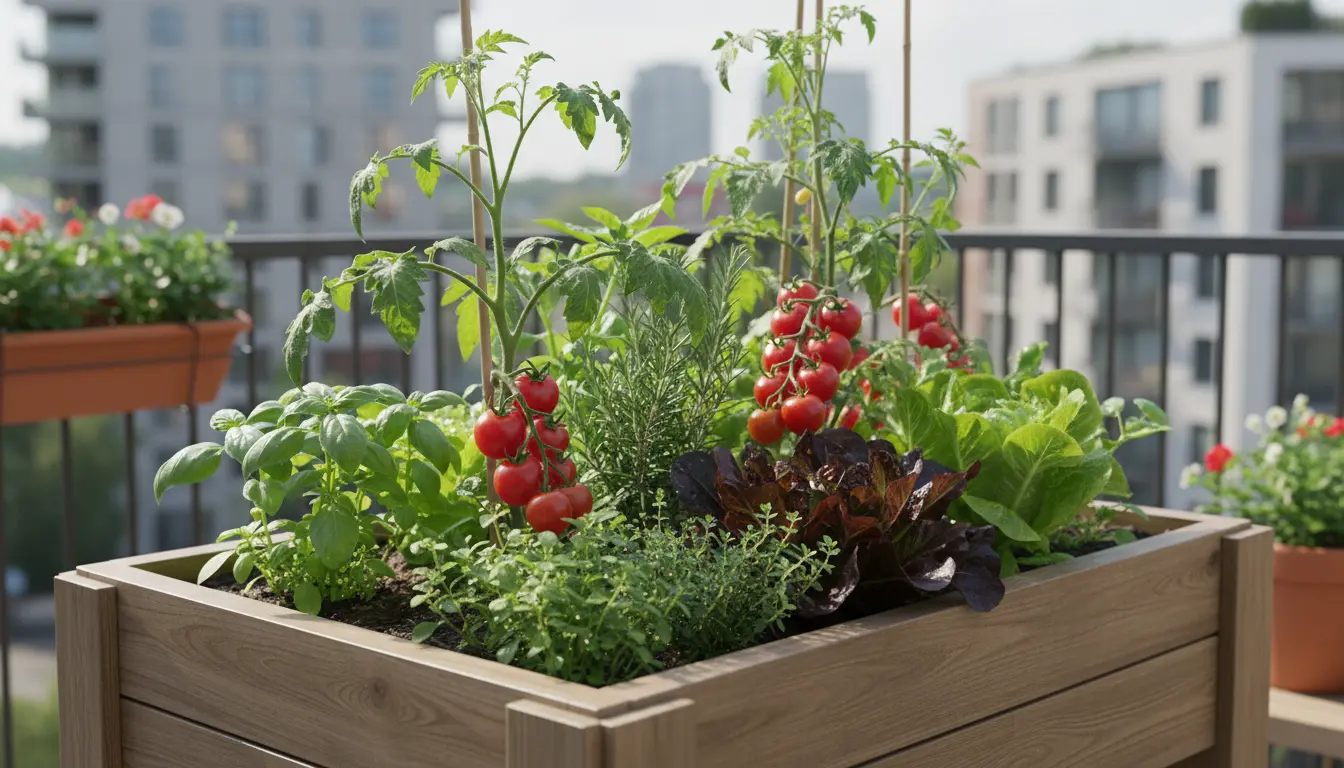
Small Real-World Example: Balcony Raised Bed Case Study
Case: A renter with a 10×4 foot balcony started a raised bed using a 2-foot-wide cedar planter box. They chose compact varieties and container-friendly crops.
Steps they followed: set the box in full sun, filled it with a 50/50 mix of topsoil and compost, planted tomato, basil, lettuce, and bush beans, and used drip tubing for watering.
Result: After eight weeks, they had continuous lettuce harvests and two large tomato plants that produced through summer. Minimal pest issues were handled by hand-picking and introducing predatory insects.
Practical Checklist to Start Your Vegetable Garden Today
- Choose a sunny site and measure available space.
- Decide between in-ground beds, raised beds, or containers.
- Buy or make compost and basic tools: spade, trowel, watering can, gloves.
- Select 3–6 easy crops to begin with and follow planting dates for your area.
- Set up simple irrigation and apply mulch after planting.
- Inspect plants weekly and keep a notebook of planting dates and harvests.
Final Notes on How to Start a Vegetable Garden
Start small and learn by doing. A compact, well-cared-for garden will teach you more than a large plot neglected by inconsistent care.
Track what works and what doesn’t, and adapt each season. With basic planning and regular attention, a productive vegetable garden is within reach for most people.