
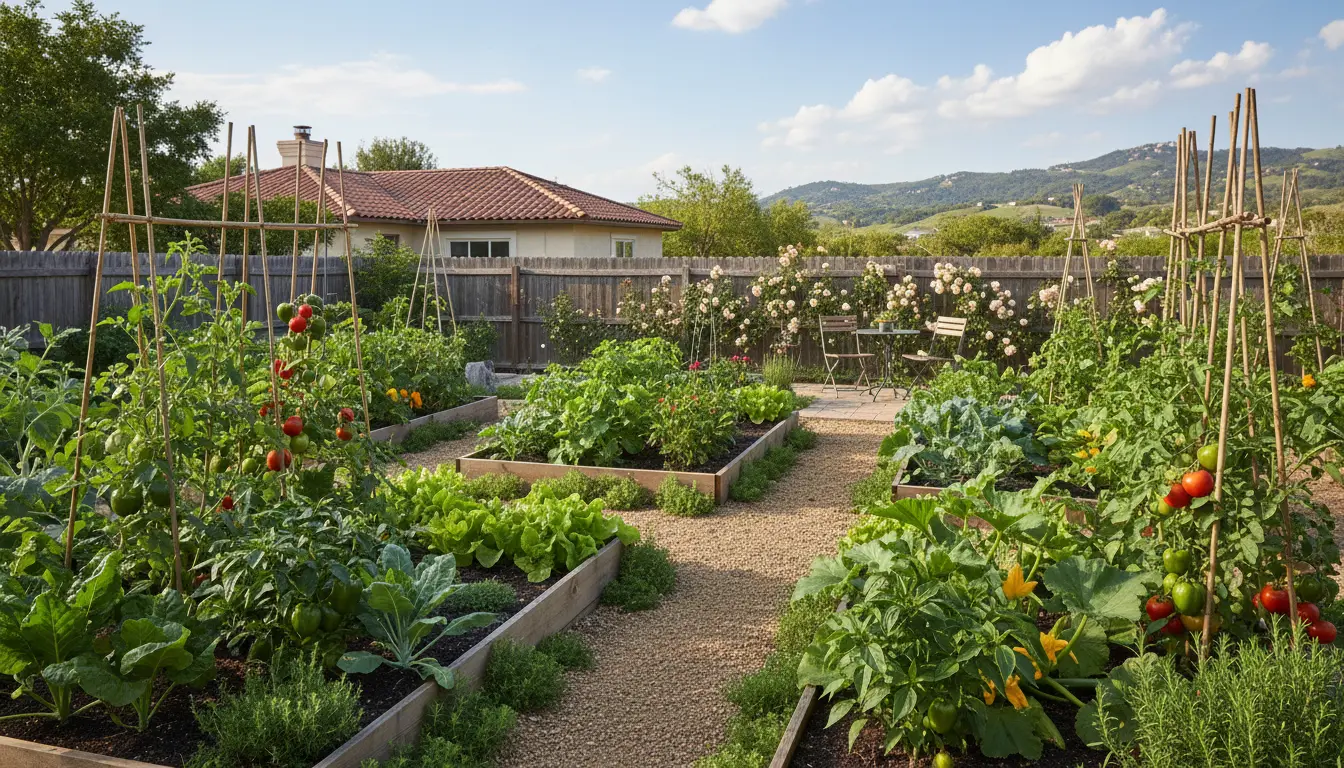
Starting a vegetable garden is an achievable way to grow fresh food, save money, and enjoy time outdoors. This guide explains how to start a vegetable garden in clear steps you can follow, whether you have a small yard or a balcony.
Choose the Right Location for Your Vegetable Garden
Location affects plant health and yield. Pick a spot that gets at least 6 hours of direct sunlight each day for most vegetables.
Consider these factors when choosing your site:
- Sun exposure: 6–8 hours of sun for tomatoes, peppers, and cucumbers.
- Drainage: Avoid low spots that collect water; raised beds help in poor-draining areas.
- Access to water: Place the garden close to a hose or irrigation source.
- Wind and shade: Use fences or hedges to block strong winds and minimize shade from buildings or trees.
Prepare Soil Before Planting
Good soil is the foundation of a successful vegetable garden. Aim for loose, fertile soil with steady moisture retention and good drainage.
Follow these steps to prepare soil:
- Test the soil pH with a simple kit; most vegetables prefer pH 6.0–7.0.
- Add organic matter such as compost or well-rotted manure to improve structure and nutrients.
- Work the top 6–12 inches of soil to break up compaction and mix amendments evenly.
- If your soil is heavy clay or sandy, use raised beds filled with a balanced soil mix for faster improvement.
Soil Amendment Example
For 100 square feet of garden, spread 2–3 cubic feet of compost, mix it in, and add a balanced slow-release organic fertilizer according to package directions.
Pick Vegetables That Match Your Space and Season
Choose crops that fit your growing zone, season length, and available space. Beginners often start with easy, productive crops.
- Easy starters: tomatoes, lettuce, radishes, green beans, zucchini.
- Short-season crops: radishes, spinach, baby greens.
- Containers and balconies: cherry tomatoes, herbs, leaf lettuce, peppers in pots.
Refer to your local extension service or seed packet for planting dates and frost tolerance.
Plan Layout and Planting Schedule
Plan where each crop will grow and when to plant. A simple layout reduces overcrowding and makes maintenance easier.
- Use rows, blocks, or raised beds depending on space.
- Practice crop rotation: avoid planting the same family in the same spot every year.
- Sow seeds or transplant seedlings according to recommended spacing on seed packets.
Succession Planting Tip
To maximize harvests, plant quick crops (like radishes) between slower-growing plants. When the quick crop is finished, transplant a new crop into that space.
Watering and Mulching for Healthy Plants
Consistent moisture is crucial for vegetables. Overwatering and underwatering both reduce yield and increase disease risk.
Watering best practices:
- Water deeply once or twice a week rather than frequent shallow watering.
- Use drip irrigation or soaker hoses to target roots and reduce leaf wetness.
- Mulch with straw, wood chips, or shredded leaves to conserve moisture and suppress weeds.
Pest and Disease Management for New Vegetable Gardens
Manage pests and diseases using integrated, low-toxicity methods first. Monitor plants weekly to catch problems early.
- Use row covers to protect young plants from insects.
- Encourage beneficial insects by planting flowers like marigolds or calendula nearby.
- Remove diseased leaves and rotate crops to reduce soil-borne problems.
- Apply organic options like insecticidal soap or neem oil only when needed.
Harvesting and Ongoing Care
Harvest regularly to encourage production. Leafy greens are best picked young, while tomatoes and peppers ripen over weeks.
Ongoing care tasks:
- Weed weekly to reduce competition for nutrients.
- Stake or cage tall plants such as tomatoes to improve air circulation.
- Keep records of planting dates, varieties, and harvest yields to refine your plan each season.
Eggplants and peppers are both in the nightshade family and share similar nutrient needs, so avoid planting them in the same location year after year.
Small Real-World Example: One-Season Backyard Case Study
Case: A homeowner converted a 10 x 8 foot lawn strip into a raised bed. They filled it with a 60/30/10 mix of topsoil, compost, and coconut coir, and planted tomatoes, basil, bush beans, and leaf lettuce.
Results after one season:
- Tomatoes produced steadily with trellising and weekly deep watering.
- Basil reduced aphid pressure on tomatoes and provided fresh herbs all summer.
- Succession planting of lettuce allowed continuous harvests for three months.
The gardener reported that harvests offset grocery purchases and that the garden required 3–4 hours of work per week during peak season.
Quick Checklist: How to Start a Vegetable Garden
- Choose a sunny site with good drainage.
- Test and amend soil with compost and nutrients.
- Select crops suited to your climate and space.
- Plan layout and succession planting.
- Install water access and mulch to retain moisture.
- Monitor pests, rotate crops, and keep records.
Starting a vegetable garden takes planning and a little work, but the rewards are fresh food, lower grocery bills, and a healthy hobby you can scale over time. Follow these steps, start small, and learn from each season to improve your results.