
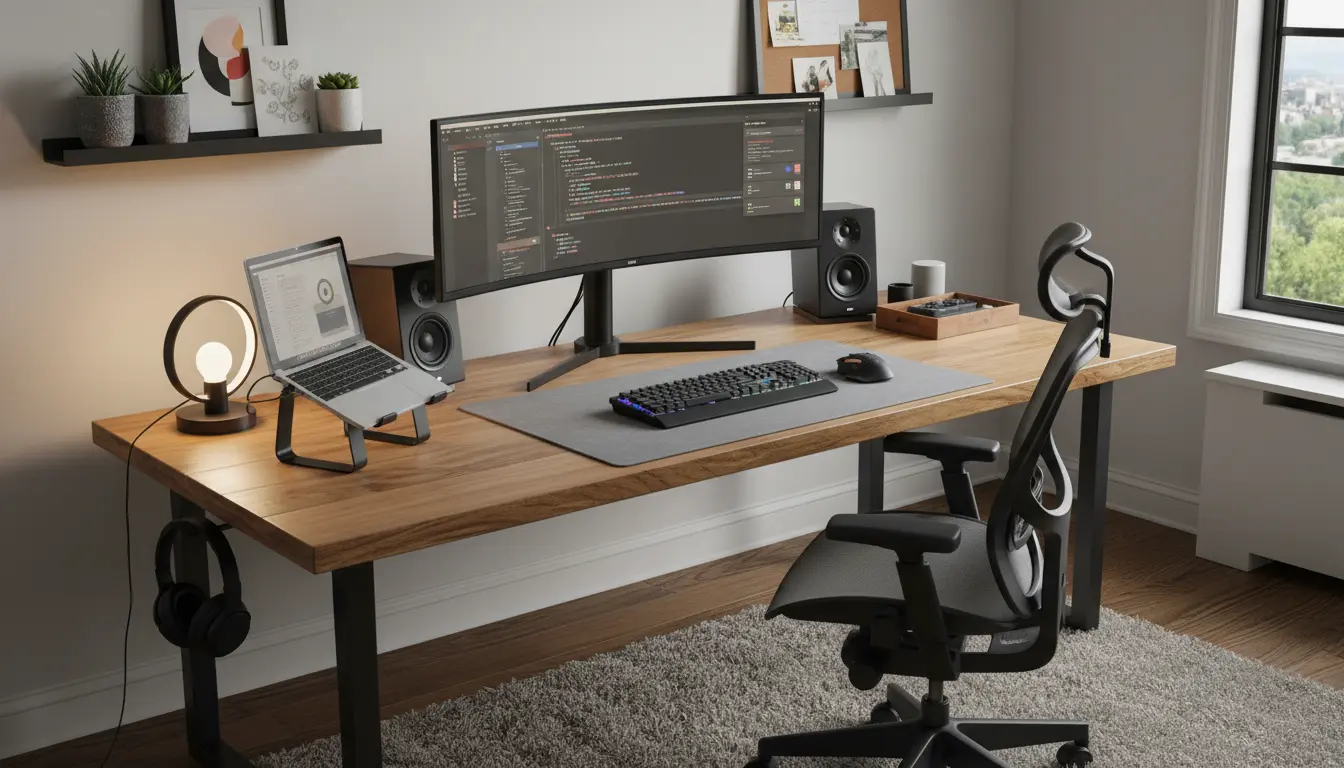
Home Office Ergonomics Quick Overview
Home office ergonomics focuses on arranging your workspace to reduce strain and improve comfort. Proper setup helps prevent pain, fatigue, and long-term injury while supporting productivity.
Why Home Office Ergonomics Matters
Poor posture and bad equipment are common causes of neck, shoulder, and back pain for remote workers. Fixing a few key elements often produces immediate benefits in comfort and focus.
Home Office Ergonomics: Core Principles
Core ergonomic principles are simple: neutral posture, proper support, and regular movement. Apply these to your desk, chair, monitor, and accessories for best results.
Home Office Ergonomics Setup: Step-by-Step
Follow this checklist to create an ergonomic home workspace. Each step targets a specific risk factor so you can address issues methodically.
- Adjust chair height so feet rest flat and knees form about a 90-degree angle.
- Place the top of the monitor at or just below eye level to avoid neck strain.
- Keep elbows close to your body and wrists straight while typing.
- Position frequently used items within easy reach to avoid repetitive twisting.
- Use appropriate lighting to reduce glare and eye strain.
Home Office Ergonomics: Monitor and Screen Height
Monitor height is one of the simplest but most effective adjustments you can make. Raising or lowering the screen to keep the top third at eye level reduces forward head posture.
Home Office Ergonomics: Chair and Seating
Choose a chair with lumbar support and adjustable height to maintain the natural curve of your lower back. If a proper chair is not available, a rolled towel or small cushion can provide temporary lumbar support.
Accessories That Improve Ergonomics
Small accessories often deliver big ergonomic gains without major expense. Consider a few targeted tools to optimize comfort and posture.
- External keyboard and mouse to keep arms relaxed and wrists neutral.
- Adjustable monitor stand or laptop riser to set correct screen height.
- Footrest if your feet do not sit flat on the floor when the chair is adjusted.
- Document holder to keep papers aligned with the screen and reduce neck twisting.
Home Office Ergonomics: Keyboard and Mouse Placement
Keep the keyboard centered in front of you with the mouse close by to limit reaching. Use a wrist rest only for breaks; avoid resting wrists on it while typing.
Microbreaks and Movement
Even with a perfect setup, prolonged static posture causes fatigue. Schedule short microbreaks every 30 to 60 minutes to stand, stretch, or walk for one to two minutes.
- Neck tilts and shoulder rolls relieve tension from computer work.
- Standing for a minute or two reactivates circulation and reduces stiffness.
- Simple stretches can be done at your desk without special equipment.
Adjusting monitor height by just 2 to 3 inches can cut neck strain and reduce reports of headaches among office workers. Small changes often deliver large benefits.
Lighting and Visual Ergonomics
Avoid glare by positioning your monitor perpendicular to windows and overhead lights. Use task lighting that illuminates paperwork without causing reflections on the screen.
Home Office Ergonomics: Reducing Eye Strain
Follow the 20-20-20 rule: every 20 minutes, look at something 20 feet away for 20 seconds. Adjust text size and contrast for comfortable reading and reduce blue light in the evening if you work late.
Small Real-World Case Study
Sarah, a marketing specialist, experienced daily neck pain after switching to full-time remote work. She adjusted her monitor height, added lumbar support, and took microbreaks; her pain reduced within two weeks and focus improved.
The changes Sarah made were inexpensive and practical, showing how targeted ergonomic fixes can have measurable effects on wellbeing and productivity. Her example highlights that many issues are solvable without replacing major equipment.
Ergonomic Checklist You Can Use Today
Use this quick checklist to evaluate your workspace and make fast improvements. Ticking these items off will reduce discomfort and support sustainable remote work.
- Feet flat on floor or supported by footrest.
- Knees at or slightly below hip level.
- Top of monitor at eye level and 20–30 inches from eyes.
- Elbows close to body and wrists straight while typing.
- Frequent movement breaks scheduled into the day.
When to Seek Professional Help
If pain persists after making ergonomic adjustments, consult a medical professional or an occupational therapist. Persistent numbness, tingling, or sharp pain may indicate an underlying condition that needs assessment.
Final Tips for Sustainable Home Office Ergonomics
Start with one or two changes and evaluate results over a week to see what helps most. Keep adjustments gradual and consistent to build habits that support long-term comfort and productivity.
Regularly revisit your setup as your work changes, and remember that even small, low-cost tweaks can produce significant improvements in wellbeing.