
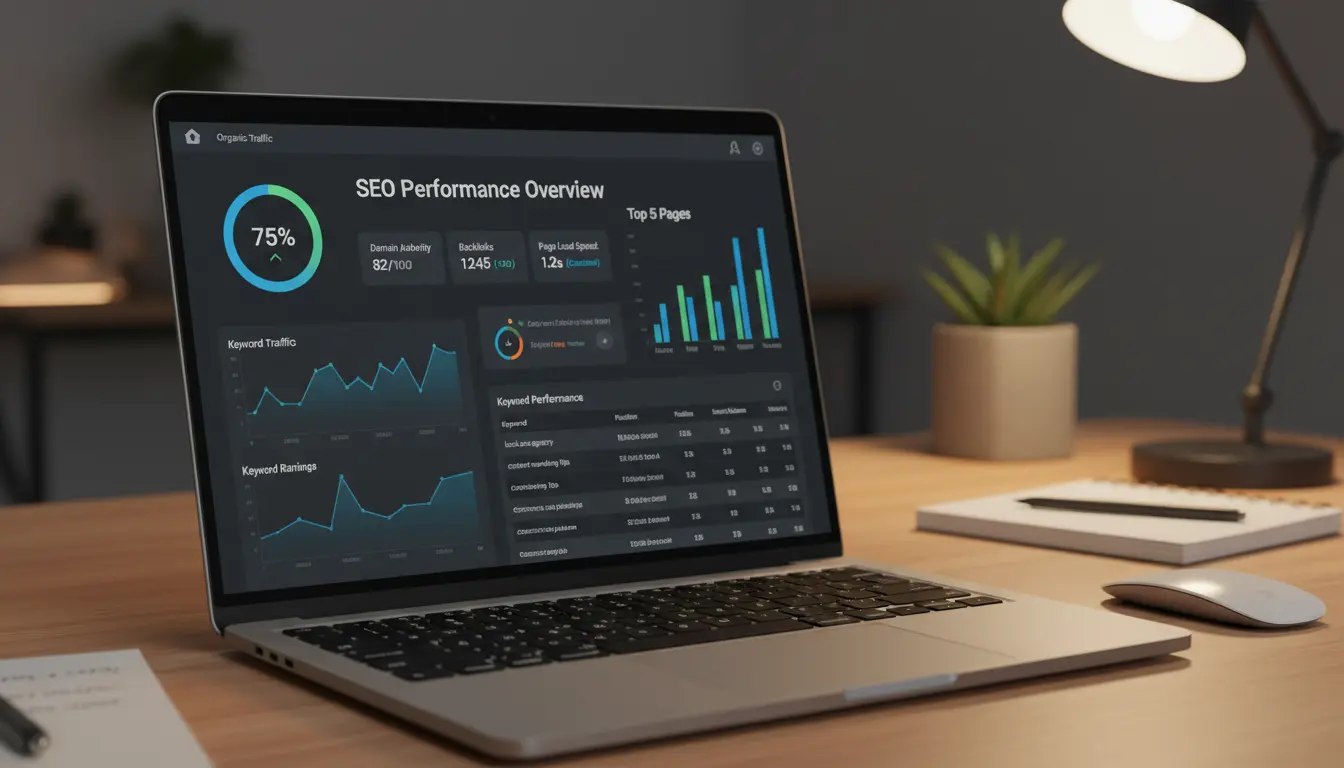
Use this on-page SEO checklist to make clear, measurable updates to individual pages. The steps below focus on elements you can control without heavy technical work.
Why use an on-page SEO checklist
An on-page SEO checklist keeps work consistent and repeatable across many pages. It reduces missed opportunities and helps prioritize changes that affect search visibility and click-through rates.
Essential on-page SEO checklist items
Below are the core items to review on every page. Work through them in order to ensure the page is optimized for both users and search engines.
Title Tag — on-page SEO checklist
Create a clear title tag that includes the main keyword near the front. Keep it under 60 characters so it displays fully in search results.
Meta Description — on-page SEO checklist
Write a useful meta description that summarizes the page and includes the main keyword naturally. Aim for 120 to 155 characters to maximize display space.
Heading Structure — on-page SEO checklist
Use one H1 per page and H2/H3 for subsections. Include the target keyword in at least one H2 and one H3 where it fits naturally.
Content Quality — on-page SEO checklist
Provide original, helpful content that satisfies user intent. Aim for focused sections, clear examples, and actionable advice rather than thin summaries.
URL Structure — on-page SEO checklist
Short, descriptive URLs help users and search engines. Use hyphens, keep URLs under 75 characters, and include the main keyword when possible.
Internal Linking — on-page SEO checklist
Link to related pages using descriptive anchor text. Internal links distribute authority and help search engines understand topic relationships.
Image Optimization — on-page SEO checklist
Compress images for fast load times and add descriptive alt text that includes keywords when relevant. Use modern formats like WebP where supported.
Page Speed — on-page SEO checklist
Fast pages reduce bounce rates and help SEO. Use caching, minimize JavaScript, and defer noncritical resources to improve load times.
Mobile Usability — on-page SEO checklist
Ensure content is readable on small screens and touch targets are well spaced. Use responsive design and test in Google Mobile-Friendly Test.
Schema Markup — on-page SEO checklist
Add schema where it helps: article, product, FAQ, breadcrumb, and local business schemas can improve how pages appear in search results.
How to run the checklist
Use a consistent process to audit and apply changes. Work in batches and track results to learn which changes move the needle.
- Step 1: Export a list of pages and their current titles, meta descriptions, and traffic.
- Step 2: Prioritize pages by traffic, conversions, or potential keyword relevance.
- Step 3: Apply checklist items to each page, starting with title and meta updates.
- Step 4: Monitor performance in Search Console and analytics for 4 to 12 weeks.
Tools to help with the on-page SEO checklist
- Google Search Console for impressions and queries.
- PageSpeed Insights or Lighthouse for speed issues.
- Content tools for readability and keyword coverage.
- Structured data testing tool for schema validation.
Pages with clear, specific title tags and meta descriptions can see higher click-through rates even without ranking changes. Small text changes can deliver measurable traffic gains.
Case study: Local bakery uses on-page SEO checklist
A small bakery optimized three product pages using this on-page SEO checklist. They updated title tags, improved product descriptions, added FAQ schema, and compressed images.
Results in 10 weeks:
- Organic impressions up 45 percent.
- Click-through rate on product pages rose from 1.8% to 3.7%.
- Average page load time dropped from 3.8s to 1.9s.
Key actions that delivered results included adding specific long-tail keywords to titles, writing benefits-focused meta descriptions, and adding FAQ schema that produced rich snippets.
Common mistakes on the on-page SEO checklist
- Keyword stuffing in titles or content instead of natural use.
- Duplicate title tags across many pages.
- Ignoring mobile layout and font sizes.
- Large uncompressed images that slow the page down.
Quick checklist summary
- Title tag with keyword, under 60 characters.
- Descriptive meta description with keyword, 120-155 characters.
- One H1, logical H2/H3 structure with keyword placement.
- High-quality content that meets user intent.
- Optimized images, fast loading, mobile-friendly design.
- Relevant schema and internal links.
Run this on-page SEO checklist periodically, especially after site redesigns or content updates. Small, consistent improvements compound over time and make your pages more competitive in search results.