
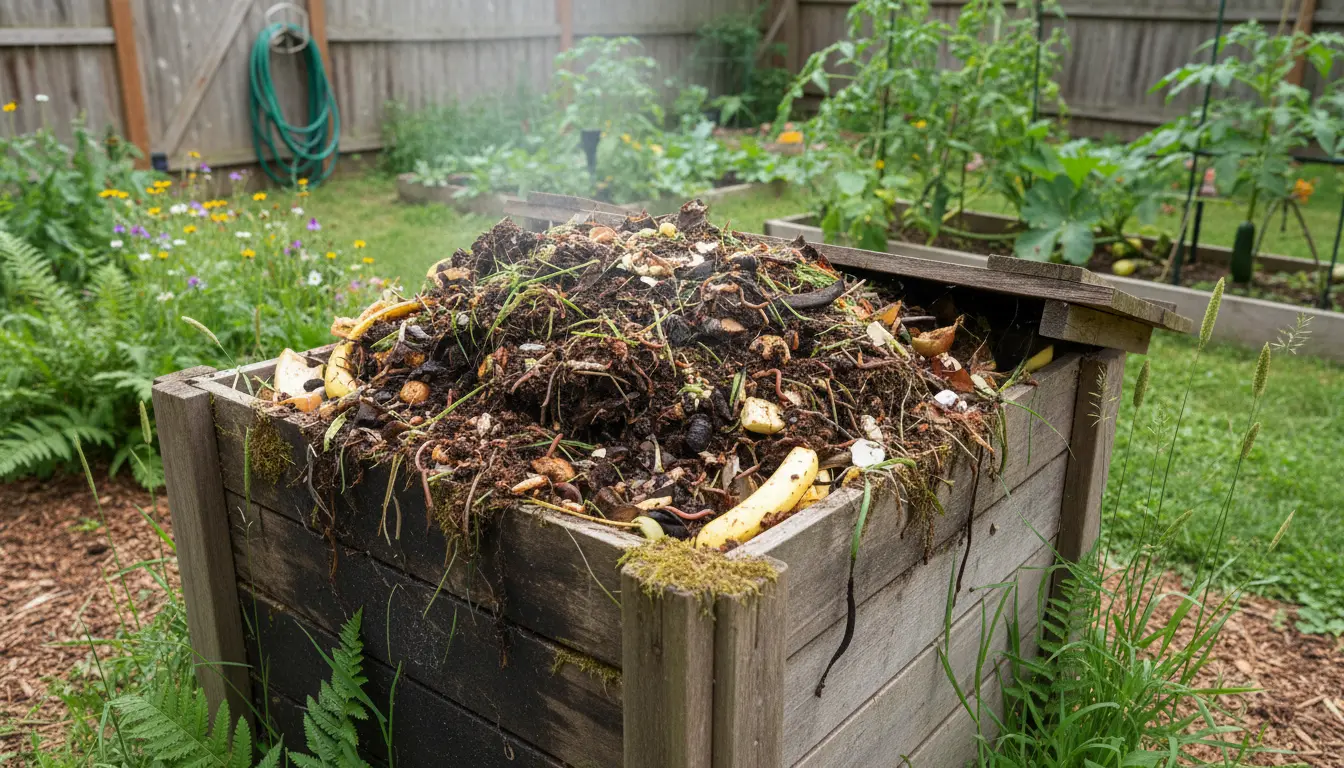
Home composting turns kitchen scraps and yard waste into nutrient-rich soil. This guide gives clear, practical steps you can follow today, whether you have a backyard, balcony, or small apartment.
Why home composting matters
Composting reduces trash, lowers methane emissions from landfills, and returns organic matter to soil. It is simple and cost-effective for homeowners and renters alike.
Even small efforts add up. A single household can keep hundreds of pounds of organic waste out of the trash each year.
Home composting basics
Compost needs three things: carbon (browns), nitrogen (greens), and the right amount of moisture and air. Balance and regular management speed decomposition and prevent odors.
- Greens: kitchen scraps, fresh grass clippings, coffee grounds.
- Browns: dry leaves, shredded paper, straw, cardboard.
- Moisture: should feel like a wrung-out sponge.
- Air: turn or aerate to keep microbes active.
Setting up your home composting system
Pick a method that fits your space and commitment level. Common options include a simple bin, tumbler, or a worm composting setup for small indoor spaces.
Choosing the right container for home composting
Bins are inexpensive and low-effort. Tumblers speed up decomposition and make turning easy. Worm bins (vermicomposting) work well indoors and handle cooked food better if managed correctly.
Location and size
Place your compost on soil or a stable surface with good drainage. Keep it accessible so you’ll use it. Choose a size based on how much waste you produce—20–40 gallons is common for a small household.
Step-by-step composting process
- Start with a base layer of coarse browns like twigs or straw to promote airflow.
- Add alternating layers of greens and browns. Aim for roughly 2–3 parts browns to 1 part greens by volume.
- Moisten each layer as you build. The pile should be damp but not dripping.
- Turn or tumble the mix every 1–2 weeks to introduce air and speed up the process.
- Monitor temperature. A hot pile (120–160°F or 50–70°C) breaks down materials faster; if it cools, turning and adding greens can help.
- Harvest finished compost in 2–6 months depending on method and conditions.
Common problems and fixes for home composting
- Smelly compost: add more browns and turn to increase airflow.
- Pile too dry: add water and greens.
- Pile too wet: add shredded paper, dry leaves, or cardboard and turn.
- Pests: avoid meat, dairy, and oily foods; use a closed bin or secure lid.
Composting can reduce household waste by up to 30 percent. Finished compost improves soil structure, increases water retention, and adds slow-release nutrients to plants.
Small real-world example: A balcony compost success
Case: Sara, a city renter with a small balcony, started a 10-gallon worm bin. She fed it fruit and vegetable scraps and shredded paper. After three months she harvested a dark, crumbly compost and used it to pot herbs and tomatoes.
Result: Her weekly trash decreased, her plants grew faster, and she avoided odors by keeping the bin slightly moist and feeding the correct items.
Tips to speed composting at home
- Chop or shred materials to increase surface area and speed decomposition.
- Maintain a balanced carbon-to-nitrogen ratio; start with more browns if unsure.
- Use a compost thermometer to monitor temperature for hot composting.
- Rotate multiple bins if you want a continuous supply of finished compost.
Using finished compost
Finished compost looks dark, crumbly, and smells earthy. Use it as a soil amendment, potting mix ingredient, or top dressing for lawns and garden beds.
Apply a 1–2 inch layer to garden beds or mix one part compost to three parts garden soil for potting. Compost gradually releases nutrients and improves soil life.
Final checklist for home composting beginners
- Choose a bin or method that fits your space.
- Collect greens and browns separately to maintain balance.
- Keep the pile moist and aerated.
- Avoid banned items (meat, dairy, pet waste) unless using a specialist system.
- Harvest and use finished compost to close the loop.
Home composting is practical, affordable, and effective. Start small, monitor your pile, and adapt your routine as you learn. Within months you can turn waste into a resource that benefits your plants and the planet.