
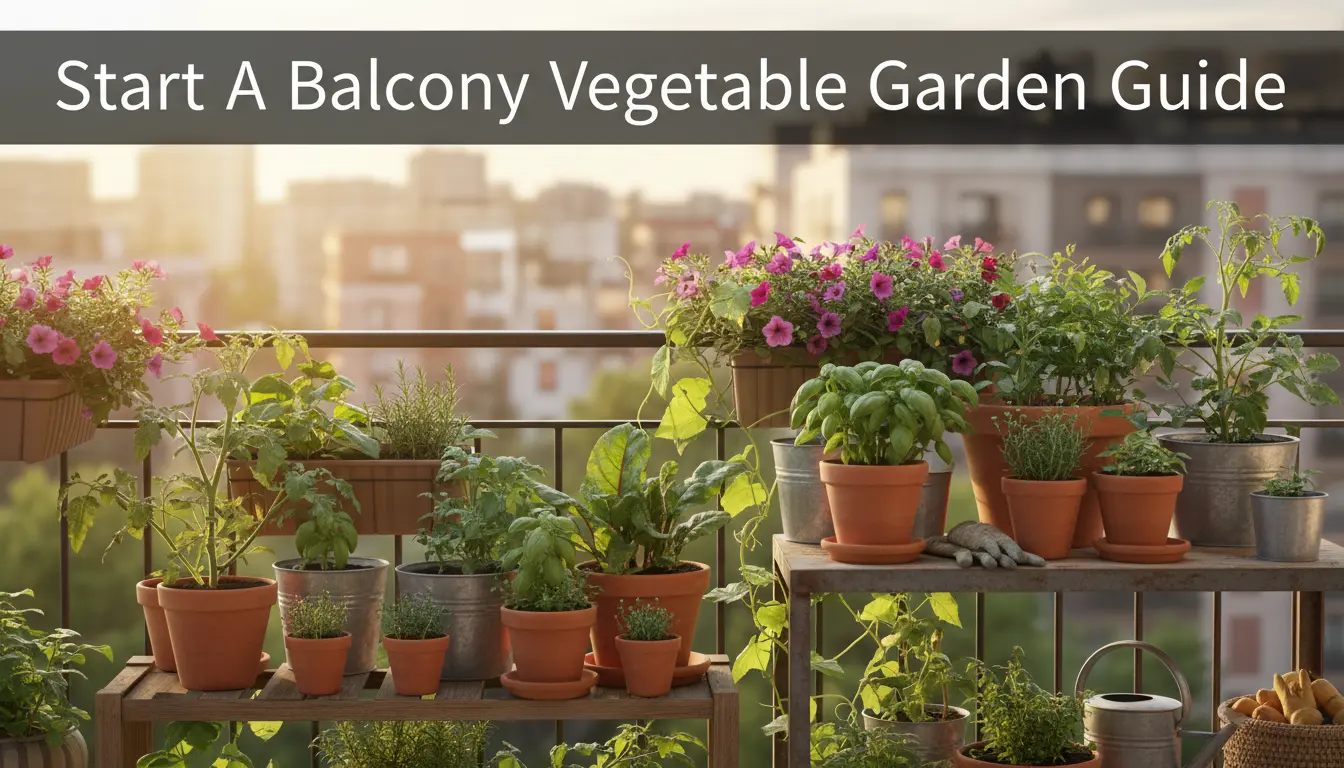
Why a Balcony Vegetable Garden Works
A balcony vegetable garden is a realistic way to grow fresh produce in limited space. It delivers herbs, salad greens, and small vegetables close to your kitchen and reduces trips to the store.
This guide gives clear steps you can follow, with practical tips on containers, soil, plant choice, and care. It is aimed at beginners who want a reliable, low-fuss start.
Getting Started with a Balcony Vegetable Garden
Begin by assessing your balcony for light, weight limits, and space. Most vegetables need 4–6 hours of direct sunlight; herbs and salad greens can tolerate less.
Measure available area and note railings or walls you can use for vertical space. This first check will direct container choices and plant selection.
Space Planning for a Balcony Vegetable Garden
Plan a layout that balances access and sun exposure. Place taller containers where they won’t shade smaller pots.
- Measure floor space and railing length.
- Reserve a clear path for watering and harvest.
- Use vertical racks or hanging planters to increase capacity.
Choosing Containers and Soil for a Balcony Vegetable Garden
Select containers with drainage holes and strong material for outdoor use. Lightweight plastic, fabric grow bags, and resin planters are good for balconies with weight limits.
Use a high-quality potting mix — not garden soil. Potting mixes drain well and retain moisture for container-grown vegetables.
Plant Selection and Layout for a Balcony Vegetable Garden
Choose plants suited to container culture and your climate. Fast-growing, compact varieties are ideal for balcony spaces.
Good beginner choices include herbs, lettuce, cherry tomatoes, peppers, radishes, and bush beans. Pair plants by water needs and sunlight requirements.
Sample Planting List for a Small Balcony Vegetable Garden
- Herbs: Basil, parsley, chives
- Leafy greens: Lettuce, arugula, spinach
- Fruiting: Dwarf tomatoes, compact peppers
- Root vegetables: Radishes, baby carrots
Care and Maintenance for a Balcony Vegetable Garden
Containers dry out faster than ground soil, so regular watering is essential. Monitor pots daily during heat waves and less often in cool weather.
Fertilize container plants every 2–4 weeks with a balanced liquid fertilizer or slow-release granules to replace nutrients lost in runoff.
Watering and Feeding a Balcony Vegetable Garden
Water thoroughly until water drains from the pot bottom, then allow the top inch of soil to dry for most vegetables. Overwatering causes root rot, so avoid constantly soggy soil.
- Morning watering reduces evaporation and fungal risk.
- Use self-watering pots or drip systems for hands-off care.
- Apply balanced fertilizer or compost tea on a regular schedule.
Pest Control and Common Problems in a Balcony Vegetable Garden
Urban balconies face aphids, slugs, whiteflies, and fungal disease. Early detection and simple measures keep problems small.
- Inspect leaves weekly for pests or damage.
- Use insecticidal soap or manual removal for small infestations.
- Improve airflow and avoid overhead watering to lower fungal risk.
Many vegetables can thrive in just 6–12 inches of soil depth if planted in wide containers. Lettuce, radishes, and many herbs need surprisingly little depth to produce a steady harvest.
Small Case Study: 6-Month Balcony Vegetable Garden
Maria, an apartment resident, converted a 6-foot-wide south-facing balcony into a productive patch. She used three 12-inch containers, two hanging planters, and vertical shelving for herbs.
Within six months she harvested basil, salad greens weekly, and three harvests of cherry tomatoes. Her approach: consistent morning watering, biweekly feeding, and rotating herbs to replace tired plants.
Key results: continuous salad greens, fresh basil for cooking, and reduced grocery herb purchases by half.
Quick Checklist to Start Your Balcony Vegetable Garden
- Assess light and weight limits
- Choose containers with good drainage
- Buy quality potting mix and starter fertilizer
- Select 4–6 beginner-friendly plants
- Create a watering and feeding routine
- Plan for pest checks and minor treatments
Examples and Practical Tips for Success
If space is limited, try staggered planting: sow lettuce every two weeks to maintain a continuous supply. Companion planting, like basil next to tomatoes, can help flavor and deter pests.
Keep an empty pot on hand for replanting when a crop finishes. Small adjustments each season improve yields and reduce mistakes over time.
Final Steps to Launch Your Balcony Vegetable Garden
Start with a simple setup and one or two types of vegetables. Track what succeeds and what needs changing, then expand in the next season.
With regular care and small investments in good containers and soil, a balcony vegetable garden will reward you with fresh, convenient produce and the satisfaction of growing your own food.