
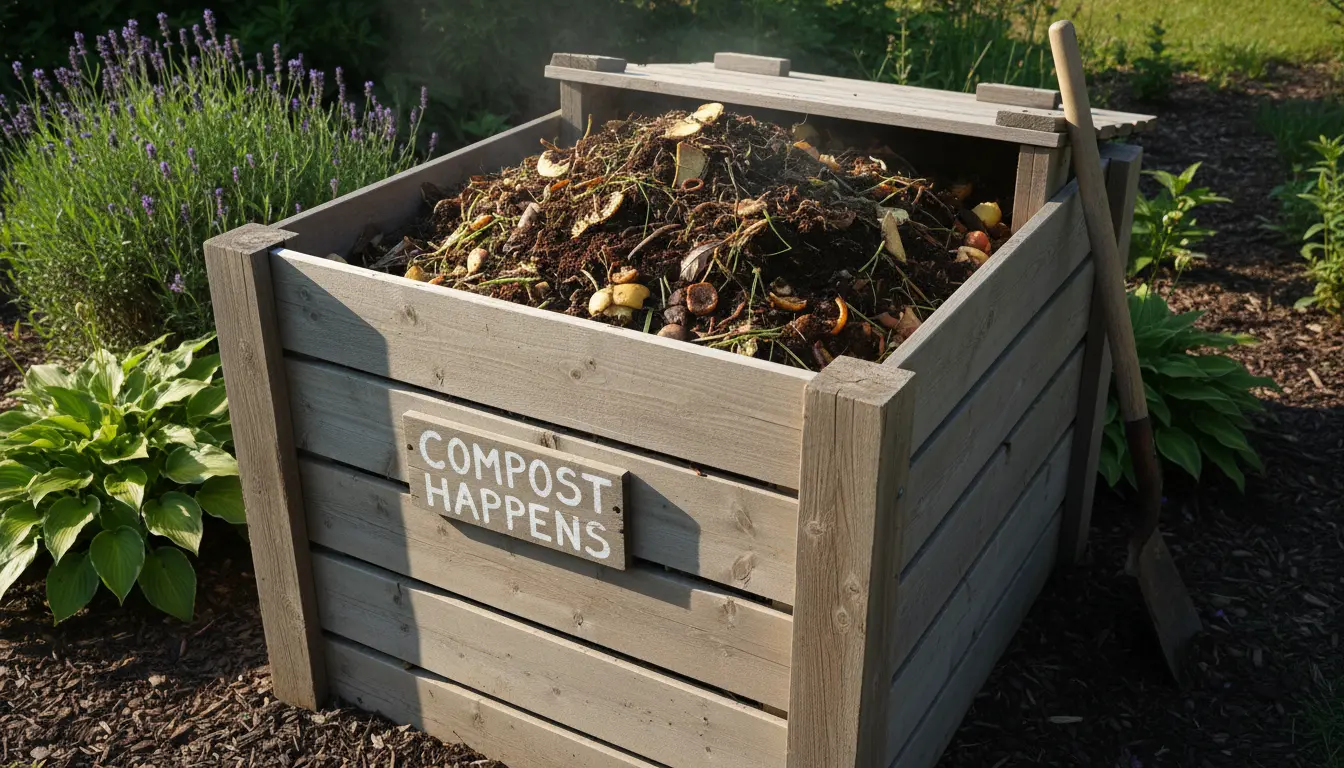
Why Home Composting for Beginners Works
Home composting is a low-cost, low-effort way to turn kitchen and yard waste into nutrient-rich soil. Beginners can start with simple methods and scale up as they learn what works in their space.
Getting Started with Home Composting for Beginners
Choose a method that fits your living situation. Small gardens and apartments can use a tumbling bin or worm composting, while yards can use a simple heap or open bin.
Follow these initial steps to begin:
- Pick a container or location with some airflow and easy access.
- Collect a mix of brown (carbon) and green (nitrogen) materials.
- Keep the pile moist and turn it periodically to add oxygen.
Essential Tools for Home Composting for Beginners
You do not need expensive equipment. A few basic items help maintain a healthy compost system and reduce problems.
- Container: tumblers, buckets, or a wooden bin.
- Garden fork or compost aerator to turn the pile.
- Kitchen pail with a tight lid for collecting food scraps.
- Thermometer (optional) to monitor compost temperature.
What to Compost and What to Avoid
Knowing what goes into the pile prevents odors and pests. Balance is the key; aim for roughly a 3:1 ratio of browns to greens by volume.
- Good browns: dry leaves, shredded paper, cardboard, straw.
- Good greens: vegetable scraps, coffee grounds, fresh grass clippings.
- Avoid: meat, dairy, oils, diseased plants, and pet waste.
Practical Tips for Balancing Your Compost
If the pile smells, add more browns and turn it. If it is dry and slow to decompose, add water and greens. Small adjustments keep decomposition steady and prevent problems.
Simple Composting Methods for Beginners
Choose one method and stick with it for a few weeks to learn its rhythms. Each method has benefits for different situations.
Cold Pile (Low Maintenance)
Build layers of browns and greens and let them decompose slowly. This requires minimal turning and is ideal for low-effort gardeners.
Tumbler (Fast and Clean)
A tumbler speeds up decomposition and keeps pests out. Rotate the tumbler every few days to mix and aerate the contents.
Vermicomposting (Indoor, Worm-Based)
Worm bins are excellent for apartments and produce fine, nutrient-rich castings. Use red wiggler worms and keep the bin in a shaded, moderate-temperature spot.
Troubleshooting Common Problems
Beginners often encounter a few common issues. Troubleshooting quickly keeps the system healthy.
- Smelly pile: Add more brown material and turn the pile to introduce air.
- Slow decomposition: Check moisture and add greens; chop larger materials into smaller pieces.
- Fruit flies: Cover fresh food scraps with a layer of browns or use a closed bin.
How to Know When Compost Is Ready
Finished compost is dark, crumbly, and smells earthy. Most composting systems produce usable compost in 2 to 12 months depending on method and care.
- Fast systems (hot composting, tumblers): 2–3 months with active turning.
- Slow systems (cold pile): 6–12 months without frequent turning.
- Vermicompost: 3–6 months depending on input and conditions.
Small Case Study: Neighborhood Starter Compost
In a small suburban neighborhood, five households pooled kitchen scraps into a shared 200-liter tumbler. They rotated it twice weekly and added yard leaves from a local tree trimmer.
After four months, they produced roughly 150 liters of finished compost. Each household used the compost to top-dress garden beds, reducing purchased soil amendments by 70 percent that season.
Practical Weekly Routine for Home Composting for Beginners
Establish a simple habit to keep your compost active without extra effort. A consistent routine prevents buildup and keeps decomposition steady.
- Daily: Add kitchen scraps to a covered pail and bury them in the bin or cover with browns.
- Weekly: Turn the pile or rotate the tumbler; check moisture level.
- Monthly: Add a large layer of shredded paper or dry leaves to balance greens.
Final Steps and Next Moves
Once you have finished compost, apply it as a soil amendment, mulch, or potting mix component. Start small and expand your system as you gain confidence.
Begin with one simple method, track what you add, and adjust brown-to-green ratios for better results. Composting is a practical skill that improves with observation and small changes.
Ready to start? Choose a bin, gather your first mix of browns and greens, and commit to a weekly turning schedule. In a few months you will have rich, homemade compost for your plants.