
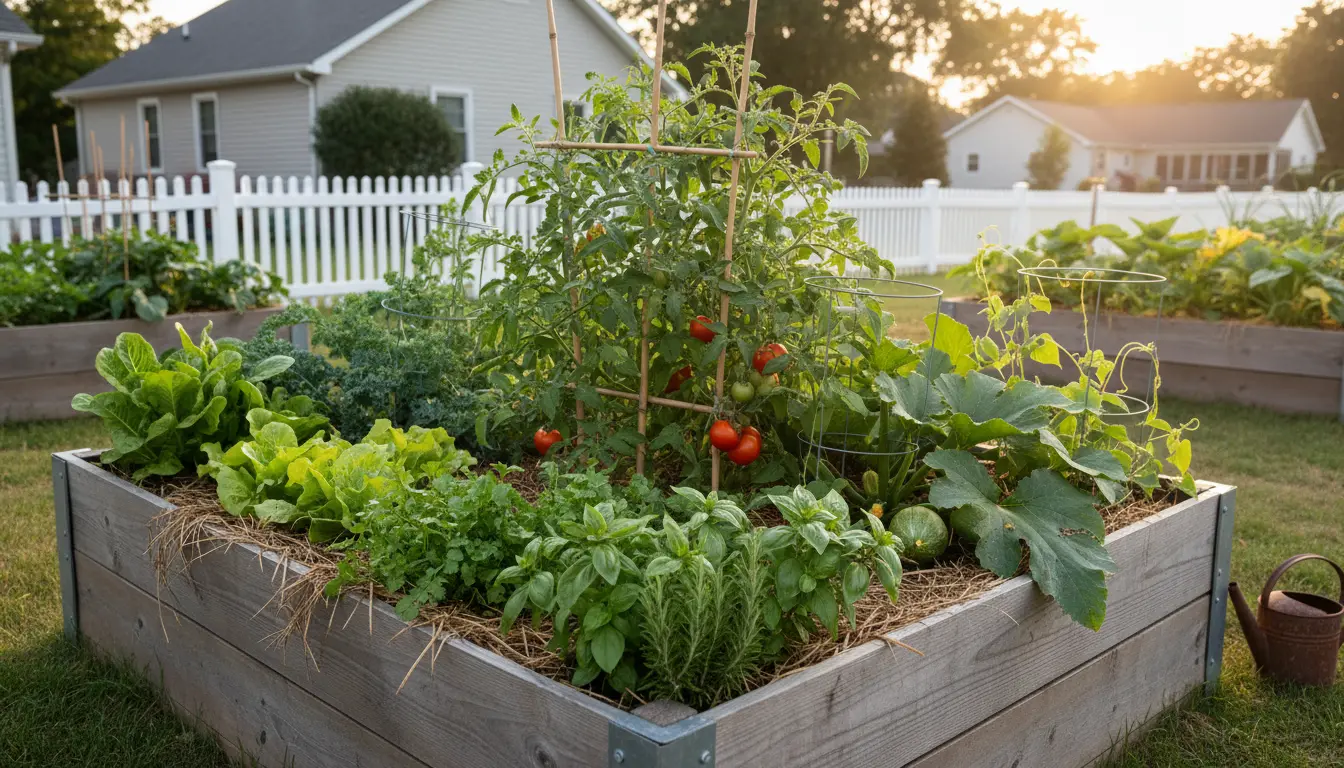
How to Start a Vegetable Garden: Overview
Starting a vegetable garden is a practical way to grow fresh produce, save money, and enjoy outdoor activity. This guide breaks the process into clear steps so beginners can build a productive garden with minimal stress.
Plan Your Vegetable Garden
Good planning reduces wasted effort. Start by selecting a site with at least 6 hours of direct sunlight and easy access to water.
Decide on garden style: in-ground rows, raised beds, or containers. Each has trade-offs for space, soil control, and cost.
Choosing Vegetables for Your Vegetable Garden
Pick vegetables that match your climate, season, and cooking habits. Fast-growing, reliable choices for beginners include lettuce, radishes, tomatoes, and beans.
Consider these factors when choosing varieties:
- Days to maturity — short-season varieties give quick results.
- Space needs — vining plants need trellises or more room.
- Pest resistance — choose varieties labeled resistant when possible.
Prepare Soil and Beds for Your Vegetable Garden
Healthy soil is the foundation of a productive vegetable garden. Test the soil pH if possible; most vegetables prefer pH 6.0–7.0.
For raised beds or poor soil, bring in a mix of compost and topsoil. Aim for a loose, crumbly texture that drains well.
Soil Preparation Steps
- Clear weeds and grass from the planting area.
- Loosen soil to 8–12 inches depth with a fork or tiller.
- Incorporate 2–4 inches of compost or well-rotted manure.
- Level the bed and water it gently before planting.
Planting and Care in Your Vegetable Garden
Follow seed packet or plant label instructions for spacing and depth. Stagger planting times for continuous harvest, especially with lettuces and greens.
Establish a simple watering routine. Most vegetable gardens need 1–1.5 inches of water per week, supplied evenly to roots.
Routine Tasks for a Healthy Vegetable Garden
- Water deeply once or twice weekly rather than light daily sprinkling.
- Mulch around plants to retain moisture and reduce weeds.
- Fertilize based on soil test results or use a balanced organic feed every 3–4 weeks.
- Monitor pests and remove damaged leaves early to prevent spread.
Common Problems and Quick Fixes
Yellowing leaves often indicate nutrient or water issues. Check soil moisture and consider a light application of balanced fertilizer.
Pests like aphids or caterpillars can be managed with hand-picking, insecticidal soap, or barriers like row covers.
Harvesting Tips for Your Vegetable Garden
Harvest regularly to encourage continued production. Pick tomatoes when fully colored and slightly soft to the touch.
Leafy greens can be harvested using the cut-and-come-again method, taking outer leaves while leaving the center to regrow.
Interplanting (planting different crops close together) can reduce pests and improve yields by maximizing space and confusing pests.
Case Study: Small Raised Bed Success
Emma in Portland started a 4×4 foot raised bed in spring with mixed soil and compost. She planted cherry tomatoes, bush beans, lettuce, and basil.
By mid-summer she harvested daily salad greens and several pints of cherry tomatoes weekly. Key actions: regular mulching, weekly compost tea, and a trellis for beans.
This small investment produced fresh vegetables for a family of two and reduced grocery purchases for salad ingredients by nearly half during the season.
Quick Checklist to Start a Vegetable Garden
- Choose sunny site and garden style (bed, container, in-ground).
- Select easy vegetables based on season and taste.
- Prepare soil: clear, loosen, add compost.
- Plant using correct spacing and depth.
- Water, mulch, and monitor for pests regularly.
Final Notes on Starting a Vegetable Garden
Start small and expand as you learn what grows well in your space. Keep simple records of planting dates and yields to improve future seasons.
With basic planning, consistent care, and a willingness to experiment, anyone can start a vegetable garden that supplies fresh produce through the growing season.