
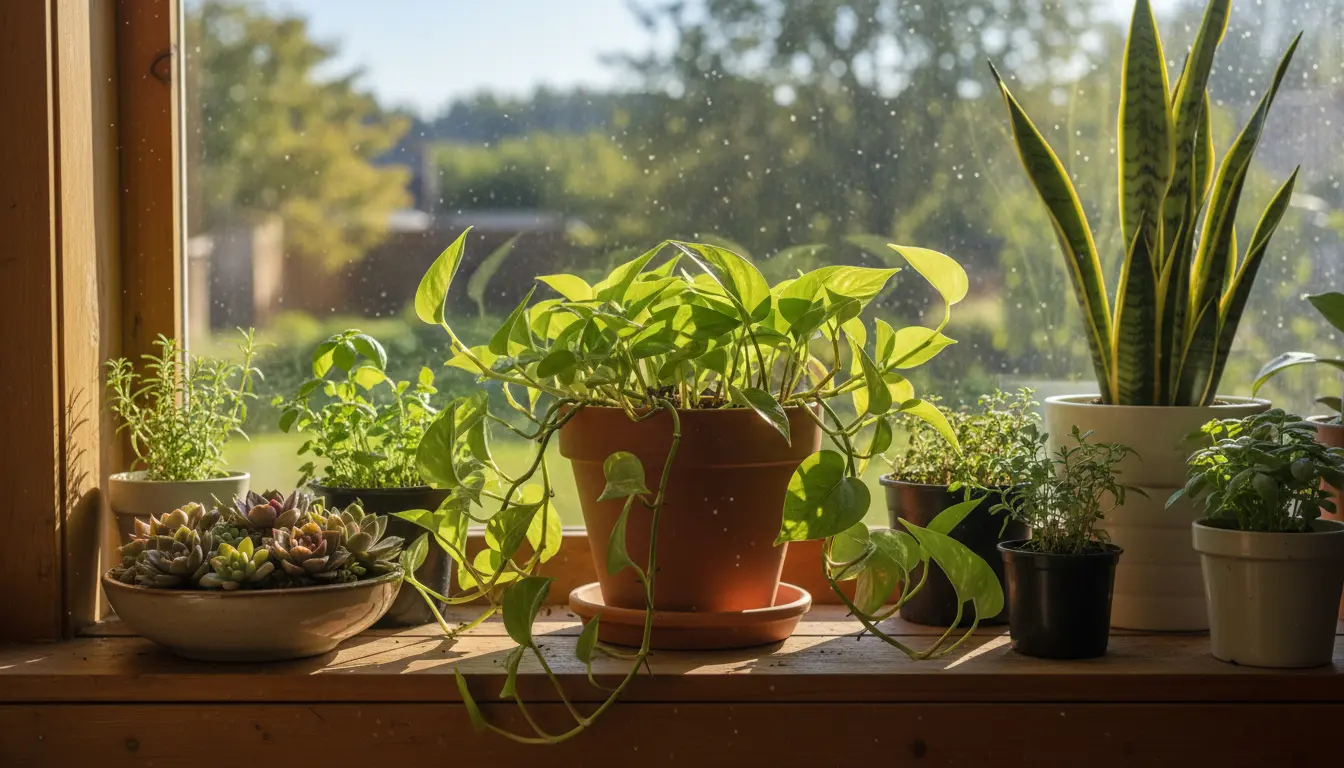
Indoor Plant Care Basics
Indoor plant care focuses on four core needs: light, water, soil, and humidity. Meeting these consistently keeps plants healthy and reduces common problems like yellowing leaves or root rot.
Understanding Your Plant Type
Start by identifying whether your plant prefers high, medium, or low light and whether it is a succulent, tropical, or foliage plant. This classification guides watering frequency, potting mix choice, and placement in your home.
Light Requirements for Indoor Plant Care
Light is the single biggest factor for most houseplants. Observe natural light in your space through the day and match plants accordingly.
Practical Light Guide
- High light: south-facing windows or several hours of direct sun—best for succulents and cacti.
- Medium light: bright, indirect light—suitable for most tropical plants like pothos and philodendron.
- Low light: north-facing windows or rooms with limited daylight—choose snake plants and ZZ plants.
Watering Tips for Indoor Plant Care
Overwatering is the most common mistake. Water needs vary by species, pot size, and season, so adopt a simple routine you can follow reliably.
Simple Watering Rules
- Check the top 1–2 inches of soil; water when it feels dry for most tropical plants.
- For succulents and cacti, let the soil dry almost completely between waterings.
- Use room-temperature water and water thoroughly until excess drains from the pot.
Tip: Use pots with drainage holes and avoid leaving plants sitting in standing water.
Soil, Pots, and Repotting
The right soil and pot size affect root health and water retention. Use mixes tailored to plant type to prevent waterlogging or rapid drying.
Soil and Pot Checklist
- Tropical foliage plants: use a peat-based, well-draining potting mix.
- Succulents/cacti: use a gritty, fast-draining mix with perlite or pumice.
- Repot every 12–24 months or when roots emerge from drainage holes.
Humidity and Temperature Considerations
Many houseplants come from humid, warm environments. Low home humidity can cause leaf browning and drop in sensitive species.
How to Raise Humidity
- Group plants together to create a microclimate.
- Use a humidity tray with pebbles and water beneath the pot base (not touching soil).
- Consider a small humidifier for very dry rooms or winter months.
Pest Management and Common Problems
Indoor plants can attract pests like spider mites, mealybugs, and scale. Early detection and routine checks prevent infestations from spreading.
Quick Pest Response
- Inspect leaves weekly, especially under large leaves and near new growth.
- Isolate new plants for two weeks before adding to your collection.
- Treat small infestations with insecticidal soap or neem oil; for heavy infestations, repeat treatments every 7–10 days.
Creating a Weekly Plant Care Routine
Consistency matters more than perfect technique. A short, repeatable routine keeps plants healthy without taking much time.
Example Weekly Routine
- Monday: Check soil moisture and water as needed.
- Wednesday: Inspect leaves and stems for pests or disease.
- Saturday: Rotate plants for even light and wipe dusty leaves with a damp cloth.
Case Study: Reviving an Overwatered Fiddle Leaf Fig
Maria bought a young fiddle leaf fig and placed it near a bright window. She watered it twice weekly out of habit and noticed yellowing leaves and soft stems within a month.
Steps Maria Used to Recover the Plant
- She removed the plant from its pot, trimmed mushy roots, and let the root ball dry for 24 hours.
- She repotted it in a well-draining mix and a pot with drainage holes, then watered sparingly until new growth appeared.
- Within six weeks the plant stabilized and new leaves formed, showing the effectiveness of adjusting watering and soil.
This quick case shows how correct diagnosis and simple fixes—drainage, soil, and watering—restore plant health.
Practical Tools and Supplies
Equip yourself with a few inexpensive items that make care easier and more precise. These tools save time and reduce common mistakes.
- Moisture meter: helps avoid guesswork with watering frequency.
- Hand pruners or sharp scissors: keep plants tidy and remove damaged growth.
- Small watering can with a narrow spout: avoids overwatering and splashing soil.
Final Tips for Sustainable Indoor Plant Care
Start with easy plants and learn from each plant’s response to your environment. Keep notes on watering intervals, light placement, and any treatments you use.
Small, consistent actions—monitoring light, using the right soil, and a weekly check—will keep your indoor garden thriving. Stay observant and patient; plants respond slowly but reliably to good care.