
Start Home Composting for Beginners: What You Need to Know
Home composting is a practical way to reduce kitchen waste and create rich soil for plants. This guide explains simple methods, necessary materials, and common problems with clear, actionable steps.
Why Choose Home Composting for Beginners
Composting reduces landfill waste and returns nutrients to the soil. For beginners, small systems like countertop bins or backyard piles are affordable and low maintenance.
Benefits include less trash, lower methane emissions, and healthier garden soil. You can start with minimal space and scale up as you learn.
How to Start Home Composting for Beginners
Choose a Composting Method
Pick a method that fits your space and lifestyle. Common options include:
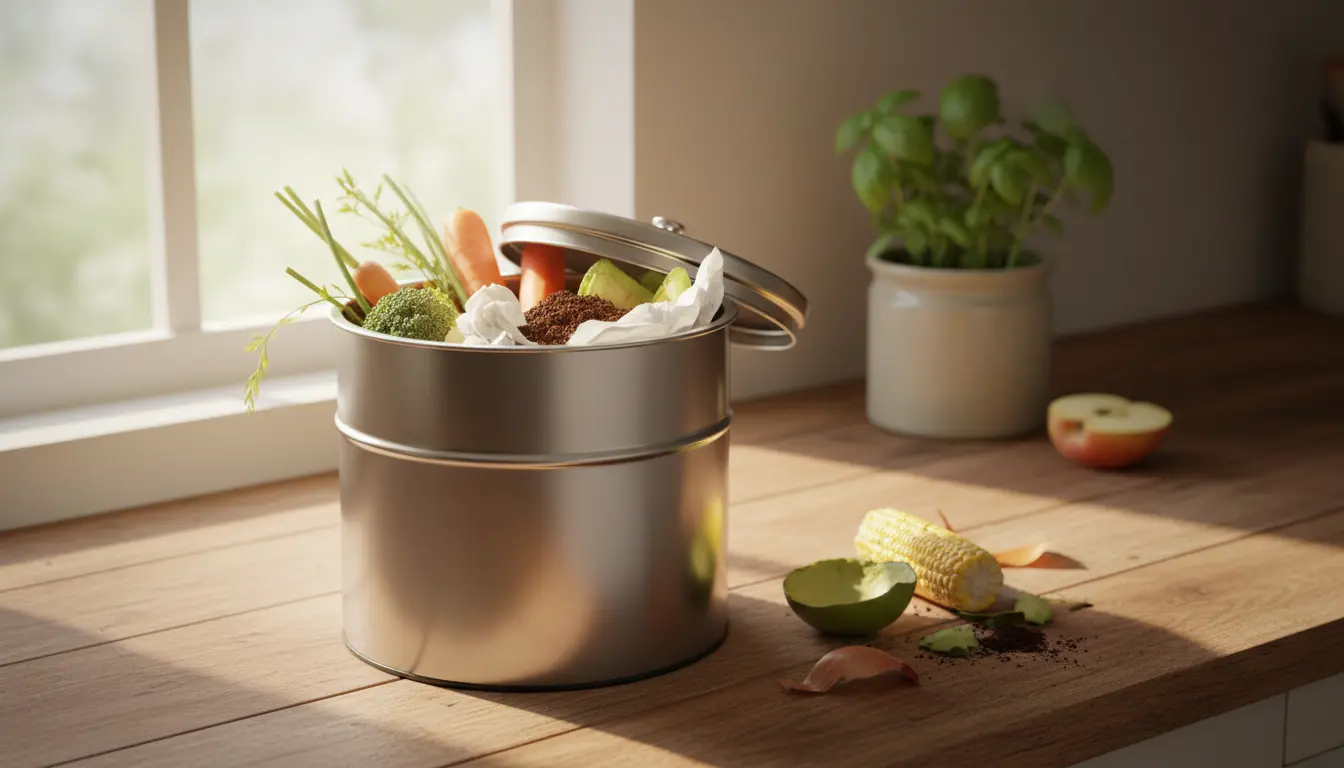
- Countertop compost bin (temporary storage for scraps)
- Backyard compost pile or tumbler
- Worm composting (vermicompost) for apartments
Gather Materials
Compost needs a balance of ‘greens’ (nitrogen) and ‘browns’ (carbon). Aim for roughly a 1:2 ratio by volume (greens:browns).
- Greens: fruit and vegetable scraps, coffee grounds, fresh grass clippings
- Browns: dry leaves, shredded paper, cardboard, straw
- Optional: finished compost or garden soil to introduce microbes
Step-by-Step Setup
Follow these steps to set up a basic backyard or bin system.
- Select a well-drained, level spot for a pile or place a bin on soil to allow worms and microbes to enter.
- Start with a layer of coarse browns to help airflow (twigs or straw).
- Add layers of greens and browns, keeping moisture like a wrung-out sponge.
- Turn or mix every 1–2 weeks for faster decomposition in hot composting systems; less often for slow systems.
- Harvest finished compost when dark, crumbly, and earthy-smelling—usually 2–6 months for active systems.
Practical Tips for Home Composting for Beginners
Small choices make composting easier and cleaner. Use these practical tips to avoid common issues.
- Chop scraps into smaller pieces to speed breakdown.
- Keep the pile moist but not soggy. Add browns if it smells like ammonia.
- Mix in garden soil or finished compost to introduce microbes.
- Use a lid or cover to keep pests out and maintain moisture.
What to Avoid
Certain items slow composting or attract pests. Avoid these in home systems:
- Dairy, meat, and oily foods (in basic outdoor piles and bins)
- Dog or cat feces
- Large woody branches that are hard to break down
Troubleshooting Home Composting for Beginners
Common problems have straightforward fixes. Use checks for smell, moisture, and activity to diagnose issues.
Problem: Bad Odor
Cause: Too many greens or anaerobic conditions. Fix: Add browns, turn the pile, and improve airflow.
Problem: Slow Breakdown
Cause: Pile too dry, too cold, or materials too large. Fix: Add water, chop materials, or insulate the pile to retain heat.
Problem: Flies or Pests
Cause: Exposed food scraps, dairy, or meat. Fix: Bury food under browns, use closed bins, or use a bokashi pre-composting system for food waste.
Case Study: Sarah’s Apartment Worm Bin
Sarah, a city apartment resident, started worm composting in a 10-liter plastic bin. She used shredded paper and kitchen scraps and added red wiggler worms.
Within three months, Sarah produced about 5 liters of vermicompost. She used it to feed houseplants and started saving 15–20% of her weekly trash from the landfill. Her setup required minimal space and no outdoor access.
Examples of Simple Schedules
Consistency helps. Here are two starter schedules based on method:
- Backyard pile: Add new waste daily, turn every 2 weeks, check moisture weekly.
- Worm bin: Add small amounts 2–3 times per week, harvest castings every 2–3 months.
Final Checklist for Home Composting for Beginners
Before you begin, confirm you have these basics:
- A suitable container or space
- Balanced greens and browns
- Basic turning or mixing tool (pitchfork or shovel)
- Patience and occasional monitoring
Home composting is a manageable habit that saves waste and improves soil. Start small, follow the simple steps above, and adapt your method as you gain experience.