
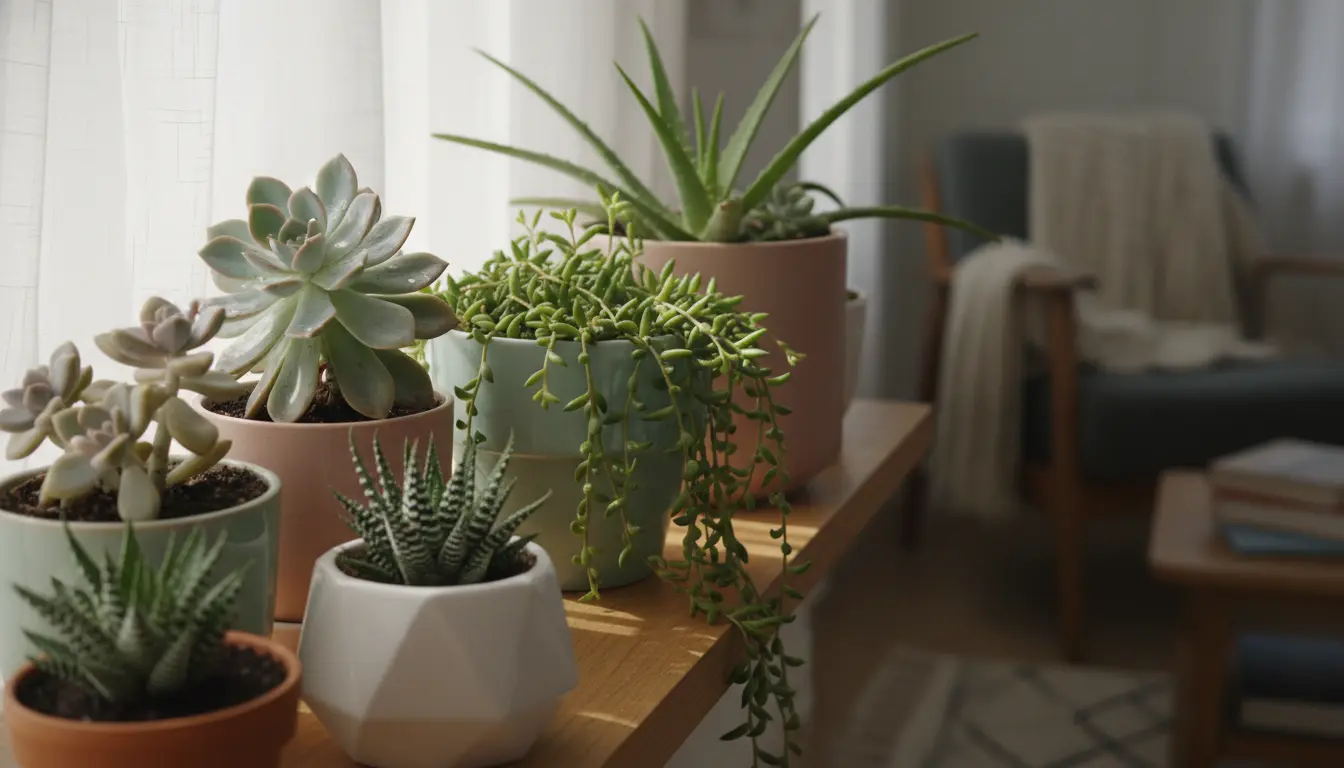
Indoor succulents are popular because they are attractive and can thrive in small spaces. With the right routine, most species stay healthy with minimal effort.
Indoor Succulent Care Basics
Start by picking the right species for your light conditions. Some succulents need bright, direct light while others tolerate lower light.
Focus on three core needs: light, water, and soil. Meeting these will solve most problems you encounter.
Light for Indoor Succulents
Most succulents need 4–6 hours of bright light each day. A south- or west-facing window is ideal in the Northern Hemisphere.
If you lack natural light, use a full-spectrum LED grow light placed 12–18 inches above the plants for 10–12 hours daily.
Watering Indoor Succulents
Succulents store water in their leaves and stems, so they prefer infrequent, deep watering. Use the soak-and-dry method: water until it drains, then wait for the soil to dry before watering again.
Signs of overwatering include soft, translucent leaves and root rot. Signs of underwatering include shriveled leaves and slowed growth.
- Watering frequency: generally every 2–4 weeks, depending on season and indoor climate.
- Check soil: insert a finger 1–2 inches deep; if dry, it is time to water.
- Use pots with drainage holes to prevent standing water.
Soil and Fertilizer for Indoor Succulents
Use a fast-draining soil mix made for cacti and succulents. You can make your own by mixing regular potting soil with coarse sand or perlite (2:1 ratio).
Fertilize lightly during the active growing season (spring and summer). Use a balanced, diluted fertilizer at one-quarter to half the recommended strength once a month.
Repotting and Propagation for Indoor Succulents
Repot succulents when roots become crowded or soil has degraded. Repotting usually occurs every 2–3 years.
Handle roots gently and allow any broken roots or stems to dry for a day before planting to reduce rot risk.
Repotting Steps
- Choose a pot 1–2 inches larger in diameter with drainage holes.
- Remove the plant and shake off old soil.
- Let the plant sit in a shaded area for a day if roots or stems were damaged.
- Place in fresh succulent mix and water lightly after 3–7 days.
Propagation Methods
Common propagation methods include leaf cuttings, stem cuttings, and offsets. Most succulents root easily when cuttings are allowed to callous first.
- Leaf cuttings: let a healthy leaf dry 1–3 days, then place on soil surface until roots form.
- Stem cuttings: allow cut end to callous, then plant in soil and water sparingly until roots establish.
- Offsets: remove and plant small pups that form at the base of the parent plant.
Common Problems and Troubleshooting for Indoor Succulents
Observe your plants regularly to catch problems early. Adjust light and watering first; many issues stem from those two factors.
- Yellow or soft leaves: likely overwatering—stop watering, check roots, and repot if needed.
- Leggy growth (etiolation): insufficient light—move to a brighter spot or add grow light.
- Pests (mealybugs, spider mites): isolate the plant and treat with insecticidal soap or alcohol swabs.
Some succulents enter a semi-dormant state in winter and need almost no water. Reducing watering in cold months prevents root rot and mimics natural cycles.
Real-World Example: Case Study
Case: A small apartment owner kept a mixed tray of succulents on a north-facing windowsill. Plants were leggy and many showed pale leaves.
Intervention steps taken: moved the tray to an east-facing window, introduced a 12-hour LED grow light, repotted into a cactus mix, and adjusted watering to once every three weeks.
Outcome after three months: new compact growth, deeper leaf color, and no further signs of rot. The owner reported less stress and easier weekend care.
Quick Care Checklist for Indoor Succulents
- Light: 4–6 hours bright light or LED grow light.
- Water: soak-and-dry method; check soil before watering.
- Soil: fast-draining succulent mix.
- Pot: use containers with drainage holes.
- Temperature: keep between 60–80°F (15–27°C).
- Fertilizer: light feeding in spring/summer at reduced strength.
Following a simple routine of correct light, careful watering, and good soil will keep indoor succulents healthy. Small adjustments—like moving a plant a few feet closer to a window or switching to a draining mix—often produce big improvements.