
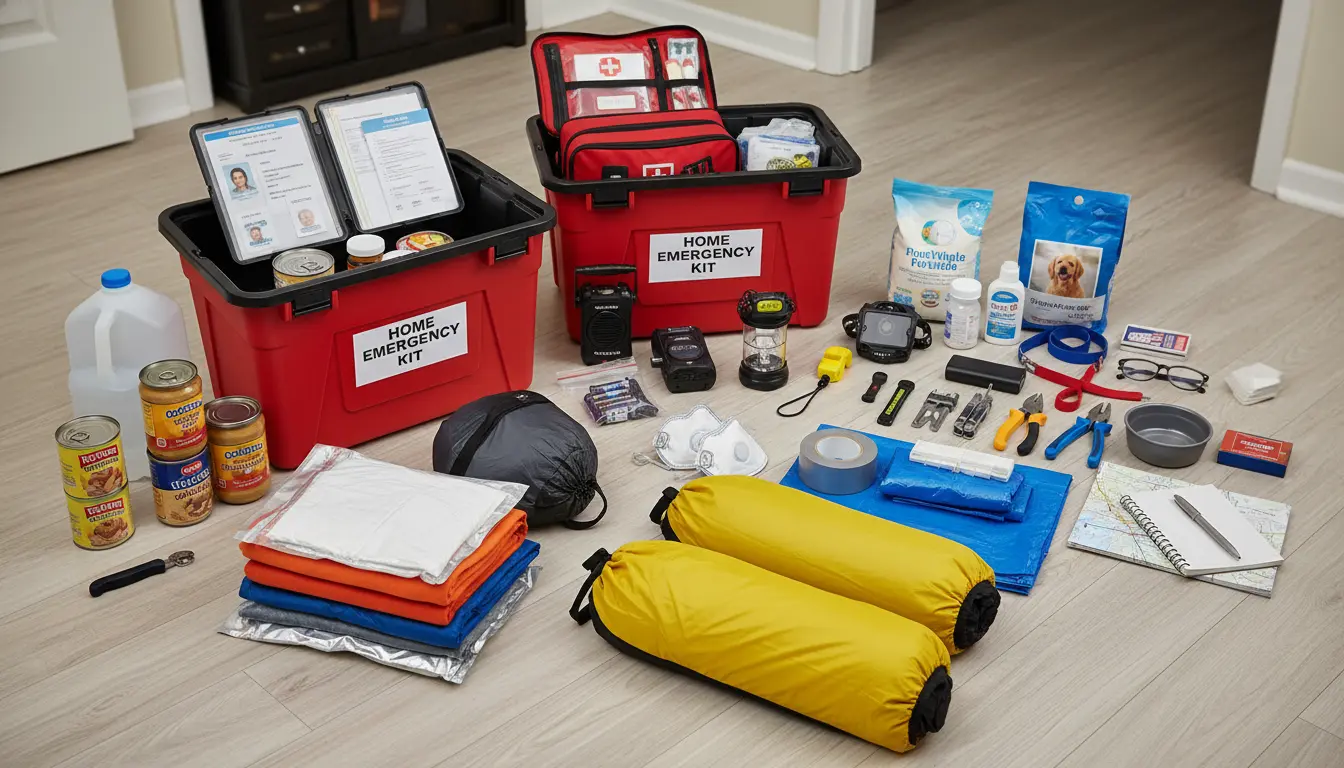
Preparing a reliable home emergency kit is one of the simplest actions families can take to improve safety. This guide explains what to include, how to store the kit, and how to maintain it so it is ready when needed.
Why a Home Emergency Kit Matters
A home emergency kit gives you basic supplies to handle short-term disruption from events like storms, power outages, or minor evacuations. Having items organized in one place reduces stress and helps you act quickly.
Emergency kits do not need to be elaborate. Focus on essentials first, then customize for your household needs.
What a Home Emergency Kit Should Include
Start with a core set of items that cover water, food, light, and first aid. These basics support your family for 72 hours, a common planning benchmark for emergency kits.
Essential items for a home emergency kit
- Water: at least 1 gallon per person per day for three days.
- Food: nonperishable items like canned goods, protein bars, and ready-to-eat meals.
- First aid kit: bandages, antiseptic, pain relievers, and any prescription medications.
- Lighting: flashlights and extra batteries or a hand-crank lantern.
- Communication: battery-powered or hand-crank radio and a phone charger (power bank).
- Tools: multi-tool, wrench or pliers, duct tape, and a manual can opener.
- Warmth and protection: blankets, rain gear, and sturdy shoes.
- Sanitation: moist towelettes, garbage bags, and personal hygiene items.
- Documents: copies of IDs, insurance papers, and emergency contact list in a waterproof container.
Customizing Your Home Emergency Kit
Adjust the kit for children, seniors, and pets. Consider medical needs, mobility limitations, and dietary restrictions when choosing supplies.
Items to add for special needs
- Extra prescription medications and medical supplies.
- Baby supplies: formula, diapers, and baby wipes.
- Pet supplies: food, water, leash, and vaccination records.
- Assistive device batteries and backup chargers for mobility aids.
How to Store Your Home Emergency Kit
Choose a cool, dry, and accessible location. Common places include a closet near the main exit, a garage shelf, or a hallway cabinet.
Use clear plastic bins or a sturdy backpack so the kit is easy to carry if you must evacuate. Label the container with its contents and the date it was assembled.
Maintenance and Rotation for a Home Emergency Kit
Check the kit every six months to replace expired foods, rotate batteries, and update documents. Regular maintenance keeps the kit usable when an emergency occurs.
Create a simple checklist to track expiration dates and substitute items as needed.
Quick Home Emergency Kit Checklist
- Water: 3 days supply per person
- Food: 3 days supply per person
- First aid kit and prescriptions
- Flashlight, radio, power bank
- Local maps and emergency contacts
- Warm clothing, blankets, and rain gear
- Personal hygiene and sanitation items
Most emergencies last from a few hours to three days. A 72-hour home emergency kit helps you stay safe until help arrives or essential services are restored.
How to Use the Home Emergency Kit During an Event
When an emergency begins, grab the kit and the family communication plan. Check everyone for injuries and use supplies in a prioritized order: water, shelter, warmth, then food.
Remain informed using the battery-powered radio and follow guidance from local authorities about evacuation or sheltering in place.
Small Real-World Example
Case study: A family of four in a suburban area used their home emergency kit during a sudden winter storm. Power went out for 36 hours. They relied on stored water, canned food, flashlights, and a battery-powered radio to follow updates.
The family avoided unnecessary travel and stayed safe until power was restored. Their pre-packed kit simplified decisions and reduced anxiety during the outage.
Final Tips for Building a Practical Home Emergency Kit
- Start small: build a basic kit first, then expand it over time.
- Keep one kit at home and a smaller grab-and-go kit for the car.
- Involve the whole household in assembling and checking the kit.
- Practice a simple emergency plan so everyone knows where the kit is and how to use it.
Building a home emergency kit is an achievable task that brings long-term peace of mind. With a clear checklist, proper storage, and routine maintenance, your kit will be ready when it matters most.