
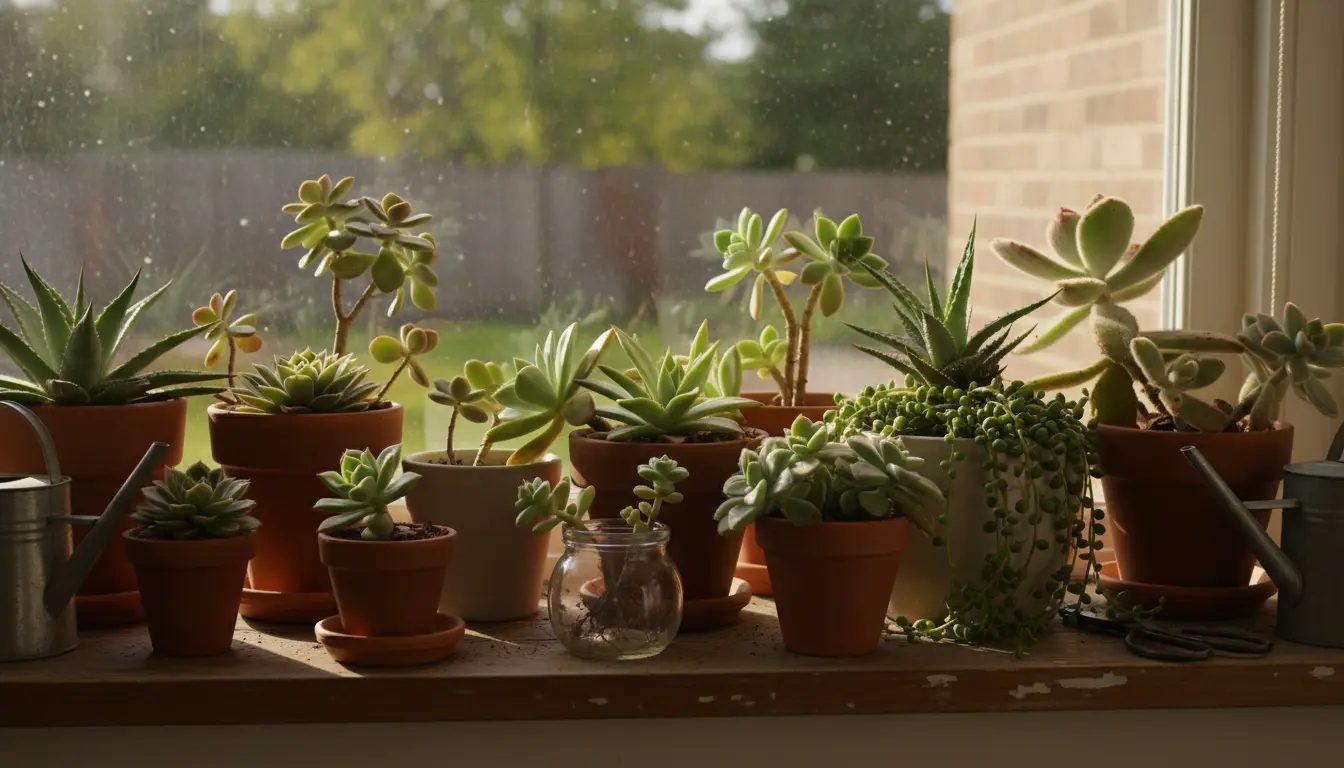
Indoor Succulent Care Basics
Succulents are low-maintenance plants that store water in their leaves and stems. They are excellent for beginners if you learn a few straightforward habits.
This guide covers the core elements of indoor succulent care so you can keep healthy plants year-round. Follow the steps and adjust to your home conditions.
Choosing the Right Succulent for Indoor Care
Start with hardy species like Echeveria, Haworthia, and Sedum. These varieties tolerate lower light and occasional neglect.
Consider size and growth habit when picking a plant for windowsills, desks, or shelves.
Light Requirements for Indoor Succulent Care
Light is the most critical factor. Most succulents need bright, indirect light for at least 6 hours a day.
South- or east-facing windows are ideal. If natural light is limited, use a grow light set on a timer for 8 to 10 hours daily.
Signs of Too Little or Too Much Light
- Too little light: stretched or leggy growth, pale leaves.
- Too much direct sun: brown or scorched patches on leaves.
- Adjust light gradually to avoid shock.
Watering Tips for Indoor Succulent Care
Succulents need less frequent watering than most houseplants. Use the soak-and-dry method: water thoroughly, then allow soil to dry before watering again.
How often depends on season and indoor humidity. Typical cycles range from 1 to 3 weeks.
Practical Watering Steps
- Check soil with your finger: water only if the top 1–2 inches are dry.
- Use a pot with drainage holes to prevent root rot.
- Reduce watering in winter when growth slows.
Soil and Pots for Successful Indoor Succulent Care
Suspend regular potting mix in favor of a fast-draining blend. Mix coarse sand, perlite, and potting soil in equal parts or buy a commercial cactus mix.
Pots should offer drainage. Terra cotta drains faster and helps prevent over-watering by wicking moisture away from soil.
Repotting Guidelines
- Repot every 1–2 years or when roots outgrow the container.
- Allow roots to dry for a day if soil is very wet before repotting.
- Use fresh soil to renew nutrients and improve drainage.
Fertilizing and Feeding for Indoor Succulent Care
Succulents require minimal feeding. Use a balanced, diluted fertilizer during the growing season (spring and summer).
Apply a quarter-strength liquid fertilizer once a month or use a slow-release formula sparingly.
Propagation Methods for Indoor Succulent Care
Propagating succulents is simple and rewarding. Common methods include leaf cuttings, stem cuttings, and offsets.
Leaf Cutting Example
- Gently twist off a healthy leaf and let it callus for a few days.
- Place the leaf on well-draining soil and mist occasionally.
- Roots and small rosettes will form in weeks; transplant when established.
Common Problems and Solutions in Indoor Succulent Care
Root rot is the most frequent issue, caused by over-watering or poor drainage. Yellowing, mushy leaves indicate roots are failing.
Pest problems include mealybugs and spider mites. Treat infestations with rubbing alcohol on a cotton swab or insecticidal soap.
Quick Troubleshooting Checklist
- Leggy growth: increase light exposure.
- Brown dry tips: check for sunburn or underwatering.
- Soft, translucent leaves: reduce watering immediately.
Some succulents, like Haworthia, prefer lower light and can thrive in north-facing windows. Knowing species needs helps avoid common care mistakes.
Case Study: A Simple Indoor Succulent Success
Laura, a first-time plant owner, started with three small Echeveria on her east-facing sill. She used a cactus soil mix and terra cotta pots with drainage.
She watered by feel, waiting 10 days between thorough soaks, and moved a lamp nearby during winter. After six months, the rosettes tripled in size and produced offsets.
Key changes that improved her results were switching to terra cotta and reducing winter watering.
Checklist for Daily and Monthly Indoor Succulent Care
- Daily: Check light and move plants if shaded.
- Weekly: Inspect soil moisture and leaf health.
- Monthly: Feed during growing season and rotate pots for even growth.
Final Tips for Consistent Indoor Succulent Care
Observe your plants and adapt routines rather than follow strict schedules. Homes vary in light, temperature, and humidity.
Start with easy species, maintain good drainage, and remember that subtle adjustments yield healthy succulents without much fuss.
With the right light, soil, and watering habits, indoor succulent care becomes a reliable and rewarding routine for beginners and experienced growers alike.