
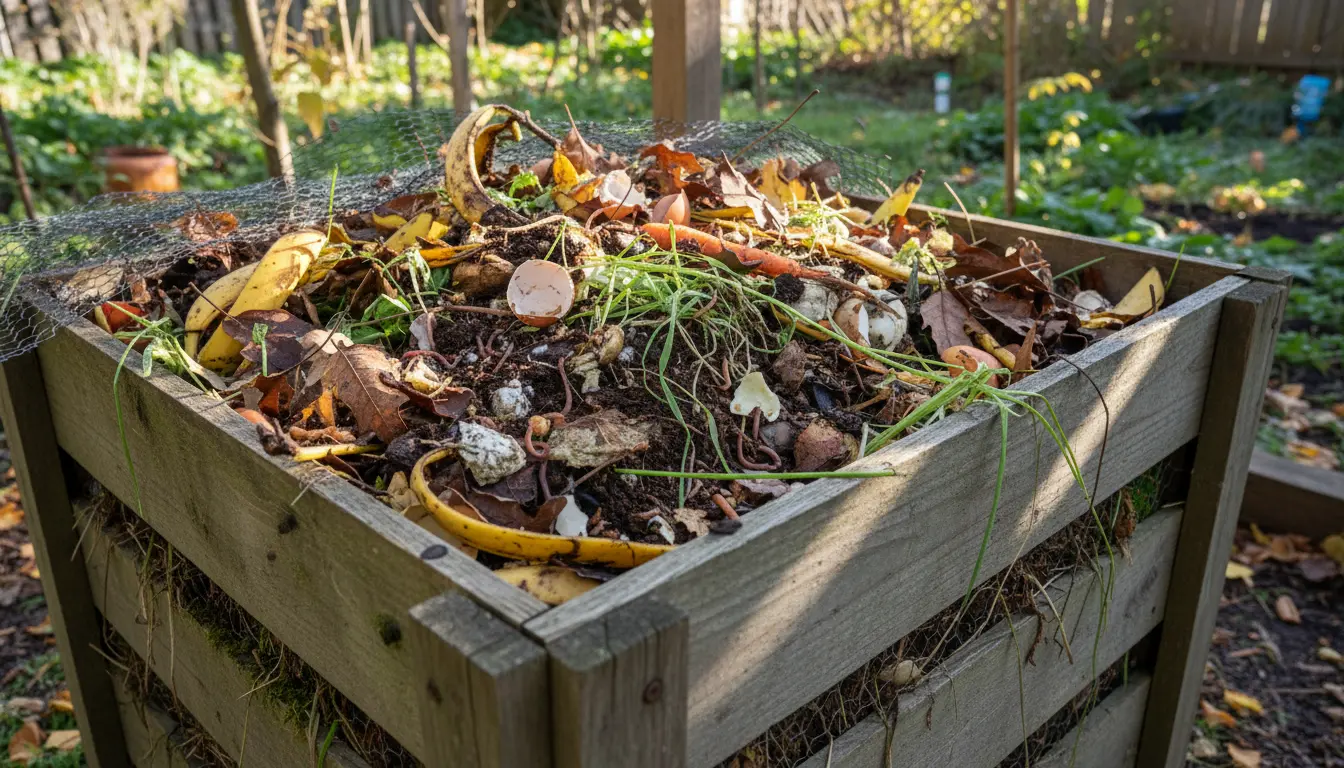
Why Composting at Home Matters
Composting at home turns kitchen and yard waste into a nutrient-rich soil amendment. It reduces landfill waste and supports healthier plants without chemical fertilizers.
Starting a compost pile is low cost and scalable. Even small apartments can compost with the right method.
How to Start Composting at Home
Follow these basic steps to begin a successful composting routine. Each step is practical and easy to implement for most households.
1. Choose a Composting Method
Select a method that fits your space and time. Common options include a backyard heap, a bin, a tumbler, or indoor vermicomposting with worms.
Consider how much organic waste you produce and how often you can turn or maintain the pile.
2. Choose a Location and Bin
Place the compost in a well-drained spot with partial shade. This keeps moisture steady and temperatures stable.
A simple open pile works outdoors, while a plastic or wooden bin helps contain odor and pests. Tumblers speed up mixing for faster results.
3. Balance Greens and Browns
Successful compost needs a balance of green materials and brown materials. Greens provide nitrogen, while browns provide carbon.
- Greens: fruit and vegetable scraps, coffee grounds, grass clippings.
- Browns: dry leaves, straw, shredded cardboard, paper.
A common target ratio is about 1 part greens to 2–3 parts browns by volume. Adjust as needed based on smell and moisture.
4. Manage Moisture and Aeration
The compost should feel like a wrung-out sponge — damp but not dripping. Add water if too dry, or add more browns if too wet.
Turn the pile every 1–2 weeks to add oxygen and speed decomposition. Tumblers reduce manual turning.
5. What Not to Compost at Home
Avoid meat, dairy, greasy foods, diseased plants, and pet waste in a simple home compost. These items attract pests or introduce pathogens.
Onions and citrus are okay in small amounts but can slow microbial activity if used in excess.
Troubleshooting Common Composting Problems
Problems usually indicate an imbalance of moisture, aeration, or materials. Diagnose quickly to keep the process on track.
- Bad smell: Add more browns and turn the pile to add air.
- Pile too dry: Add water and more green materials.
- Pile not heating: Shred materials and increase size or add more greens.
Compost Use and Curing
Finished compost is dark, crumbly, and smells earthy. It typically takes 2–12 months depending on method and attention.
Cure finished compost for several weeks before planting. Use it as mulch, mix into potting soil, or top-dress garden beds.
Small Real-World Example
Case Study: A two-person household set up a 200-liter tumbler in their backyard. They added kitchen scraps and shredded leaves in a 1:3 green-to-brown ratio and turned the tumbler twice a week.
After four months they produced about 40 liters of finished compost. They used it to top-dress vegetable beds and reported healthier tomato growth the following season.
Composting one ton of organic waste can prevent roughly 0.5 to 1 metric ton of CO2 equivalent from entering the atmosphere, depending on local landfill practices.
Tips for Apartment or Small-Space Composting
If you live in an apartment, consider these compact options: a worm bin, an electric composter, or a sealed bokashi system. Each method has trade-offs in speed and maintenance.
- Worm bins break down food quickly and produce worm castings for potted plants.
- Bokashi ferments food waste and requires a short outdoor curing phase.
- Electric composters accelerate breakdown but use power and cost more upfront.
Quick Checklist to Start Composting at Home
- Pick a composting method and container.
- Gather browns and greens and aim for a balance.
- Monitor moisture and turn regularly.
- Avoid prohibited items like meat and pet waste.
- Harvest finished compost and use it in your garden.
Final Thoughts on Composting at Home
Composting at home is a simple way to reduce waste and improve soil health. Start small, observe the process, and adjust materials and maintenance to suit your needs.
With a little attention, composting becomes a routine that benefits your garden and the environment.