
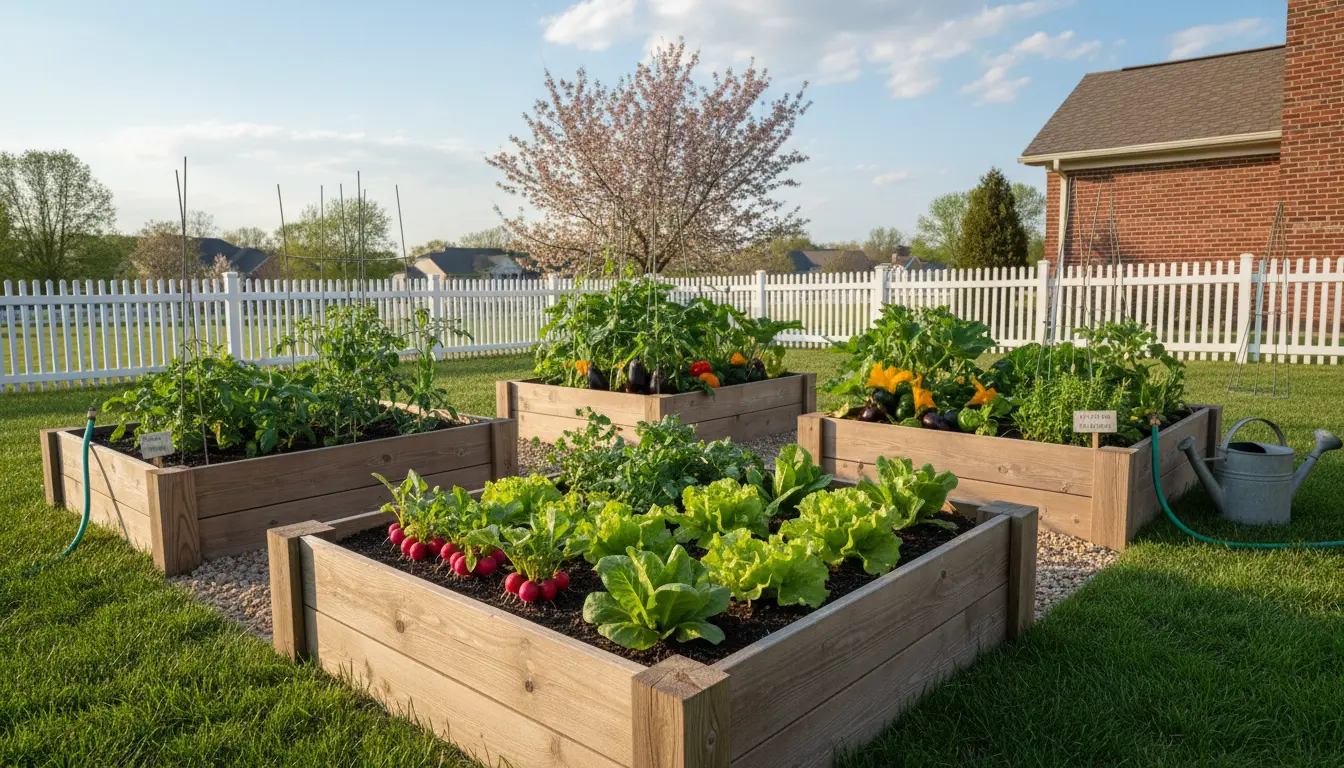
Why a Small Vegetable Garden Works
Starting small makes gardening manageable and reduces upfront cost and time. A compact plot or a few containers can supply fresh vegetables for a household without complex equipment.
This guide covers the essentials: site, soil, plant selection, planting, maintenance, and a short real-world example to show how it works in practice.
Choose the Right Site for Your Small Vegetable Garden
Most vegetables need 6 to 8 hours of direct sunlight. Observe available spaces for a few days to find the sunniest spot.
Consider drainage and access. Avoid low spots that stay wet and pick a location near a water source to simplify watering.
Container versus Ground Bed
Containers work well on patios and balconies and reduce weed pressure. Ground beds are better for long-term soil building and larger yields.
Choose raised beds if ground soil is poor. Raised beds warm faster in spring and improve drainage.
Prepare Soil for a Small Vegetable Garden
Soil quality is the most important factor for success. Test the soil pH if you can; most vegetables prefer pH 6.0–7.0.
Improve soil with organic matter. Mix compost and a balanced slow-release fertilizer into the top 6–8 inches for raised beds or containers.
Soil Mix for Containers
- 40% high-quality compost
- 30% peat moss or coconut coir
- 30% perlite or coarse sand for drainage
This balance holds moisture but drains excess water—important in a small garden where root space is limited.
Select Easy Vegetables for Small Spaces
Begin with vegetables that give a high yield per square foot and are tolerant of slight mistakes. Good options include cherry tomatoes, lettuce, radishes, bush beans, and herbs.
Choose compact or bush varieties labeled for containers or small gardens where possible.
Planting Calendar Basics
- Cool-season crops: plant early spring and fall (lettuce, spinach, radishes).
- Warm-season crops: plant after last frost (tomatoes, peppers, cucumbers).
- Succession planting: sow quick crops like radish every 2–3 weeks for continuous harvest.
Planting and Layout Tips for a Small Vegetable Garden
Make a simple plan before you plant. Map out where each crop will go and how tall plants will affect sunlight for others.
Use vertical space with trellises for vining crops like cucumbers and pole beans to maximize floor area.
Sample Layout for a 4×8 Raised Bed
- One row of trellised cherry tomatoes along the north side
- Two rows of mixed lettuce and spinach in the center
- One row of bush beans and a patch of radishes near the front
Maintenance: Watering, Fertilizing, and Pest Control
Water consistently. Small gardens and containers dry out faster, so check moisture daily during hot weather. Water at the soil level to reduce foliage disease.
Feed with a balanced liquid feed or slow-release granular fertilizer every 4–6 weeks depending on crop needs.
Simple Pest Management
- Inspect plants weekly for pests and disease.
- Handpick larger pests and use insecticidal soap for soft-bodied insects if needed.
- Encourage beneficial insects by planting flowers like marigolds or alyssum nearby.
Planting herbs like basil near tomatoes can improve flavor and deter some pests naturally. Many common herbs and companion flowers support pollinators for better yields.
Harvesting and Extending the Season
Harvest vegetables when they reach recommended size; frequent harvesting often encourages more production. For example, pick lettuce leaves progressively to prolong harvest.
Use row covers or a simple cold frame to extend the season in spring and fall by several weeks.
Case Study: Balcony Garden That Fed a Small Family
Anna, an apartment dweller, used two 4-foot troughs and four 12-inch pots on a sunny balcony. She planted determinate cherry tomatoes, basil, leaf lettuce, radishes, and a pole bean on a small trellis.
In the first growing season she harvested enough lettuce and herbs for weekly salads, continued snacking on fresh tomatoes, and stored extra basil as pesto. Her investment was a few bags of potting mix and seeds, and she reported lower grocery bills and higher satisfaction.
Quick Checklist to Start Your Small Vegetable Garden
- Pick a sunny, accessible site.
- Decide between containers, raised beds, or ground plot.
- Improve soil with compost and balanced fertilizer.
- Choose compact, high-yield crops and follow a simple layout.
- Water consistently and monitor for pests weekly.
- Harvest regularly and use succession planting to maximize output.
Final Tips for Success
Start with a small plan and expand once you feel confident. Keep a simple notebook to record planting dates and results.
Small vegetable gardens are low-risk, high-reward projects that teach the basics of growing food. With consistent care, even compact spaces can produce meaningful harvests.