
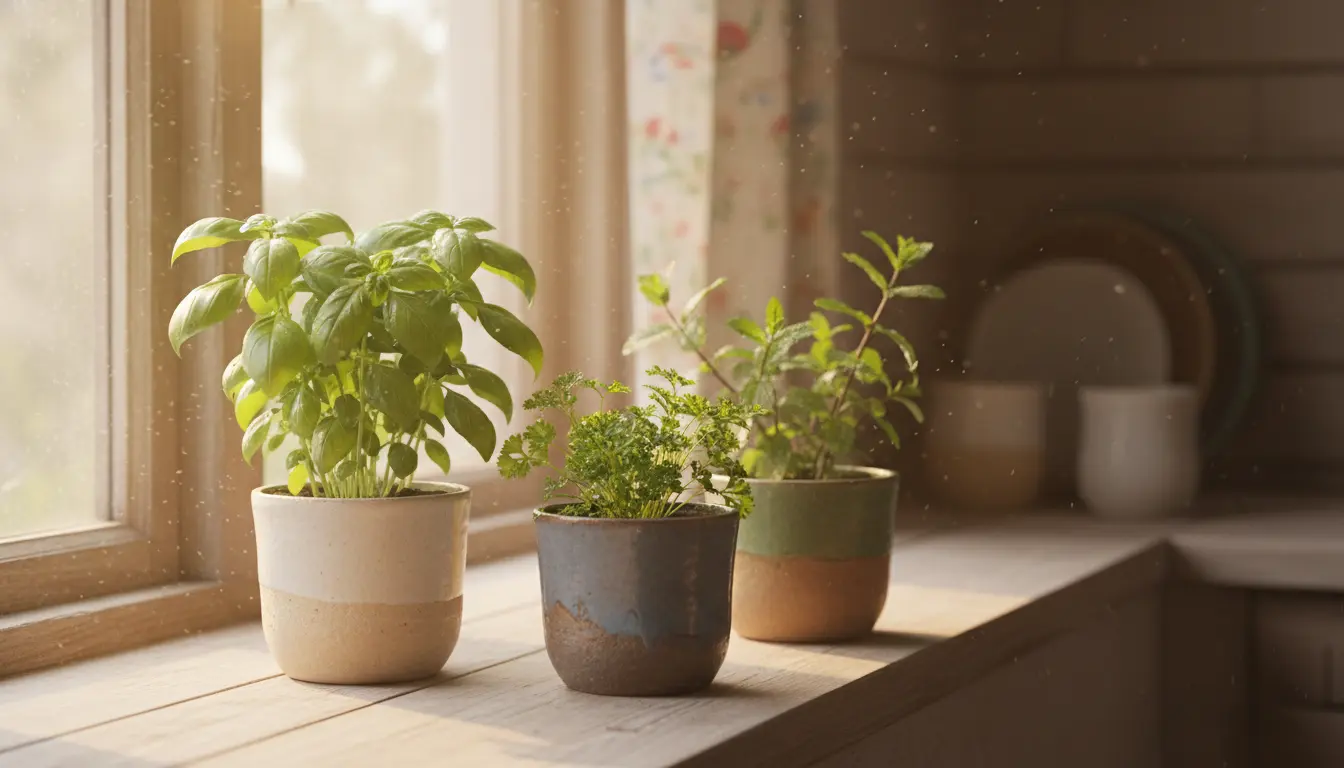
Why an indoor herb garden is a good idea
An indoor herb garden gives fresh flavors for cooking, improves air quality, and lets you garden year-round. It works in small spaces and requires low startup cost.
This guide explains practical, step-by-step actions to plan, set up, and maintain an indoor herb garden so you get consistent harvests.
Choosing herbs for your indoor herb garden
Select herbs that adapt well to pots and limited light. Start with easy, productive varieties for reliable results.
- Basil — fast-growing, great for windowsills with good light.
- Parsley — tolerates moderate light and is forgiving of irregular watering.
- Mint — vigorous and invasive, best kept in its own pot.
- Chives — compact and tolerant of indoor conditions.
- Thyme and oregano — drought-tolerant and good for pots.
Example: Pick 3–5 herbs to begin, mixing basil or parsley with a resilient herb like thyme.
Plan the location for your indoor herb garden
Light is the most important factor. Most culinary herbs need at least 6 hours of bright light each day.
Options include a sunny south or west-facing windowsill, or a grow light when natural light is insufficient.
Indoor herb garden lighting options
Match light intensity to the herbs you choose. Tender herbs like basil want bright light; hardy herbs tolerate less.
- Natural light: South or west-facing windows are ideal.
- LED grow lights: Choose full-spectrum LEDs. Place them 6–12 inches above plants.
- Rotate pots weekly to keep growth even.
Choose containers and soil for your indoor herb garden
Containers should have drainage holes to avoid root rot. Use shallow to medium pots for most herbs.
Use a high-quality potting mix formulated for containers. Avoid garden soil, which compacts and drains poorly.
Container and soil checklist
- Drainage holes or add a 1-inch gravel layer at the bottom.
- Light potting mix with perlite or vermiculite for drainage.
- Containers sized to allow root growth for at least one season.
- Self-watering pots help if you travel often.
Planting and watering basics for an indoor herb garden
Plant at the same depth as the nursery container, firm the soil gently, and water thoroughly to settle roots.
Watering frequency depends on light, pot size, and indoor humidity. Check soil by finger: water when the top 1 inch feels dry.
Watering tips
- Water slowly until excess drains from the bottom.
- Reduce watering in cooler, lower-light months.
- Avoid overwatering: yellowing leaves and mushy stems indicate too much water.
Feeding and pruning your indoor herb garden
Use a balanced liquid fertilizer at half the recommended strength every 3–4 weeks during the growing season.
Regular pruning encourages bushy growth and higher yields. Harvest the top third of growth and avoid removing more than 30% at once.
Pruning and harvest tips
- Pinch or snip stems above a leaf node to encourage branching.
- Harvest in the morning for best flavor and oil content.
- Remove flowers on basil and parsley to keep plants focused on leaf growth.
Common problems and quick fixes for an indoor herb garden
Watch for pests like aphids and whiteflies. Treat small infestations with a spray of mild soapy water or insecticidal soap.
Leggy, thin growth usually means insufficient light; move plants closer to the window or add a grow light.
Case study: Small kitchen indoor herb garden
Sarah, a busy office worker, started an indoor herb garden on a 3-foot windowsill with three 6-inch pots: basil, parsley, and thyme.
She used a south-facing window and an LED grow light on cloudy days. After six weeks she had continuous basil harvests and used herbs weekly in meals.
- Setup cost: $45 (pots, soil, seeds, small LED light).
- Results: Fresh herbs for 4–6 meals per week, reduced grocery herb purchases by 70%.
- Maintenance: 10–15 minutes per week for watering, pruning, and rotating pots.
This shows a compact indoor herb garden can be low-cost, low-effort, and provide measurable benefits.
Most culinary herbs release the highest concentration of essential oils just before flowering, making morning harvests the most flavorful.
Practical checklist to start your own indoor herb garden
- Choose 3–5 herbs suited to your light conditions.
- Pick pots with drainage and a quality potting mix.
- Set location with at least 4–6 hours of bright light or install a grow light.
- Water when the top inch of soil is dry; feed lightly every 3–4 weeks.
- Prune regularly and harvest often to keep plants productive.
Final tips for a successful indoor herb garden
Start small and expand once you learn each herb’s needs. Group plants by light and water needs to simplify care.
With a consistent routine of light, soil, water, and pruning, an indoor herb garden can supply fresh flavor and a rewarding hobby all year.