
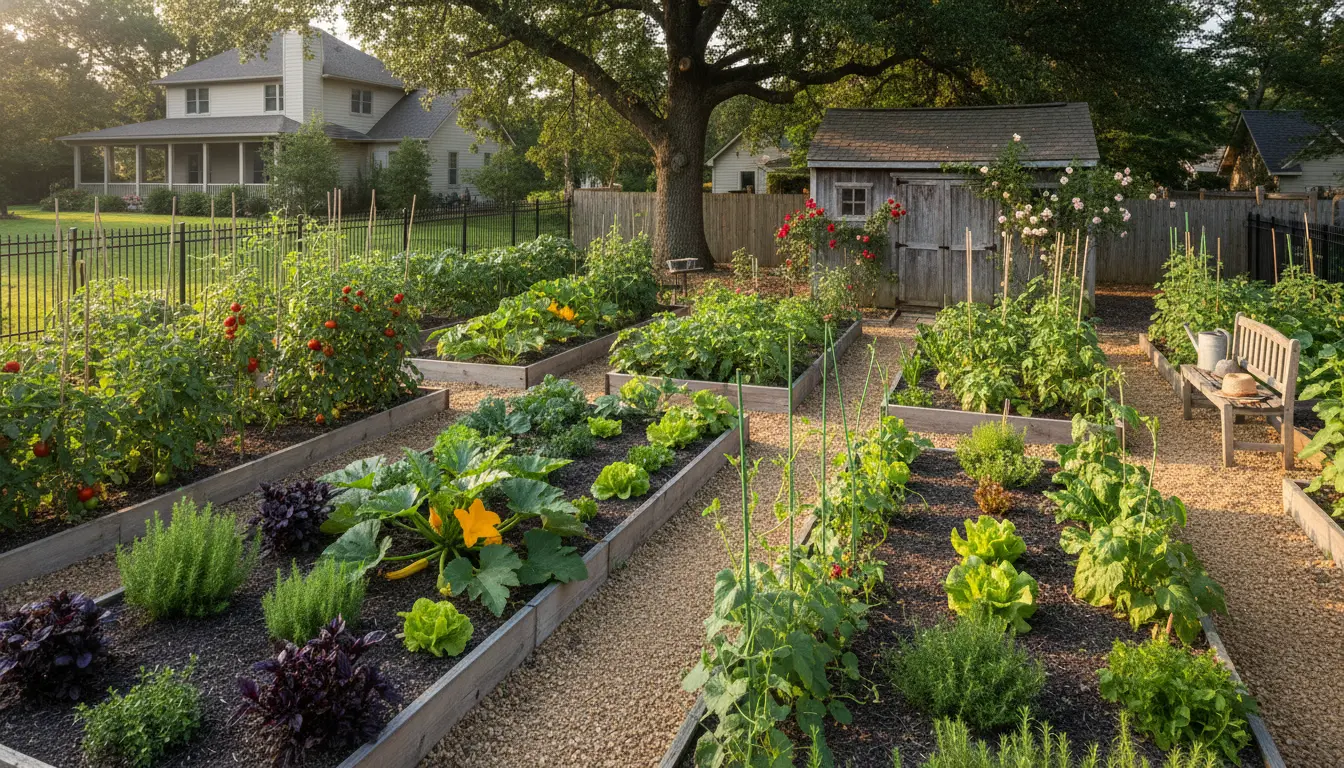
Starting a vegetable garden at home is a practical way to grow fresh food and learn useful skills. This guide gives straightforward steps you can follow, whether you have a small balcony or a backyard.
Planning to Start a Vegetable Garden
Begin by assessing space, sunlight, and your time. Most vegetables need 6 to 8 hours of sun, so choose a bright spot.
Decide on garden type: in-ground beds, raised beds, container gardening, or vertical systems. Match the type to your space and budget.
Pick Your First Vegetables
For beginners, pick easy crops that offer quick rewards and are forgiving. Good choices include lettuce, radishes, cherry tomatoes, green beans, and herbs like basil.
Start small: a few containers or a single 4×4 or 4×8 bed is easier to manage. Expanding later is simple once you gain experience.
Choose the Right Location for Your Vegetable Garden
Sun, soil drainage, and access to water are the top factors. Avoid low spots that collect water or shaded corners under large trees.
Consider convenience: place your garden near the kitchen or a water source to make daily maintenance and harvesting easier.
Soil and Bed Preparation for a Vegetable Garden
Healthy soil is the most important element for a productive vegetable garden. Good soil drains well, holds moisture, and is rich in organic matter.
Test soil pH with a simple kit; most vegetables prefer pH 6.0–7.0. Amend soil with compost, aged manure, or peat-free alternatives to improve texture and fertility.
Preparing Raised Beds and Containers
Use a mix of topsoil, compost, and coarse material for raised beds. A common ratio is 50% topsoil, 40% compost, 10% coarse material for drainage.
For containers, choose a quality potting mix rather than garden soil. Ensure pots have drainage holes and are sized for the plants you choose.
Planting: Timing and Techniques
Follow seed packet or plant tag directions for planting depth and spacing. Timing depends on your climate and last frost date.
Use succession planting to maximize harvests: sow fast crops (radishes, lettuce) every 2–3 weeks. This keeps the garden productive across the season.
Watering and Daily Care for Your Vegetable Garden
Water deeply and less often to encourage strong roots. Aim for about 1 inch of water per week, adjusting for rainfall and soil type.
Use drip irrigation or soaker hoses to deliver water to roots and reduce leaf wetness. Mulch with straw or wood chips to conserve moisture and suppress weeds.
Pests, Weeds, and Common Problems in Vegetable Gardens
Monitor plants weekly to catch problems early. Look for holes in leaves, wilting, or discolored growth as early signs of pests or disease.
Use simple, practical controls: handpick larger pests, install row covers for young plants, and encourage beneficial insects with flowering herbs. Rotate crops yearly to limit soil-borne pests and disease.
Organic and Low-Chemical Options
- Neem oil or insecticidal soap for soft-bodied insects
- Floating row covers to protect seedlings from insects
- Crop rotation and compost to improve soil health
Planting a mix of flowers and herbs near vegetables can attract pollinators and beneficial insects that reduce pests and increase yields.
Harvesting and Storage Tips for Vegetable Garden Produce
Harvest vegetables at peak ripeness for best flavor and nutrition. Frequent harvesting often encourages more production, especially with beans and zucchini.
Store crops properly: leafy greens in cool, moist conditions, root vegetables in cool dark places, and tomatoes at room temperature until fully ripe.
Simple Case Study: A Small Backyard Vegetable Garden
Maria had a sunny 10-by-12-foot backyard and wanted fresh salads for the family. She used two 4×8 raised beds filled with a 50/50 mix of topsoil and compost.
Year one plan: cherry tomatoes (4 plants), lettuce (rows for succession), bush beans (10 plants), and basil and parsley in pots. She watered twice weekly with a soaker hose and mulched with straw.
Results: within three months she harvested weekly salads and a steady supply of tomatoes. The small upfront effort saved money on greens and improved family meals.
Quick Starter Checklist to Start a Vegetable Garden
- Choose a sunny location with good drainage
- Decide garden type: raised bed, container, or in-ground
- Test and amend soil; add compost
- Pick 4–6 easy crops to begin with
- Plan a watering schedule and add mulch
- Monitor for pests and rotate crops annually
Final Steps to Begin Your Vegetable Garden
Start small, learn by doing, and adjust each season. Gardening is a practical skill where small improvements yield better results over time.
Set a simple goal for the first season, such as growing salad greens and one fruiting crop. That focused plan gives clear tasks and a good chance of success.