
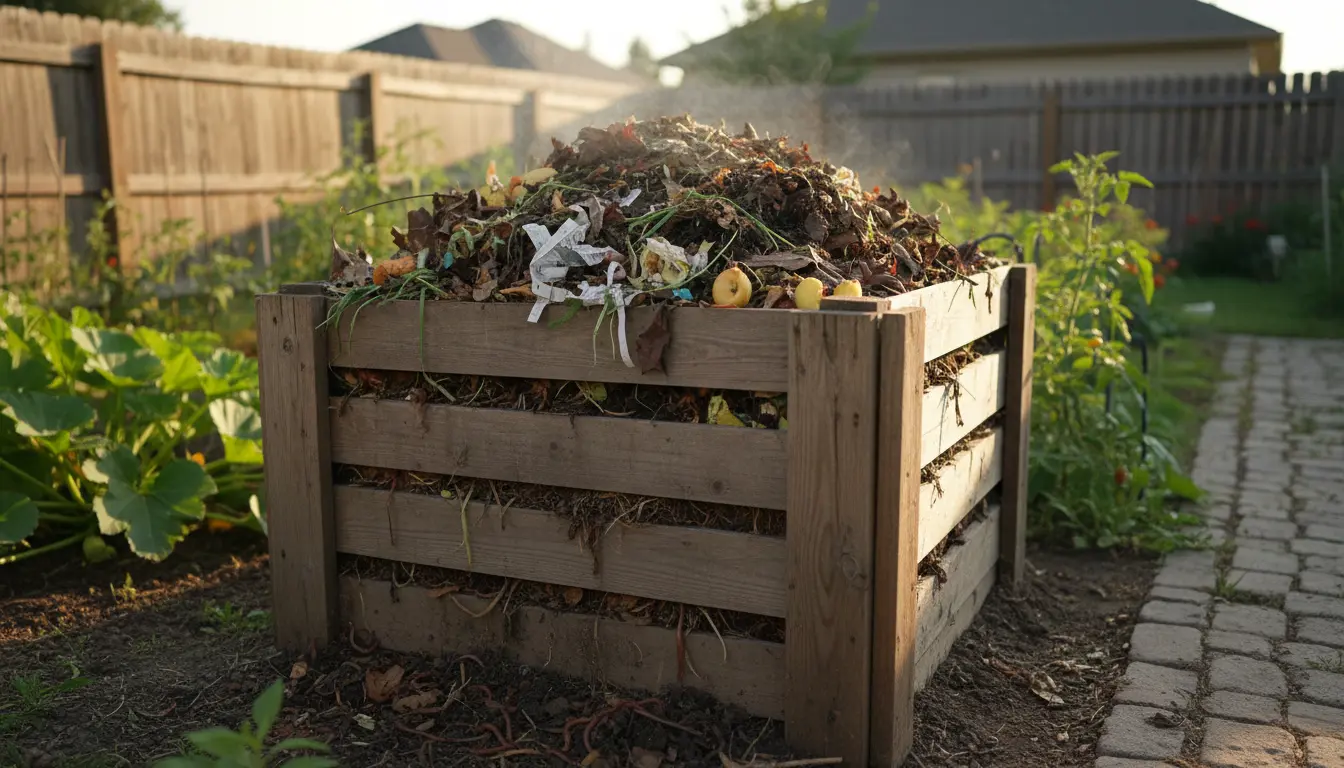
Why Home Composting Matters
Home composting turns kitchen scraps and yard waste into nutrient-rich soil that feeds plants and reduces landfill waste. It saves money on soil amendments and lowers your household’s environmental footprint.
Composting is simple to start and can be adapted to small balconies or larger backyards. This guide focuses on practical steps to get a functioning compost system fast.
Choosing a Compost Method for Home Composting
Pick a method that fits your space, time, and goals. The three common approaches are open pile, bin composting, and vermicomposting.
- Open pile — Good for large yards and high-volume green waste.
- Bin composting — Tidy and contained, ideal for most homeowners.
- Vermicomposting — Uses worms; great for apartments and kitchen waste.
How to Pick the Right Bin
Choose a bin with good airflow and drainage to prevent odor and sogginess. Sizes from 30 to 85 gallons work well for households.
Material matters: plastic bins are low-maintenance, while wooden bins blend into gardens but need rot-resistant wood or regular replacement.
What to Compost: Greens and Browns
Successful home composting balances nitrogen-rich “greens” and carbon-rich “browns.” Aim for a rough ratio of 1 part greens to 2–3 parts browns by volume.
- Greens: fruit and vegetable scraps, coffee grounds, fresh grass clippings.
- Browns: dried leaves, straw, shredded paper, cardboard, wood chips.
Do not compost meat, dairy, oils, diseased plants, or pet waste. These attract pests or introduce pathogens.
Step-by-Step Setup for Home Composting
Follow these steps to build a balanced compost pile in a bin or pile.
- Place the bin on bare soil for drainage and access to beneficial microbes and worms.
- Start with a 2–3 inch layer of coarse browns like twigs to improve airflow.
- Add alternating layers of greens and browns, aiming for the 1:2 to 1:3 ratio.
- Keep the pile moist like a wrung-out sponge. Add water if it becomes dry.
- Turn the pile every 1–2 weeks to introduce oxygen and speed decomposition.
How Long Until Compost Is Ready?
Home composting can produce usable compost in 2–6 months with regular turning and good moisture. If you rarely turn the pile, expect 6–12 months.
Finished compost is dark, crumbly, and smells earthy rather than sour or rotten.
Troubleshooting Common Home Composting Problems
Problems usually come from imbalanced materials, poor aeration, or wrong moisture levels. Here are quick fixes:
- Bad smell: Add more browns and turn the pile to increase airflow.
- Too wet: Mix in shredded cardboard or dry leaves and leave the lid off to dry.
- Slow decomposition: Chop materials into smaller pieces and increase turning frequency.
- Pests: Avoid meat/dairy, bury food scraps in the center, or use a sealed bin.
Small Real-World Example: Case Study
Case study: A two-person household started a 60-gallon bin in spring. They added all kitchen scraps and yard trimmings. They layered greens and browns, turned the bin weekly, and maintained moisture.
Result: After 4 months they harvested 25 liters of crumbly compost and used it to top-dress potted herbs. Garden vigor improved and their trash volume dropped by about 30 percent.
Tips to Speed Up Home Composting
Want faster results? Try these practical tips that work in most home systems.
- Chop or shred materials to increase surface area.
- Add garden soil or finished compost to introduce microbes.
- Use a compost thermometer; aim for 120–150°F (49–66°C) for active breakdown.
- Maintain the greens-to-browns ratio and regular turning.
Using Your Finished Compost
Apply finished compost as a soil amendment, potting mix ingredient, or mulch. Use 1–2 inches as a top dressing for lawns or mix 10–30 percent compost into garden beds.
Compost improves soil structure, water retention, and nutrient availability while feeding beneficial microbes.
Final Checklist for Home Composting
- Choose a method that fits your space: bin, pile, or worms.
- Balance greens and browns; maintain moisture and airflow.
- Turn regularly and monitor temperature for faster results.
- Avoid meat, dairy, and pet waste to keep pests away.
With a small time investment, home composting gives you healthy soil and reduces household waste. Start small, observe, and adjust your system over time.