
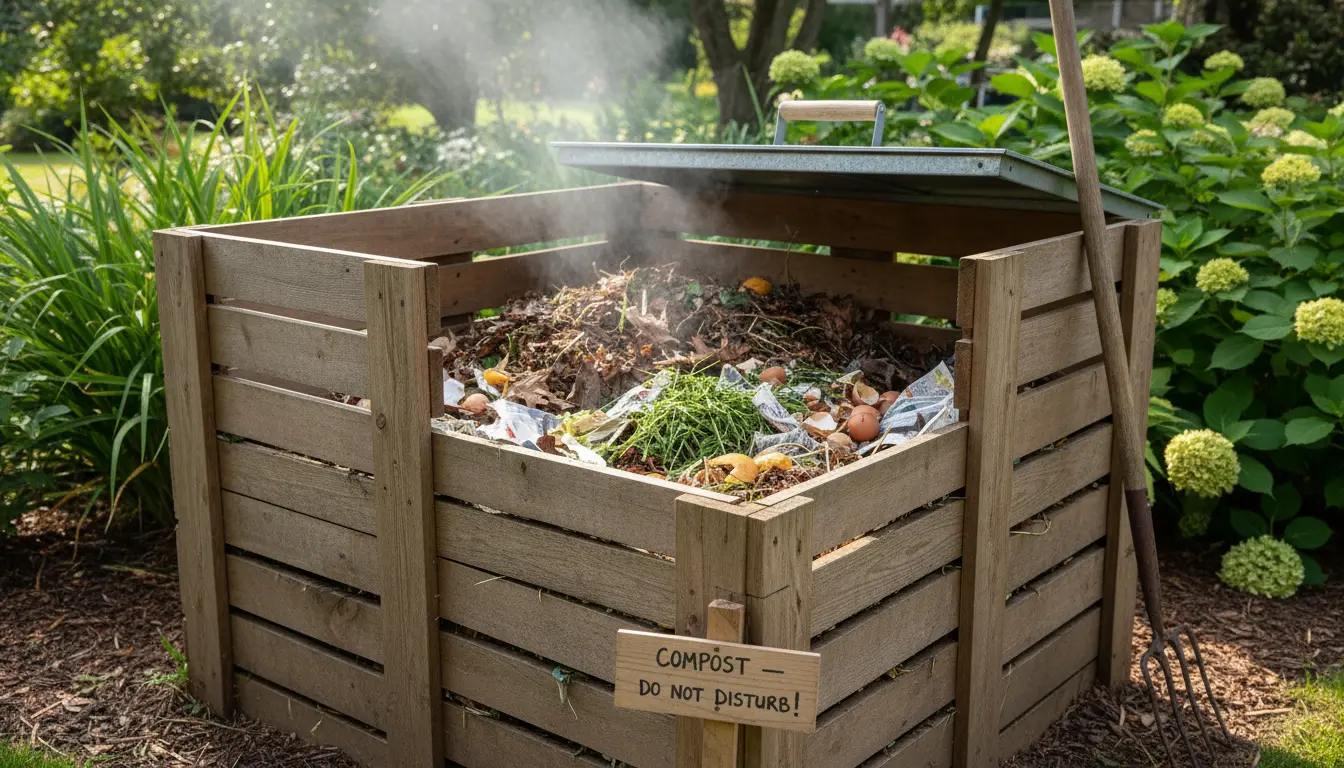
Why Home Composting Matters
Home composting turns kitchen scraps and yard waste into a nutrient-rich soil amendment. It reduces household waste and improves garden soil structure.
This guide gives clear, actionable steps for beginners to start composting successfully and avoid common mistakes.
How to Start Home Composting
Choose a location that is convenient, well-drained, and partly shaded. A spot near the kitchen or garden encourages regular use and makes turning easier.
Select a container or bin that fits your space and needs. Options include tumblers, stationary bins, and open piles.
Choose a Composting Method
Pick a method that matches your time and effort. Here are common options:
- Hot composting: Faster breakdown, requires layering, turning, and monitoring temperature.
- Cold composting: Low maintenance, slower process, ideal for small households.
- Tumbler composting: Easy turning, contained system, good for small yards or patios.
What to Compost
Balance carbon-rich (brown) and nitrogen-rich (green) materials. Aim for roughly 25–30 parts browns to 1 part greens by volume for active composting.
- Browns: Dry leaves, shredded paper, straw, cardboard.
- Greens: Vegetable scraps, coffee grounds, grass clippings.
- Avoid: Meat, dairy, oily foods, diseased plants, pet waste.
Step-by-Step Setup for Home Composting
Follow these simple steps to build a workable compost system in your yard or on a balcony.
- Place a layer of coarse material (twigs or straw) at the bottom to improve airflow.
- Add alternating layers of greens and browns, keeping particle size small for faster breakdown.
- Keep the pile moist like a wrung-out sponge; water if it dries out.
- Turn the pile every 1–2 weeks for hot composting, or once a month for tumblers.
Monitoring Temperature and Moisture
Temperature indicates microbial activity. In active hot composting, interior temperatures should reach 130–160°F (55–70°C).
If the pile is too wet it smells; if too dry it stalls. Adjust by adding browns to soak up moisture or water to rehydrate.
Microbes do most of the work in compost. Turning supplies oxygen to aerobic bacteria, which digest organic matter and reduce odor.
Troubleshooting Common Problems
Many issues are simple to fix once you know the cause. Here are common problems and solutions.
- Bad smell: Add dry browns and turn the pile to introduce air.
- Pile too dry: Water lightly and mix; cover with a tarp to retain moisture.
- Slow breakdown: Chop materials, add greens, and maintain warmth by insulating the pile.
- Pests: Avoid adding meat or oily foods; use a closed bin or bury kitchen scraps in the center.
How Long Does Composting Take?
Times vary by method. Hot composting can produce finished compost in 2–3 months with active management.
Cold composting typically takes 6–12 months. Tumblers may finish in 2–6 months depending on size and frequency of turning.
Using Finished Compost
Finished compost looks dark, crumbly, and earthy-smelling. It should no longer resemble the original materials.
Use finished compost to enrich garden beds, topdress lawns, or mix into potting soil. Apply a 1–2 inch layer to beds or blend 10–20% compost into potting mixes.
Small Real-World Example
Case study: A two-person household started a 50-gallon tumbler with kitchen scraps and dry leaves. They turned the tumbler twice a week and maintained moisture.
Result: After 10 weeks the compost was dark and crumbly. They used 10 liters in container tomatoes and saw improved growth and fruit set the following season.
Tips for Home Composting Success
Consistency and balance are key. Small actions every week lead to steady results and less waste.
- Keep a small counter bucket for kitchen scraps to make collection easy.
- Shred or chop materials to speed decomposition.
- Layer materials rather than tossing all greens in at once.
- Record turning and temperature to learn what works for your climate.
Final Checklist Before You Start Home Composting
- Choose a bin or location that suits your space.
- Gather a mix of browns and greens.
- Plan a simple schedule for turning and monitoring moisture.
- Be patient—composting times vary with weather and inputs.
Home composting is a practical way to reduce waste and build healthy soil. Start small, observe your pile, and adjust technique as you learn—success comes with experience.