
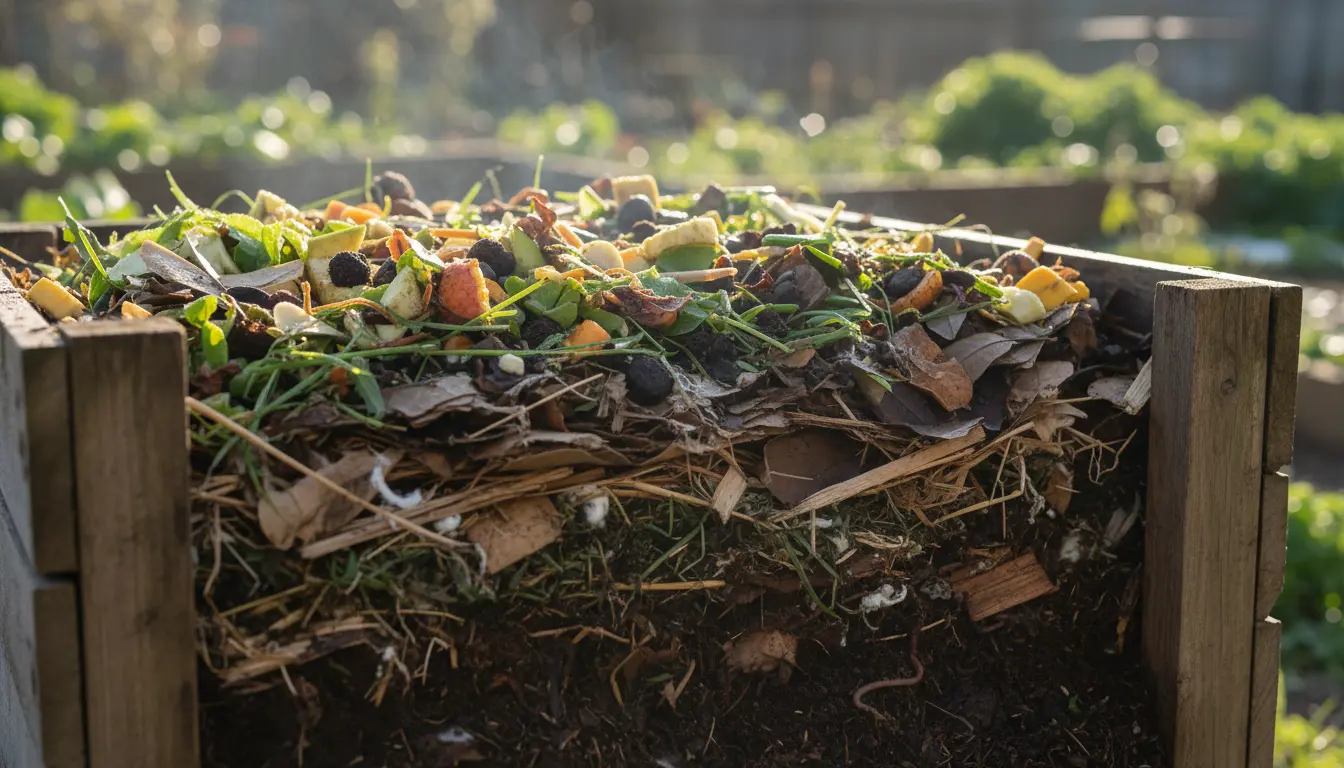
Starting a home compost bin turns kitchen scraps and yard waste into nutrient-rich soil. This guide gives clear, practical steps to set up, manage, and troubleshoot a small compost system at home.
Why start a home compost bin
A home compost bin reduces waste sent to landfill and returns organic matter to your soil. Compost improves moisture retention, feeds plants, and reduces the need for synthetic fertilizers.
For beginners, a simple bin or tumbler is enough. You do not need a large garden to benefit from composting.
What you need to start a home compost bin
Choose the right container and a good spot. Most beginners use a stackable bin, a closed tumbler, or a DIY wooden bin.
- Container options: plastic bin, compost tumbler, wire cage, or wooden pallet bin.
- Location: partial shade, level ground, and easy access from the kitchen.
- Tools: a garden fork or compost aerator, a small rake, and a kitchen compost pail.
Key materials to compost
Balance carbon-rich (brown) and nitrogen-rich (green) materials. Aim for roughly 3 parts brown to 1 part green by volume.
- Greens: fruit and vegetable scraps, coffee grounds, fresh grass clippings.
- Browns: dried leaves, shredded paper, cardboard, straw.
What to avoid in a home compost bin
Do not add meat, dairy, oily foods, diseased plants, or pet waste from carnivores. These items attract pests and can create odors.
Avoid large branches or thick wood that take too long to break down unless chipped first.
Step-by-step: How to start a home compost bin
Follow these steps to get your home compost bin working efficiently from day one.
- Prepare the base: Place your bin on bare soil or coarse gravel for drainage and worm access.
- Add a starter layer: Start with a few inches of coarse brown material like small twigs or straw to encourage airflow.
- Layer green and brown: Alternate thin layers of greens and thicker layers of browns. Chop larger items so they break down faster.
- Moisten: The pile should be as damp as a wrung-out sponge. Add water if very dry, or more browns if too wet.
- Aerate regularly: Turn the pile every 1–2 weeks using a fork or tumbler to speed decomposition and prevent odors.
- Monitor temperature: A properly balanced pile warms up as microbes work. For backyard piles, 40–60°C (104–140°F) in the center indicates active composting; household piles often stay lower but still work.
- Harvest: Compost is ready when it is dark, crumbly, and earthy-smelling. This typically takes 3–6 months with regular turning.
Maintenance tips for a healthy home compost bin
Routine checks keep your bin active and odor-free. Small adjustments prevent problems before they start.
- Stir or turn the pile every 1–2 weeks to add oxygen.
- Keep the balance of browns and greens in mind; add more browns if it smells, add greens if it is not heating up.
- Cover food scraps with a layer of browns to deter flies and pests.
- Use a closed tumbler if you need a low-maintenance, neater option for small yards.
Troubleshooting common problems
Common issues are usually simple to fix. Check these quick diagnostics.
- Bad smells: Too wet or too many greens. Add dry browns and turn the pile.
- Pests: Use a closed bin, avoid meat and oily foods, and bury kitchen scraps under browns.
- Slow decomposition: Materials are too large or too dry. Chop or shred and moisten, then turn.
- Pile not heating: Add more greens and create a slightly larger mass, or insulate the bin in cool climates.
Small real-world example
Case study: A family of three in a small suburban home switched to a 60-liter compost tumbler. They collected kitchen scraps and yard trimmings and turned the tumbler weekly.
After four months they produced enough compost to refresh two vegetable beds and several potted herbs. Food waste sent to the curb dropped by nearly half, and the family reported less need for store-bought potting mixes.
Composting can divert up to 30% of household waste from landfills and reduces methane production from organic waste in anaerobic conditions.
Final checklist before you start your home compost bin
Use this simple checklist to ensure success from day one.
- Pick the right bin for your space and climate.
- Gather browns and greens and a small turning tool.
- Place the bin on soil or gravel and start with a brown base layer.
- Maintain moisture, balance, and turn regularly.
Starting a home compost bin is a low-cost, high-impact way to reduce waste and improve your soil. With basic tools and a little attention, most households can produce useful compost within months.