
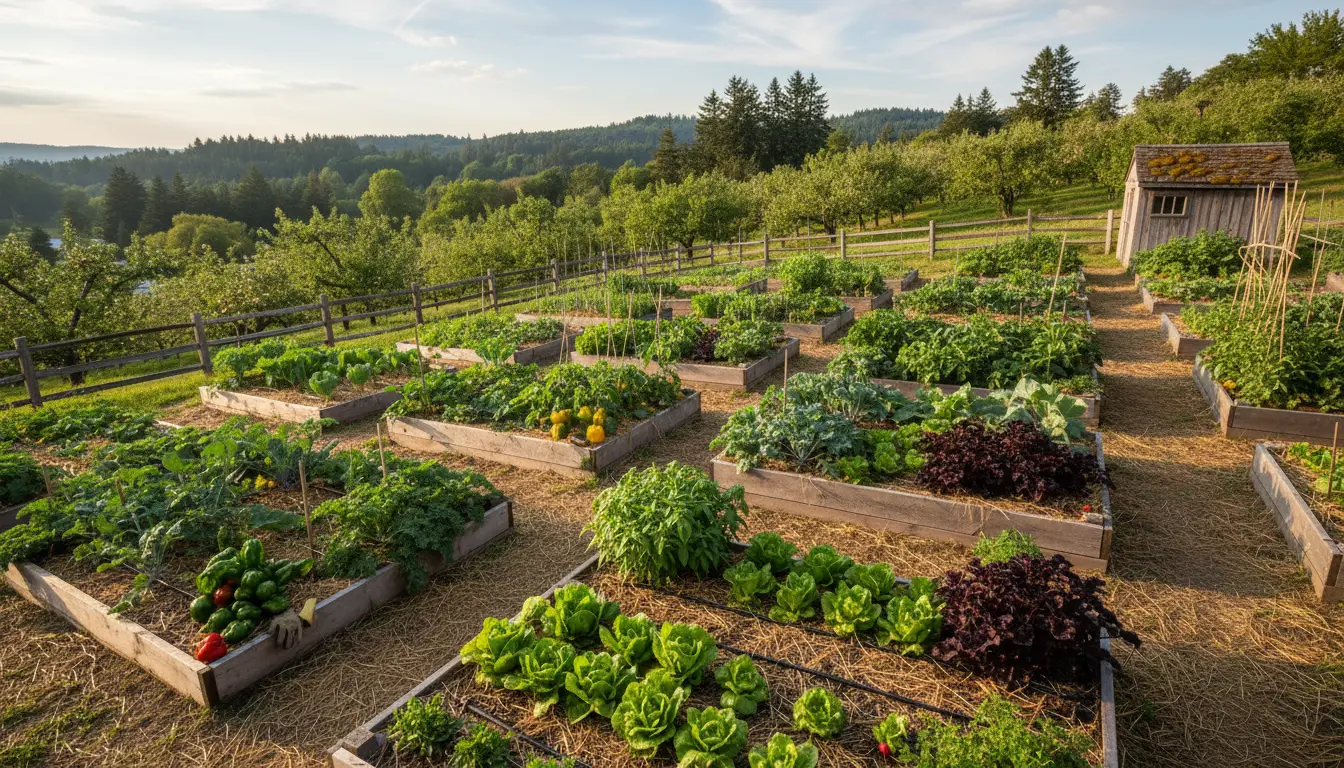
Begin with a Simple Plan for Your Vegetable Garden
Starting a vegetable garden is easier when you follow a clear plan. Decide on location, size, and the vegetables you want to grow before buying supplies.
Choose the Right Location for a Vegetable Garden
Pick a spot that gets at least six hours of direct sunlight daily. Make sure it has good drainage and is close enough to a water source for easy maintenance.
Prepare Soil for a Healthy Vegetable Garden
Good soil is the foundation of a productive vegetable garden. Test the soil pH and amend it to improve structure and fertility.
Vegetable Garden Soil Checklist
- Test pH and nutrients with a home kit or local extension service.
- Add compost to increase organic matter and drainage.
- Use aged manure or balanced organic fertilizer if tests show deficiencies.
- Loosen compacted soil to a depth of 8–12 inches for root growth.
Plan What to Plant in Your Vegetable Garden
Select vegetables that match your climate, taste, and space. Start with a few easy crops to build confidence and success.
Best Beginner Vegetables for a Vegetable Garden
- Tomatoes: productive and reliable in warm spots.
- Lettuce and salad greens: quick-growing for repeated harvests.
- Radishes and carrots: good for small or deep containers.
- Zucchini and bush beans: high yields with minimal care.
Layout and Planting Tips for a Vegetable Garden
Design rows or raised beds that make planting and harvesting simple. Allow paths wide enough to reach plants without stepping on beds.
Spacing and Companion Planting in a Vegetable Garden
Follow seed packet spacing and consider companion planting to reduce pests and boost growth. For example, plant basil near tomatoes to improve flavor and deter some insects.
Watering and Feeding Your Vegetable Garden
Consistent watering helps seedlings establish and reduces plant stress. Use mulch to retain soil moisture and cut down on weeds.
- Water deeply once or twice a week depending on rainfall and soil type.
- Use drip irrigation or soaker hoses for efficient water use.
- Feed with compost or an organic fertilizer during the growing season.
Pest and Disease Management for a Vegetable Garden
Monitor plants regularly to catch problems early. Use cultural controls like crop rotation and resistant varieties before chemical options.
Practical Pest Controls
- Handpick larger pests like slugs and caterpillars.
- Use row covers to protect young plants from insects.
- Encourage beneficial insects by planting flowers such as marigolds and dill.
Adding a one-inch layer of compost annually can increase soil organic matter by up to 10 percent over three years, improving water retention and fertility for your vegetable garden.
Seasonal Care and Harvesting from a Vegetable Garden
Adjust care by season: mulch in summer, protect from frost in fall, and plan crop rotations for spring. Harvest vegetables at peak ripeness to encourage continued production.
Harvesting Tips
- Pick leafy greens young for better flavor and regrowth.
- Harvest tomatoes when they are fully colored and slightly soft.
- Store roots like carrots in cool, humid conditions to extend freshness.
Small Real-World Case Study
Jane, a beginner gardener in a small suburban yard, started a 10×4 foot raised bed in spring. She chose tomatoes, lettuce, and bush beans and amended the soil with compost before planting.
By following a regular watering schedule and using mulch, she had continuous salads through summer. Minimal pest problems were controlled by handpicking and planting marigolds; the bed produced enough to share with neighbors.
Common Mistakes to Avoid in a Vegetable Garden
New gardeners often overwater, overcrowd plants, or ignore soil testing. Avoid these mistakes by following planting guides and starting with a few crops.
- Do not plant too densely; give roots space to grow.
- Don’t assume store-bought soil is ready; check drainage and quality.
- Avoid heavy pruning of young plants until established.
Final Checklist Before You Start Your Vegetable Garden
- Choose a sunny location with good drainage.
- Test and amend soil, adding compost as needed.
- Select beginner-friendly vegetables suited to your climate.
- Set up simple irrigation and mulching to conserve moisture.
- Plan regular monitoring for pests and diseases.
Starting a vegetable garden can be a rewarding, low-cost way to grow fresh food at home. With basic planning, soil care, and seasonal attention, beginners can expect steady improvement and productive harvests in the first year.