
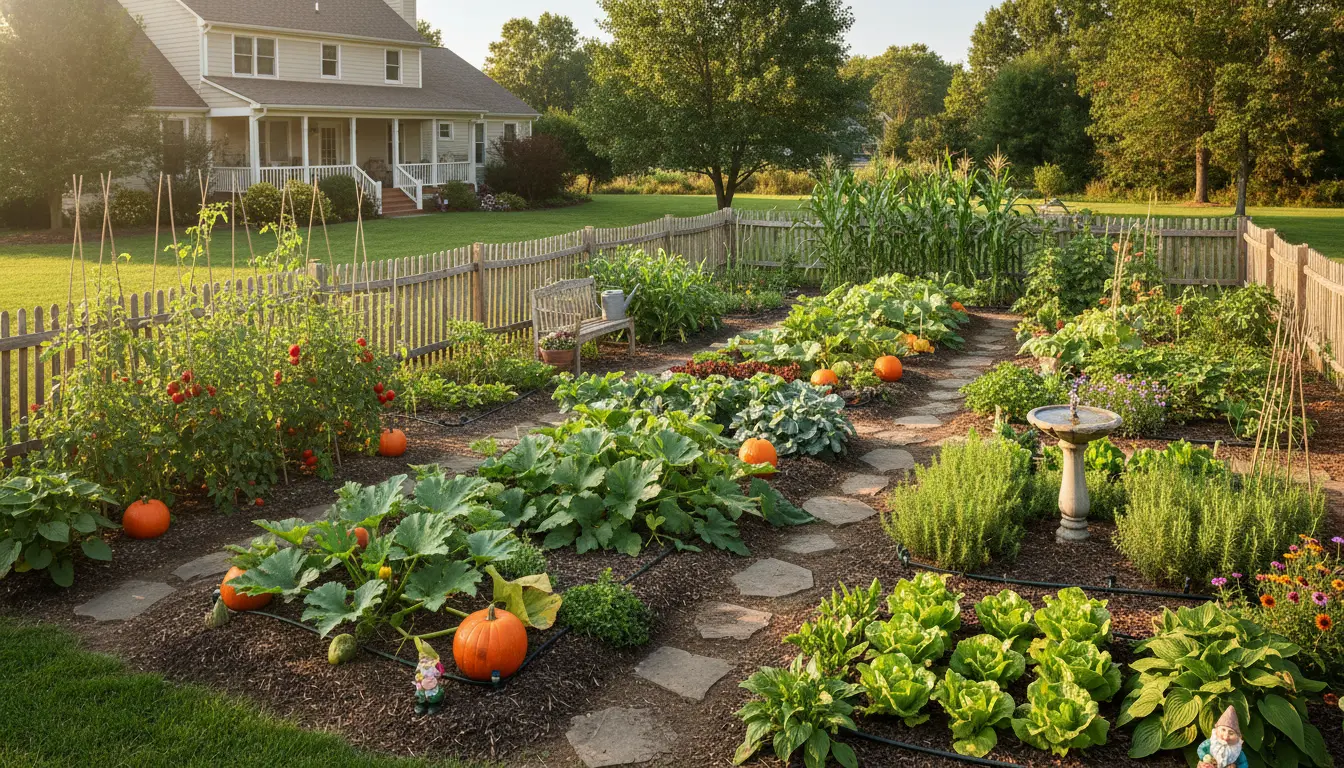
Starting a vegetable garden at home gives you fresh produce, exercise, and a chance to learn seasonal care. This guide focuses on practical steps you can use in a small yard or balcony to get harvests within a season.
Growing vegetables in raised beds can warm soil earlier in spring, allowing harvests up to 2 to 3 weeks sooner than in-ground beds.
How to Start a Vegetable Garden: Plan First
Good planning saves time and increases yield. Begin by deciding where you will place your vegetable garden, which crops you want, and how much time you can commit each week.
Choose a Location for Your Vegetable Garden
Pick a spot with at least 6 hours of direct sunlight for most vegetables. Consider access to water, wind protection, and how close it is to your kitchen for easy harvesting.
Select Crops Based on Space and Skill
Start with a few reliable, easy-to-grow vegetables like tomatoes, lettuce, radishes, and beans. Choose varieties labeled “easy” or “beginner” at nurseries.
Prepare Soil and Beds for a Healthy Vegetable Garden
Soil quality is the most important factor for a productive vegetable garden. Good soil improves plant growth and reduces the need for fertilizers and constant watering.
- Test soil pH with a kit or local extension service. Most vegetables prefer pH 6.0 to 7.0.
- Add organic matter: compost, aged manure, or leaf mold to improve structure.
- Use raised beds in compacted or poor soils to control soil mix and drainage.
Building a Simple Raised Bed
Raised beds are easy to build and maintain. A 4 foot by 8 foot bed is a common choice; it allows you to reach the center from both sides without stepping inside.
Fill with a mix of topsoil, compost, and a small portion of coarse sand or perlite for drainage.
Planting Schedule and Techniques to Start a Vegetable Garden
Timing matters. Check your USDA hardiness zone or local planting calendar and plan sowing dates for seeds and transplanting seedlings accordingly.
Seeds vs Seedlings
Seeds are cheaper and offer more variety. Seedlings (transplants) give a head start and are helpful for plants that need a longer season, like tomatoes and peppers.
Spacing and Depth
Follow seed packet or plant tag instructions for spacing and planting depth. Overcrowding leads to disease and lower yields.
Watering, Feeding, and Basic Pest Control
Once planted, reliable watering and regular feeding keep plants productive. Simple pest control reduces losses without heavy chemicals.
- Water deeply 1-2 times per week rather than shallow daily watering. Adjust for weather.
- Mulch with straw or shredded leaves to retain moisture and suppress weeds.
- Feed with balanced organic fertilizer or compost tea every 4-6 weeks for hungry crops.
- Use physical barriers like row covers for insect control and handpick large pests like slugs.
Common Problems and Quick Fixes
Yellow leaves can indicate poor drainage or nutrient deficiency. Check soil moisture and add compost. Wilting in heat usually needs more frequent watering in the hottest weeks.
Harvesting and Crop Rotation for a Long-Lasting Vegetable Garden
Harvesting on time improves flavor and encourages more production. Learn the right stage to pick each vegetable—leafy greens before bolting, tomatoes when fully colored but slightly firm.
- Succession planting: sow seeds every 2-3 weeks for continual harvests of lettuce or radishes.
- Rotate plant families each year to reduce disease buildup. Move nightshades, brassicas, and legumes to different beds in rotation.
Quick Real-World Example: 10×10 Raised Bed Case Study
Emily turned a 10×10 unused corner of her yard into a productive vegetable garden using two 4×8 raised beds and one small herb box. She started in late spring and focused on easy crops.
Her first season results:
- Salad greens: harvested weekly for 16 weeks.
- Cherry tomatoes: produced 15 pounds collectively from four plants.
- Bush beans: three successive plantings gave steady 6-8 week yields.
Emily spent 2 to 3 hours per week watering, weeding, and harvesting. Her upfront cost was about $150 for wood, soil, and seedlings, and she recouped part of the cost through reduced grocery trips and higher-quality produce.
Simple Checklist to Start a Vegetable Garden
- Choose sunny location and measure available space.
- Decide bed type: in-ground or raised bed.
- Prepare soil: test pH and add compost.
- Select 4-6 beginner crops and check planting dates.
- Set up a watering plan; mulch after planting.
- Monitor, harvest, and record what worked for next season.
Starting a vegetable garden at home is a step-by-step process. With modest planning and simple maintenance, even a small plot can supply fresh vegetables and build gardening confidence over time.