
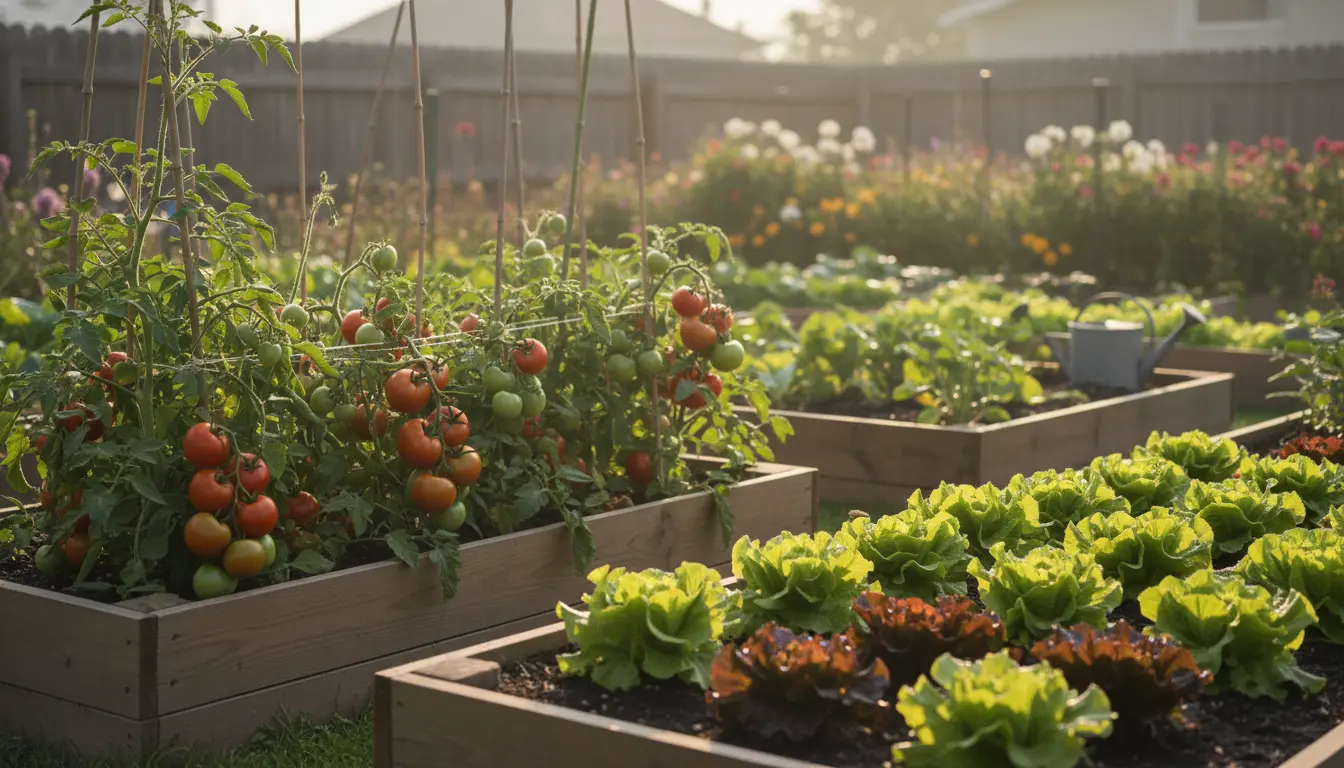
Starting a vegetable garden is a practical way to grow fresh food, save money, and enjoy time outdoors. This guide gives clear steps you can follow from planning to harvest.
How to Start a Vegetable Garden: Plan Your Space
Choose a location that gets at least six hours of sunlight per day. Observe the area at different times to confirm sun exposure and shade patterns.
Decide between in-ground beds, raised beds, or containers based on space, soil quality, and accessibility. Raised beds warm earlier in spring and improve drainage.
- Size: Start small — a 4×8 foot raised bed is manageable for beginners.
- Access: Place beds near water and a storage area for tools.
- Soil test: Consider a basic soil test to check pH and nutrients.
Prepare Soil Before You Start a Vegetable Garden
Good soil is the foundation of productive plants. Aim for loose, well-draining soil rich in organic matter.
How to improve soil
- Add 2–4 inches of compost and mix it into the top 6–8 inches of soil.
- For heavy clay, add coarse sand and organic matter to improve texture.
- Adjust pH if needed: most vegetables prefer pH 6.0–7.0.
Mulch with straw or shredded leaves after planting to retain moisture and suppress weeds.
Choose Plants and Timing to Start a Vegetable Garden
Match crops to your climate and season. Cool-season crops (lettuce, spinach, peas) go in early spring or fall. Warm-season crops (tomatoes, peppers, cucumbers) need warmer soil and air temperatures.
- Start seeds indoors for tomatoes and peppers 6–8 weeks before the last frost.
- Direct sow quick crops like radishes and carrots when soil can be worked.
- Use transplants for larger plants to get an earlier harvest.
Spacing and companion planting
Follow seed packet or plant tag spacing. Crowding leads to disease and lower yields.
- Example: Tomatoes 18–24 inches apart; lettuce 6–12 inches apart.
- Companion pairs: basil near tomatoes; marigolds near many vegetables to deter pests.
Watering and Fertilizing When You Start a Vegetable Garden
Consistent watering is crucial. Most vegetables need about 1 inch of water per week, more in hot weather.
- Water deeply at the base of plants to encourage deep roots.
- Use drip irrigation or soaker hoses to reduce evaporation and leaf wetness.
- Fertilize based on soil test results; a balanced slow-release fertilizer works for many gardens.
Watch for signs of under- or over-watering: yellowing leaves or wilting can indicate issues that need adjustment.
Pest and Disease Basics to Start a Vegetable Garden
Prevent problems by keeping plants healthy and monitoring regularly. Early detection makes control easier.
- Inspect plants weekly for holes, discoloration, or insects.
- Use row covers for young seedlings to block pests.
- Rotate crops yearly to reduce soil-borne diseases.
Choose resistant varieties when available and remove any diseased plants promptly to limit spread.
Harvesting and Ongoing Care
Harvest vegetables when they reach recommended size for best flavor and continued production. Regular harvesting often encourages more fruiting.
- Pick leafy greens before they bolt for best texture.
- Harvest tomatoes when fully colored and slightly soft to the touch.
- Keep a garden journal to track planting dates, yields, and issues for future seasons.
Quick Checklist to Start a Vegetable Garden
- Site selection: sun, water access, protection from wind.
- Soil prep: compost, loosen, test pH.
- Plant selection: seeds or transplants, seasonal timing.
- Water plan: deep, consistent watering; drip irrigation preferred.
- Pest strategy: monitoring, barriers, crop rotation.
Real-World Example: A Small Starter Garden
Case study: Two neighbors converted a 4×8 foot sunny patch into a raised bed in early spring. They filled it with a 50/50 mix of topsoil and compost and planted three tomato plants, two pepper plants, a row of carrots, and lettuce.
They used a simple drip tape and a mulch layer. By late summer, they harvested about 20 pounds of tomatoes, several trays of peppers, and continuous lettuce harvests. The setup cost under $200 and produced fresh vegetables through September.
This example shows that small, well-planned gardens can yield significant food and learning for first-time gardeners.
Final Tips to Start a Vegetable Garden
- Start small and expand after your first season.
- Learn from each season — adjust plant choices and timing.
- Join local gardening groups or extension services for region-specific advice.
With modest time investment and basic care, you can successfully start a vegetable garden and enjoy homegrown produce. Follow the steps above, keep records, and iterate each year for better results.