
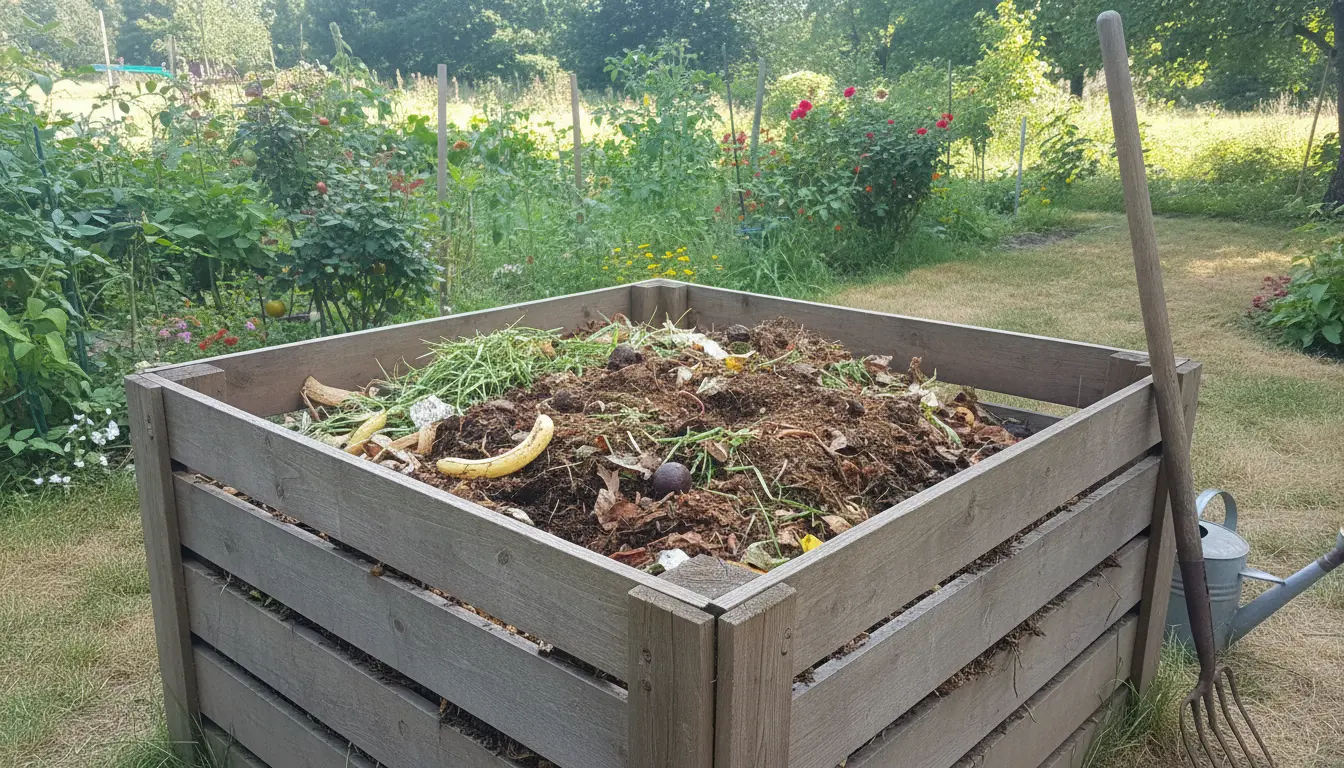
Why start composting at home
Composting at home reduces kitchen and garden waste, cuts landfill volume, and returns nutrients to your soil. It is a simple, low-cost way to improve soil structure and plant health.
Even small apartments can compost with a bokashi bucket or worm bin, so this practice fits many lifestyles. The steps below show how to begin and avoid common mistakes.
Choose the right system for home composting
Select a bin or method that matches your space and time. Common options include a backyard compost heap, a sealed compost bin, a tumbling composter, a worm bin, or a bokashi system.
- Backyard heap: low cost, needs space and turning.
- Sealed bin or tumbler: neater and faster, good for yards and patios.
- Worm bin: ideal for apartments and indoor composting.
- Bokashi: ferments all food waste including meat and dairy.
What to compost at home
Balanced compost needs carbon rich ‘brown’ materials and nitrogen rich ‘green’ materials. Aim for a mix to support decomposition.
- Brown materials: dry leaves, shredded paper, cardboard, straw.
- Green materials: vegetable scraps, coffee grounds, fresh grass clippings.
- Avoid: meat, dairy, oily foods, diseased plants, and pet waste for most systems.
How to start composting at home
Create layers to kickstart decomposition. Start with a coarse base for airflow, then alternate greens and browns.
- Place a 5 cm layer of twigs or coarse brown material at the bottom.
- Add a 10 cm layer of green material, then a thicker layer of brown material.
- Maintain moisture like a wrung-out sponge; not dripping wet and not bone dry.
- Turn the pile every 1 to 2 weeks for faster composting, or leave static for low-maintenance systems.
Temperature and time for home composting
Compost temperature affects speed. Hot composting reaches 55 to 65 C and breaks down materials in weeks. Cold composting takes months to a year but requires less work.
Most home systems operate between these modes depending on size and management. Worm bins and bokashi systems follow different timelines and care routines.
Maintenance tips for successful home compost
Keep three factors balanced: air, moisture, and carbon to nitrogen ratio. Small adjustments solve most problems quickly.
- Air: turn or aerate to supply oxygen and prevent odors.
- Moisture: add water in dry spells or more browns if too wet.
- Feed: chop large pieces to help microbes and worms work faster.
Troubleshooting common issues in home composting
Bad smell usually means too much green material or poor aeration. Add dry browns and turn the pile.
Slow decomposition often results from large pieces, low moisture, or a compacted pile. Shred materials, water lightly, and loosen the mix.
Using finished compost from home
Finished compost is dark, crumbly, and smells earthy. Use it as a soil amendment, potting mix ingredient, or top dressing for lawns and beds.
- Mix 1 part compost to 3 parts soil for potting mixes.
- Topdress vegetable beds with a 1 to 2 cm layer in spring or fall.
- Work compost into garden soil to improve structure and water retention.
Small real-world example: case study
Case study: Sarah, a two-person household, started a 200-liter tumbling composter in spring. She fed kitchen scraps, coffee grounds, and shredded cardboard, and turned the tumbler twice weekly.
After three months she had dark compost ready for her vegetable boxes. Her tomatoes showed stronger growth, and she cut grocery waste by roughly half.
Tips for apartment or small-space composting
Worm bins and bokashi systems work well indoors. Place a worm bin under a counter or on a balcony for small quantities of food waste.
- Worm bin: feed kitchen scraps and avoid citrus overload. Harvest castings every 3 to 6 months.
- Bokashi: ferment scraps in a sealed bucket, then bury the fermented matter in potting soil or a garden bed.
Checklist to start composting at home today
- Choose a system that fits your space and time.
- Gather basic tools: bin, garden fork or aerator, and a small shredder or scissors.
- Collect brown and green materials and keep a small kitchen caddy for scraps.
- Monitor moisture and turn or aerate regularly.
- Use finished compost in beds and pots within 3 to 12 months depending on method.
Final practical advice for home composting
Start small and learn by doing. The first bin may need tweaks, but common fixes are easy: add browns, aerate, or adjust moisture.
Composting at home is a practical step toward reducing waste and improving your garden. With a little routine, it becomes an easy and rewarding habit.