
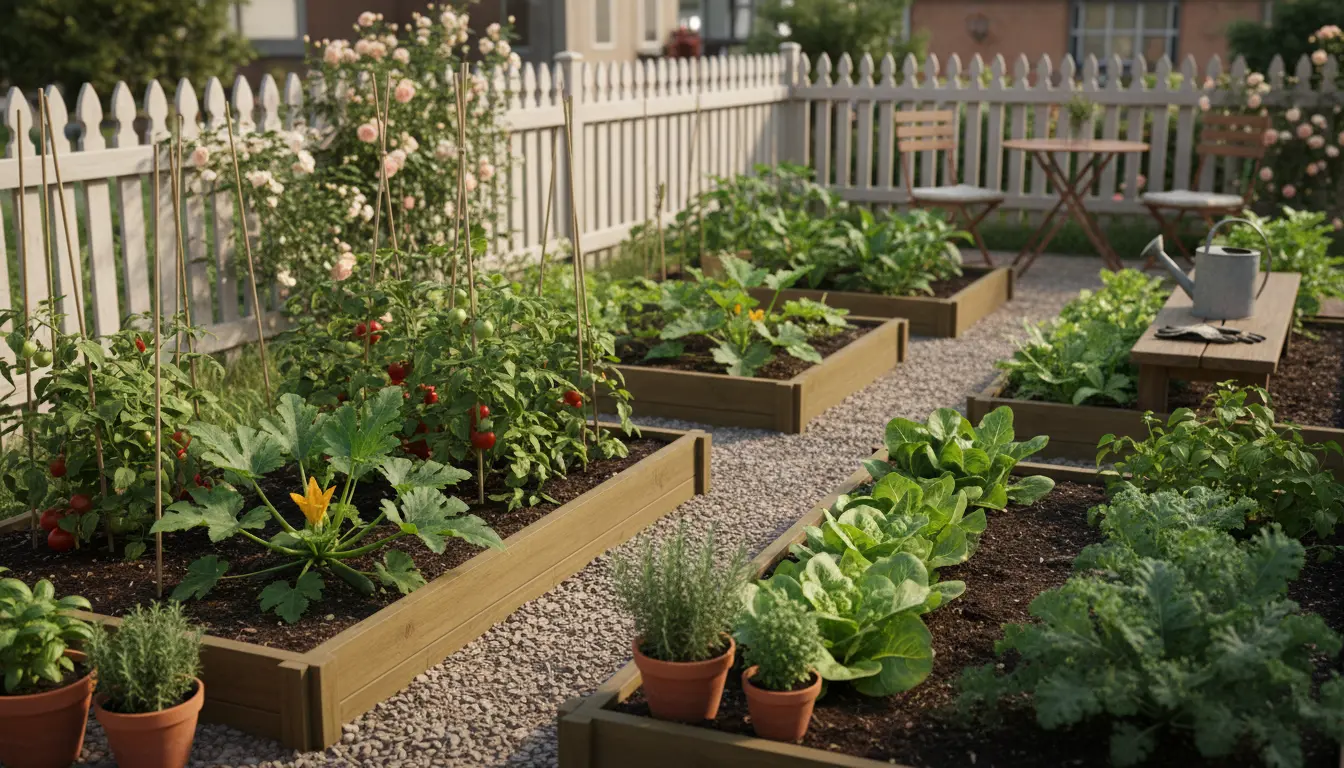
Why a Small Vegetable Garden Works
A small vegetable garden is a practical way to grow fresh food without a large yard. It fits balconies, patios, and small backyards, making it ideal for beginners.
Keeping the space small reduces work and helps you focus on a few high-yield crops. This guide gives clear steps for planning, planting, and maintaining a productive small vegetable garden.
Plan Your Small Vegetable Garden
First, choose the right location. Pick a spot that gets at least 6 hours of direct sunlight each day for most vegetables.
Decide on the garden type: in-ground bed, raised bed, or container garden. Each option suits different spaces and budgets.
Essential planning checklist
- Sun exposure: 6–8 hours preferred
- Water access: nearby hose or watering can
- Space: measure area to plan rows or containers
- Soil test: check pH and nutrient levels
Prepare Soil for Your Small Vegetable Garden
Healthy soil is the foundation of a productive garden. For raised beds or in-ground plots, loosen soil and remove large rocks or roots.
Amend soil with compost and well-rotted organic matter. Aim for a loose, crumbly texture that drains well but holds moisture.
Simple soil mix for containers
- 40% high-quality potting soil
- 30% compost
- 30% coarse sand or perlite for drainage
Choose Vegetables for a Small Space
Select plants that produce well in limited space and match your climate. Start with easy, quick crops to build confidence.
Good beginner choices include tomatoes, lettuce, radishes, bush beans, and herbs like basil.
Crop selection tips
- Pick compact or bush varieties for small beds
- Stagger planting times for continuous harvests
- Use vertical supports for vining crops to save ground space
Planting and Spacing in a Small Vegetable Garden
Follow seed packet or plant tag spacing to avoid overcrowding. Proper spacing improves air circulation and reduces disease risk.
Consider square-foot gardening for tight plots. Plant more intensively while keeping a manageable layout.
Square-foot example
- 1 square: 1 tomato plant
- 4 squares: 16 lettuce plants (closely spaced)
- 2 squares: 4 bush bean plants
Watering and Fertilizing
Water deeply and less frequently to encourage strong roots. Early morning watering reduces evaporation and fungal problems.
Use a balanced organic fertilizer or compost tea every 4–6 weeks during the growing season. Adjust feeding based on plant performance and soil tests.
Pest and Disease Management
Use preventive strategies first: crop rotation, good spacing, and clean tools. Inspect plants weekly to catch issues early.
For pests, handpick larger insects and use insecticidal soap for soft-bodied pests. Introduce beneficial insects like ladybugs for natural control.
Simple Maintenance Tasks
Stay consistent with these tasks to keep your small vegetable garden productive. Weekly attention prevents small problems from growing.
- Weed by hand to reduce competition
- Mulch to retain moisture and suppress weeds
- Prune and stake tomatoes and other tall plants
Planting marigolds near vegetables can help deter soil nematodes and attract pollinators. Companion planting is a low-cost way to support garden health.
Small Real-World Case Study
Case: A two-person household used a 4×4-foot raised bed on a sunny balcony. They planted indeterminate tomatoes, basil, a few lettuce rows, and bush beans.
By using vertical tomato cages, weekly compost tea, and a simple drip line, they harvested fresh salad greens and 20–30 pounds of tomatoes over one season. The garden required 2–3 hours of maintenance per week.
Harvesting and Extending the Season
Harvest vegetables when ripe to encourage more production. Pick lettuce leaves regularly to promote new growth.
Extend the season with row covers, cold frames, or container moves indoors for tender plants when frost arrives.
Quick Start Checklist for a Small Vegetable Garden
- Choose a sunny spot and garden type (bed or containers).
- Test and amend soil with compost.
- Select compact vegetable varieties for your space.
- Plant with proper spacing and add mulch.
- Water deeply, fertilize monthly, and inspect for pests.
Starting a small vegetable garden is practical and achievable with basic planning and regular care. Focus on a few reliable crops, use good soil practices, and adjust methods to your space for steady, rewarding results.