
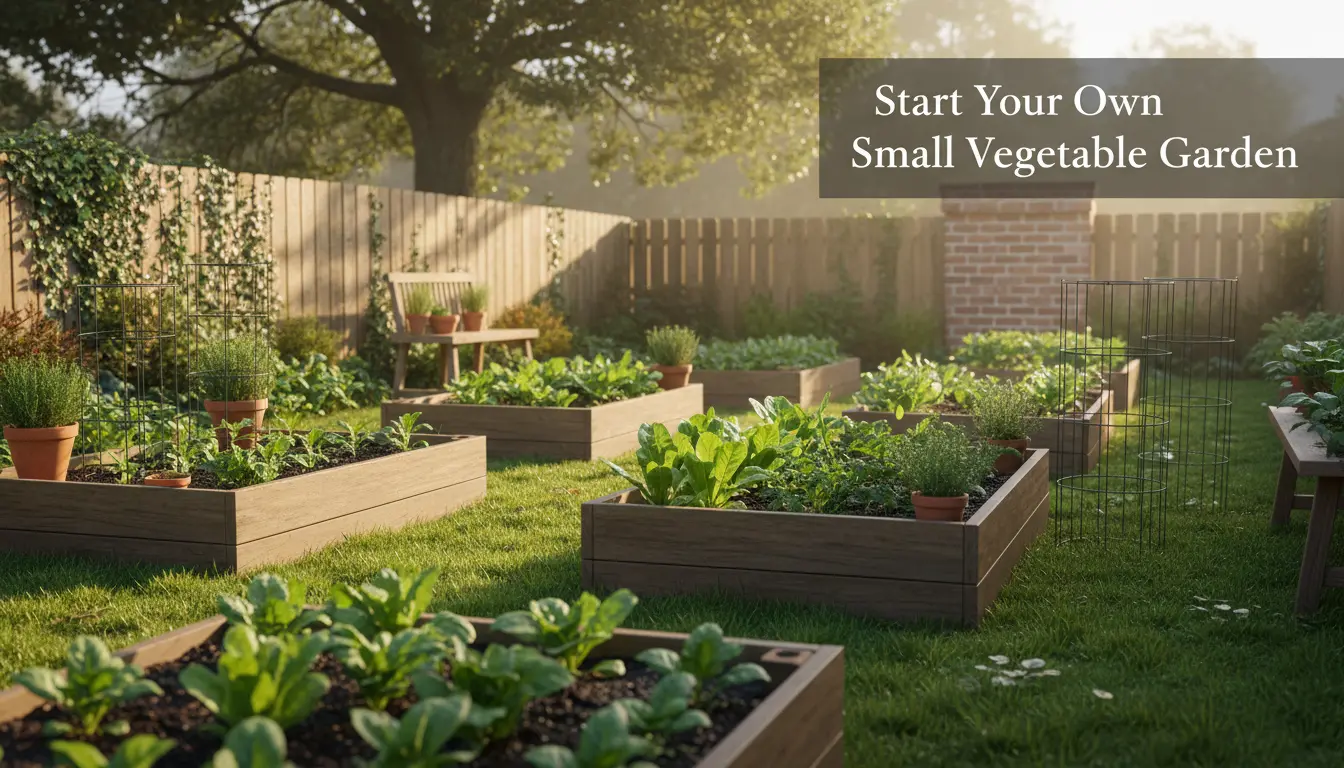
Starting a small vegetable garden at home is practical and affordable. This guide gives clear, step-by-step instructions so you can plan, plant, and maintain a productive patch, even in limited space.
How to Start a Small Vegetable Garden: Plan First
Good results begin with a simple plan. Decide what you want to grow, how much time you can spend, and whether you prefer in-ground beds, raised beds, or containers.
List the vegetables you and your household eat most. Prioritize easy, high-yield crops like lettuce, radishes, cherry tomatoes, bush beans, and herbs.
Choose the Right Location for a Small Vegetable Garden
Sunlight is the most important factor. Most vegetables need 6–8 hours of direct sun. Observe the yard for a few days to find the sunniest spot.
Also consider access to water, flatness of the ground, wind exposure, and visibility from your door so you’ll check the garden regularly.
Pick a Garden Type
- In-ground bed: Best if soil drains well and space is available.
- Raised beds: Improve drainage, reduce bending, and give you better soil control.
- Containers: Ideal for balconies or patios; use large pots for root vegetables and tomatoes.
Soil, Compost, and Soil Testing
Healthy soil is the foundation for a small vegetable garden. Start with a basic soil test to check pH and nutrient levels; many local extension services offer low-cost tests.
Amend soil with compost to improve structure and fertility. For raised beds, use a mix of topsoil, compost, and a small amount of loam or coconut coir for water retention.
Simple Soil Mix for Raised Beds
- 40% high-quality topsoil
- 40% compost
- 20% drained loam or coir
Work the mix to a depth of at least 8–12 inches for most vegetables. For root crops like carrots, deeper loose soil helps roots develop.
What to Plant First in a Small Vegetable Garden
Start with quick, easy crops to build confidence. Cool-season crops and fast harvests help keep momentum early on.
- Lettuce and salad greens — harvest in 30–60 days.
- Radishes — 25–40 days, great for quick success.
- Spinach and kale — cool-season hardy greens.
- Cherry tomatoes — compact and productive in containers.
- Herbs like basil, parsley, and chives — low maintenance.
Succession Planting for Constant Harvests
Plant small batches of fast crops every 2–3 weeks. This ensures continuous harvest without large peaks and gaps.
Watering, Mulch, and Pest Basics
Consistent watering is crucial. Aim for deep, infrequent watering rather than daily shallow watering. Use a soaker hose or drip irrigation for efficiency.
Mulch reduces weeds and retains moisture. Apply 2–3 inches of straw, shredded leaves, or wood chips around plants.
For pests, use physical barriers (row covers, collars), hand-pick larger pests, and encourage beneficial insects by planting flowering herbs and companion plants.
Common Small Garden Problems and Quick Fixes
- Yellow leaves: Check watering and soil drainage.
- Stunted growth: Test soil and add compost or balanced organic fertilizer.
- Slugs and snails: Use beer traps, diatomaceous earth, or copper tape around containers.
Planting taller crops on the north side of a small garden bed prevents shading of shorter plants. This simple layout increases overall yields in tight spaces.
Maintenance Schedule for a Small Vegetable Garden
Keep a short weekly routine to reduce problems. Spend 15–30 minutes doing light tasks like weeding, checking for pests, and harvesting ripe produce.
Monthly tasks include topping up mulch, inspecting soil moisture deeper in the bed, and adding compost or slow-release organic fertilizer if growth slows.
Seasonal Notes
- Spring: Prepare beds, sow cool crops, and transplant starts.
- Summer: Focus on watering, pest control, and harvesting.
- Autumn: Plant fall greens, collect seeds, and add compost to beds.
Real-World Example: A Small Backyard Success
Case study: A family converted a 12 ft x 4 ft raised bed in their small backyard. They used three 4 ft x 4 ft connected beds filled with a 40/40/20 soil mix.
In the first season they planted cherry tomatoes (4 plants), bush beans (12 plants), two rows of lettuce, and a herb patch. They practiced succession planting for lettuce and radishes.
Results: Regular weekly maintenance yielded fresh salad greens twice a week and 8–10 pints of cherry tomatoes per plant over the season. Time commitment averaged 20 minutes per week.
Summary: Practical Steps to Start a Small Vegetable Garden
- Choose a sunny, accessible location with good water access.
- Decide on in-ground, raised beds, or containers based on space and budget.
- Improve soil with compost and test pH if possible.
- Start with easy, high-yield crops and use succession planting.
- Water deeply, mulch, and perform short weekly maintenance.
With a modest plan and small weekly effort, you can start a small vegetable garden that reliably produces fresh food for your household. Begin with one small bed or a few large containers, learn from one season, and expand as you gain confidence.