
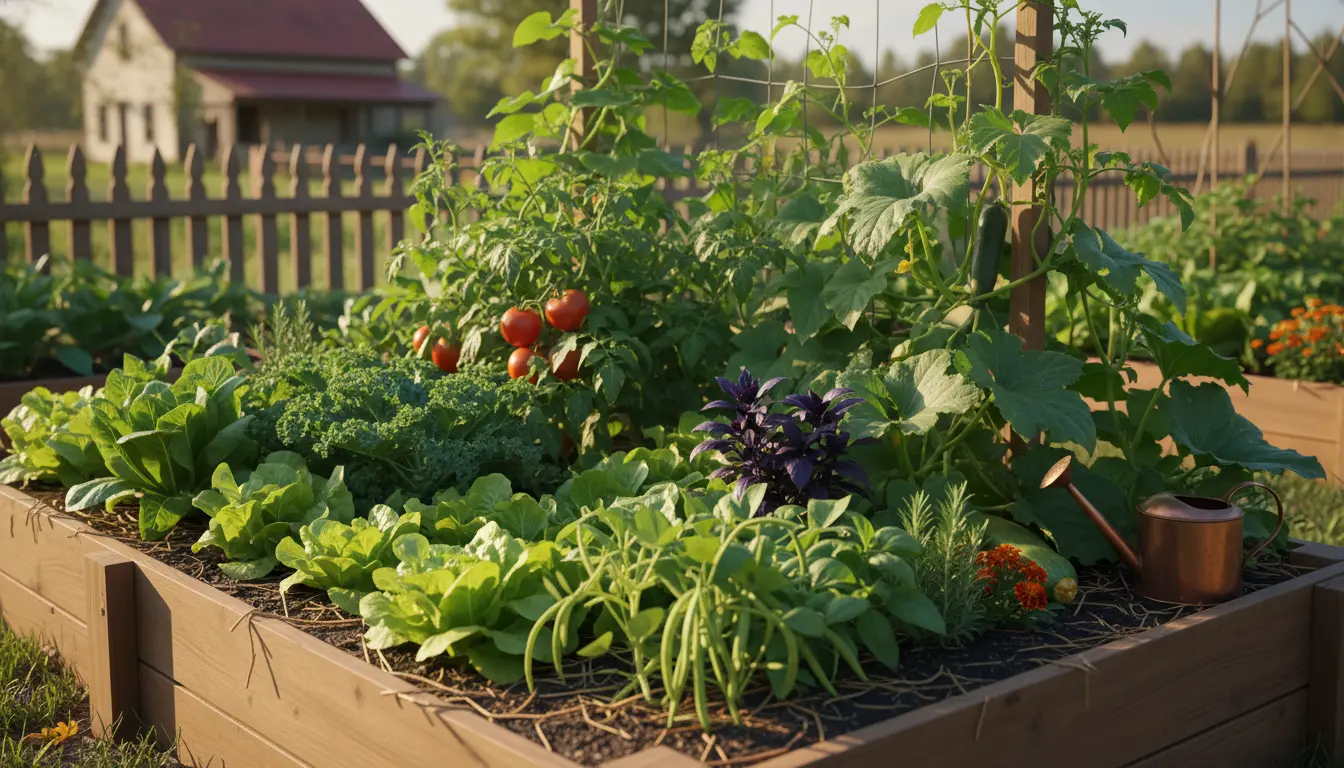
Why start a small vegetable garden
Growing your own vegetables saves money and gives you fresh, tastier produce. A small vegetable garden fits in backyards, balconies, or community plots and suits beginners and busy people.
This guide explains practical steps to plan, plant, and maintain a productive small vegetable garden with minimal tools and time.
Choose a site for your small vegetable garden
Site selection is the first key decision when you start a small vegetable garden. Most vegetables need at least six hours of direct sunlight each day.
Look for a flat or gently sloped area with good drainage and easy access to water. Consider proximity to your kitchen for harvesting convenience.
Sun, soil, and accessibility for a small vegetable garden
Assess sunlight at different times of day. Note shade from trees or buildings. If sunny space is limited, choose shade-tolerant crops like lettuce, spinach, and herbs.
Ensure you can reach the garden without stepping on beds. Use paths or raised beds to protect soil structure and make maintenance easier.
Prepare soil for a small vegetable garden
Healthy soil is the foundation of a productive small vegetable garden. Good soil holds water, drains well, and provides nutrients.
Test soil pH with a simple kit; most vegetables prefer pH 6.0 to 7.0. Amend heavy clay or sandy soils with organic matter.
Soil preparation steps
- Clear weeds and debris from the site.
- Turn or double-dig the top 6 to 8 inches to loosen compacted soil.
- Mix in 2 to 4 inches of compost or well-rotted manure to improve fertility and structure.
- Level the bed and water lightly to settle the soil.
Select plants for a small vegetable garden
Choose a mix of fast-growing and longer-season crops to maximize harvests in limited space. Consider your climate zone and the season.
Start with reliable, easy-to-grow varieties if you are a beginner.
Recommended plants for a small vegetable garden
- Leafy greens: lettuce, spinach, swiss chard
- Quick roots: radishes, baby carrots
- Compact fruiters: dwarf tomatoes, patio peppers
- Herbs: basil, cilantro, parsley
Planting and spacing in a small vegetable garden
Proper spacing prevents crowding and disease. Use seed packets or plant labels for exact spacing guidelines.
Consider square-foot gardening or raised beds to maximize yield in small plots.
- Square-foot method: divide 4×4 beds into 16 squares and plant according to square spacing guides.
- Succession planting: sow new crops every 2–3 weeks to keep harvests steady.
Watering and maintenance for a small vegetable garden
Consistent watering is crucial. Most vegetables need about 1 inch of water per week, supplied evenly.
Water at the base of plants early in the morning to reduce evaporation and leaf diseases.
Simple maintenance checklist
- Water deeply 1–2 times weekly depending on weather.
- Mulch around plants to retain moisture and suppress weeds.
- Fertilize lightly with compost tea or balanced organic fertilizer every 4–6 weeks.
- Remove weak or diseased leaves promptly.
Planting beans near corn can improve pollination and soil nitrogen. Beans fix nitrogen, which benefits heavy feeders like corn.
Pest control and harvest in a small vegetable garden
Use integrated pest management: monitor plants regularly, remove pests by hand, and encourage beneficial insects.
Row covers, companion plants, and physical barriers can reduce damage without chemicals.
Harvest tips for a small vegetable garden
- Harvest leafy greens frequently to encourage new growth.
- Pick tomatoes when fully colored but still firm; ripen inside if necessary.
- Store root crops in a cool, dry place after removing excess soil.
Case study: A 4×8 raised bed small vegetable garden
Maria used a 4×8 raised bed on her apartment balcony to start a small vegetable garden. She filled it with a 60:40 mix of compost and topsoil and planted two dwarf tomato plants, six basil plants, and rows of lettuce and radishes.
With drip irrigation and weekly compost tea, she harvested salad greens within five weeks and tomatoes by midsummer. Her setup required about 30 minutes of care per week and produced enough vegetables for two people.
Quick checklist to start your small vegetable garden
- Choose a sunny, accessible site.
- Test and amend soil; add compost.
- Select compact, fast-maturing plants.
- Plan spacing and succession planting.
- Set up simple watering and mulching.
- Monitor pests and harvest regularly.
Final tips for success with a small vegetable garden
Start small and expand as you gain experience. Keep records of planting dates and varieties to learn what works in your microclimate.
Enjoy the process—gardening is a cycle of small experiments that lead to better yields and less wasted time each season.