
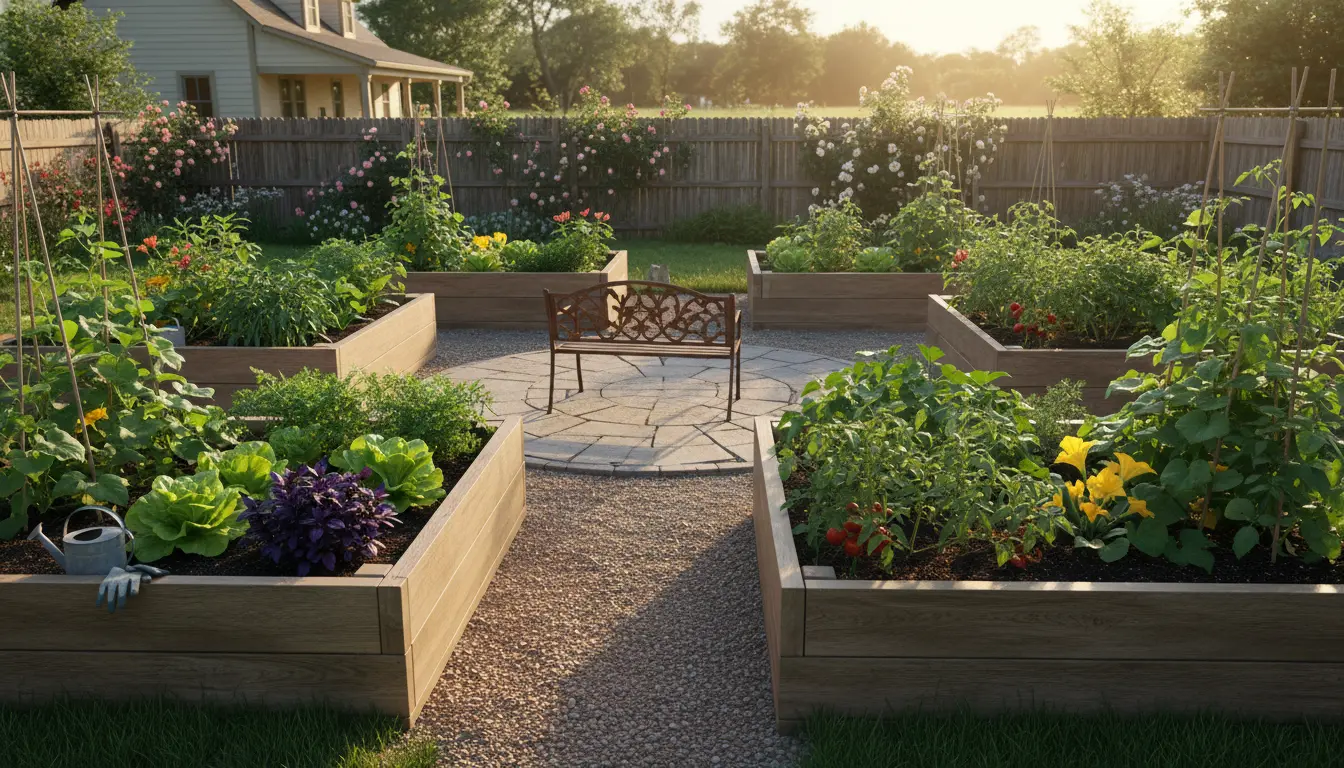
How to Start a Small Vegetable Garden
Starting a small vegetable garden is an achievable project for any beginner. This guide gives practical steps to plan, plant, and maintain a productive patch even in limited space.
Plan Your Small Vegetable Garden
Decide goals before you plant. Are you growing to save money, eat fresher vegetables, or learn a new hobby?
Sketch a simple layout showing sun exposure, water source, and space for pathways. Keep the design compact to reduce maintenance time.
Choose the Best Spot for Your Small Vegetable Garden
Most vegetables need 6 to 8 hours of direct sunlight daily. Choose a south- or west-facing area when possible.
Check drainage and proximity to a water source. Avoid areas that stay soggy after rain.
Decide Between Raised Beds, Containers, or In-Ground
For a small vegetable garden, raised beds and containers are often the easiest to manage. They warm faster in spring and allow control over soil quality.
- Raised beds: Good for root vegetables and continuous cropping.
- Containers: Ideal for balconies, patios, and very small yards.
- In-ground: Best if you have healthy native soil and a larger area.
How to Build a Simple Raised Bed
Choose untreated wood, stone, or recycled materials. Keep beds 3 to 4 feet wide so you can reach the center from both sides.
Fill beds with a mix of good topsoil, compost, and a small amount of coarse sand or perlite for drainage.
Prepare Soil for a Small Vegetable Garden
Soil quality determines long-term success. Test soil pH if possible; most vegetables prefer pH 6.0 to 7.0.
Incorporate 2 to 3 inches of compost into the top 6 inches of soil to improve nutrients and structure.
Soil Tips and Amendments
- Use compost or well-rotted manure for steady nutrients.
- Add lime if the soil is too acidic; add sulfur if too alkaline.
- Consider a slow-release organic fertilizer at planting time.
Choose Vegetables Suitable for a Small Vegetable Garden
Pick high-yield, space-efficient vegetables such as tomatoes, peppers, lettuce, radishes, and bush beans.
Use vertical supports for vining crops like cucumbers and pole beans to save ground space.
Succession Planting for Continuous Harvest
Plant quick-maturing crops every few weeks to maintain a steady supply. For example, sow lettuce and radishes every 2 to 3 weeks in spring and fall.
Watering and Irrigation for a Small Vegetable Garden
Water deeply and less often to encourage strong root growth. Aim for the soil to be moist to a depth of 6 inches.
Use soaker hoses or drip irrigation to save water and reduce leaf wetness, which can reduce disease risk.
Mulching and Weed Control
Apply 2 to 3 inches of organic mulch such as straw or shredded leaves to conserve moisture and suppress weeds.
Hand-pull or hoe weeds early; they compete with vegetables for nutrients in a small garden.
Common Pests and Simple Controls
Start with prevention: clean beds, crop rotation, and healthy soil. Use row covers for young plants to block insects.
- Handpick larger pests like slugs and caterpillars.
- Use insecticidal soap or neem oil for persistent soft-bodied insects.
- Encourage beneficial insects by planting flowers such as marigolds and dill.
Harvesting and Storage
Harvest vegetables when they reach recommended size for peak flavor. Regular harvesting often encourages more production.
Store harvests correctly: cool leafy greens quickly, store root vegetables in a cool, dark place, and refrigerate soft fruits like tomatoes short-term.
Some compact varieties are bred for small gardens. Look for words like bush, dwarf, or patio on seed packets to save space and increase yields.
Small Vegetable Garden Case Study
Example: Anna, a city renter, used four 2×4 raised beds on her balcony to grow tomatoes, lettuce, bush beans, and herbs. She chose determinate tomato varieties and used vertical trellises for cucumbers.
In her first season she followed a weekly watering schedule with drip lines and added compost twice. She harvested lettuce every 3 weeks and had enough basil and parsley to use in cooking for the whole summer.
Checklist to Start Your Small Vegetable Garden
- Choose site with 6+ hours of sun
- Select containers or build raised beds
- Improve soil with compost and test pH
- Pick compact or bush varieties
- Install simple drip irrigation or water schedule
- Mulch, monitor pests, and harvest regularly
Final Practical Tips for a Small Vegetable Garden
Start small and expand in the second year. A smaller, well-managed garden is more productive and less overwhelming.
Keep a short notebook with planting dates, varieties, and harvest notes. These simple records improve planning and yields each season.
With a clear plan, good soil, and consistent care, a small vegetable garden can supply fresh produce, reduce grocery bills, and provide satisfying hands-on work.