
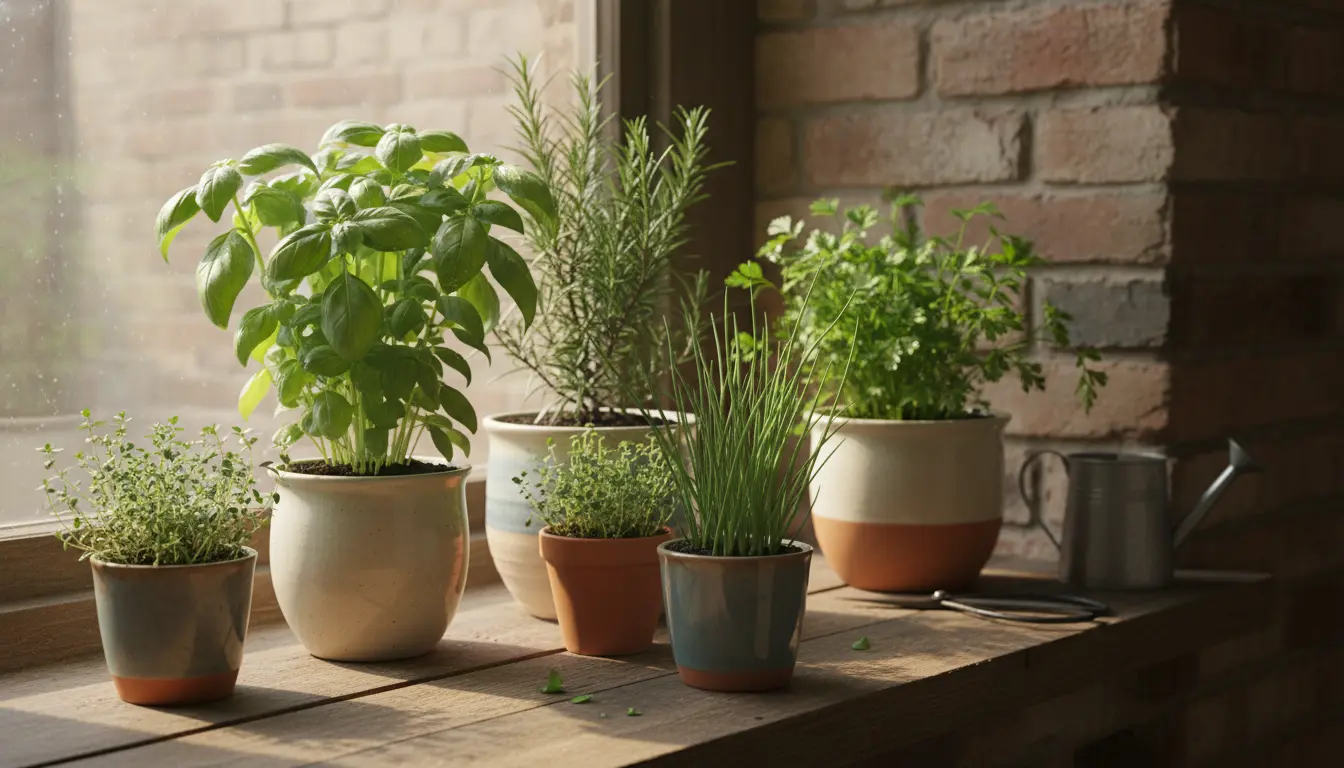
Getting started with a kitchen herb garden
Growing herbs in your kitchen gives you fresh flavors, saves money, and requires little space. This guide explains practical steps to start a kitchen herb garden and keep it productive year-round.
Why Start a Kitchen Herb Garden
A kitchen herb garden delivers immediate benefits: fresh ingredients, reduced grocery trips, and better-tasting meals. Herbs also improve indoor air quality and add a touch of green to small spaces.
Many common herbs are low-maintenance and adapt well to containers, which makes them ideal for windowsills, balconies, and small apartments.
Benefits of a Kitchen Herb Garden
- Fresh, pesticide-free herbs on demand
- Lower food costs and less waste
- Easy access while cooking
- Educational and therapeutic value
Choose Herbs for a Kitchen Herb Garden
Select herbs that match your cooking habits and indoor conditions. Start with easy-to-grow varieties if you are new to indoor gardening.
Recommended Herbs
- Basil — great for tomatoes and pasta, needs bright light
- Parsley — versatile and tolerant of moderate light
- Thyme — compact and drought-tolerant
- Mint — fast-growing, keep it contained
- Chives — hardy and space-efficient
Step-by-Step: Start a Kitchen Herb Garden
Follow these clear steps to set up your kitchen herb garden. Each step focuses on practical choices to reduce common mistakes.
1. Pick the Right Location
Most herbs need 4–6 hours of light a day. South- or west-facing windows are ideal, but east windows often work well too.
If natural light is limited, plan for a small LED grow light that provides full-spectrum light for 12–14 hours daily.
2. Choose Containers and Soil
Use containers with drainage holes to prevent root rot. Terracotta pots are breathable and help avoid overwatering.
Use a lightweight potting mix formulated for containers or herbs. Avoid garden soil, which can compact and retain too much moisture.
3. Planting Options
You can start from seeds, small plants, or cuttings. Beginners often find small nursery plants easiest because they establish quickly.
- Seeds: cheapest, requires patience and extra care.
- Starter plants: fast results and simpler care.
- Cuttings: clone a favorite plant and root it in water or soil.
4. Watering and Fertilizing
Water when the top inch of soil is dry. Most herbs prefer slightly drier conditions than consistently wet soil.
Fertilize lightly every 4–6 weeks with a balanced, water-soluble fertilizer at half strength to maintain steady growth.
5. Pruning and Harvesting
Regular pruning encourages bushier plants and prevents legginess. Harvest leaves from the top and avoid removing more than one-third of the plant at a time.
Pinch flowers or trim flower stalks on herbs like basil and thyme to focus energy on leaf production.
Harvesting herbs regularly actually increases their yield. Removing stems stimulates new growth, so frequent light harvesting keeps plants productive and compact.
Common Problems and Quick Fixes
Indoor herb gardens face a few recurring issues. Identifying them early helps preserve plant health.
Yellow Leaves
Often a sign of overwatering or poor drainage. Check soil moisture and improve drainage or reduce watering frequency.
Leggy Growth
Leggy or stretched stems indicate insufficient light. Move plants closer to the window or add a supplemental grow light.
Pests
Small infestations of aphids or spider mites can be treated with insecticidal soap or a strong water spray. Isolate new plants for a week to avoid bringing pests indoors.
Case Study: Small Windowsill Herb Bed
Maria, a busy teacher in a city apartment, started a windowsill herb garden with three pots: basil, parsley, and chives. She used store-bought starter plants and placed them on a south-facing sill.
Within four weeks, she had enough basil to make weekly pesto and fresh chives for salads. She kept a small spray bottle for watering and pruned weekly to encourage new growth. The setup cost under $40 and cut her herb purchases nearly in half.
Practical Tips and Examples
Here are quick practical tips to improve success and reduce maintenance time.
- Group plants with similar light and water needs.
- Label pots with planting dates to track progress.
- Rotate containers weekly for even light exposure.
- Use saucers to catch runoff and protect surfaces.
Summary: Keep Your Kitchen Herb Garden Thriving
Starting a kitchen herb garden is an easy project with immediate rewards. Focus on light, drainage, and regular harvesting to keep plants productive.
With minimal space and simple care, you can enjoy fresh herbs year-round and add flavor to everyday meals.