
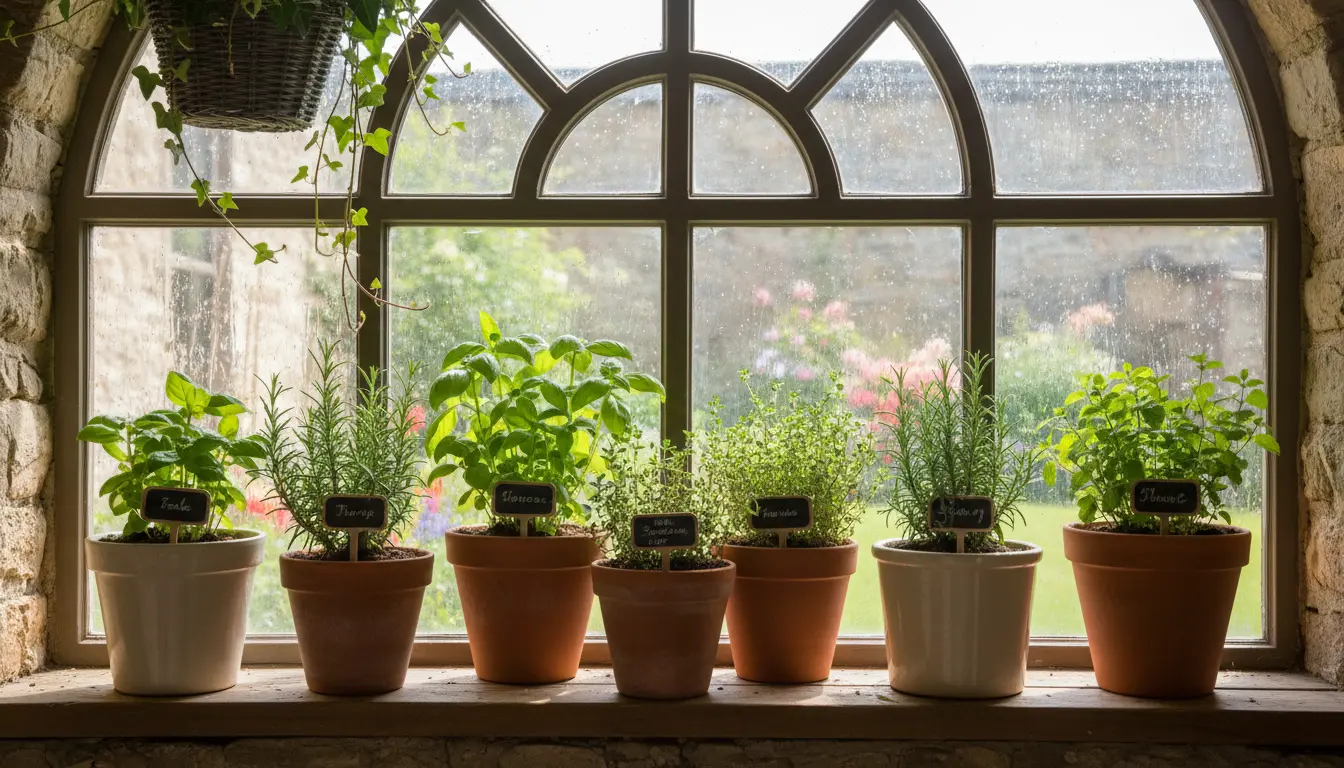
Why start an indoor herb garden
An indoor herb garden gives fresh flavor, saves money, and improves indoor air. It is manageable on a windowsill or a small shelf and fits beginners and experienced gardeners.
This guide covers what to grow, how to set up an indoor herb garden, basic care, and troubleshooting advice you can use today.
Choose herbs for your indoor herb garden
Select herbs that adapt well to containers and indoor light. Start with a few easy varieties and expand once you gain confidence.
- Basil for warm, sunny spots
- Perrsley for moderate light and steady moisture
- Mint for low light, but keep it contained
- Chives for bright light and cool conditions
- Rosemary and thyme for very bright light and drier soil
Pick light and location for an indoor herb garden
Light is the most important factor for an indoor herb garden. Most culinary herbs need 6 hours of bright light per day.
Place pots on a south or west facing window. If natural light is limited, use a simple LED grow light set to 12 to 14 hours daily.
Light tips for an indoor herb garden
- Bright window without direct afternoon heat is ideal
- Rotate pots weekly so growth stays even
- For LEDs, choose full spectrum bulbs and hang 12 to 18 inches above plants
Choose containers and soil for an indoor herb garden
Choose pots with drainage holes to prevent root rot. Size matters: 4 to 6 inch pots work for most herbs, larger pots for rosemary.
Use a light, well draining potting mix labeled for herbs or vegetables. Add perlite or coarse sand if the mix holds too much water.
Planting and spacing in your indoor herb garden
Plant seedlings or transplants rather than sowing tiny seeds for faster results. Space herbs to allow air flow and prevent disease.
- Single seedling per 4 to 6 inch pot
- Two small herbs can share an 8 inch pot if growth habits match
- Label pots with planting date and variety
Watering and feeding your indoor herb garden
Overwatering is the most common mistake with an indoor herb garden. Water when the top 1 inch of soil feels dry to the touch.
Use a saucer to catch runoff, and empty it after watering. Fertilize lightly with a balanced liquid fertilizer every 4 to 6 weeks during the growing season.
Simple watering schedule example
- Small pots in warm rooms: check every 2 to 3 days
- Large pots or cool rooms: check every 4 to 7 days
- Use a moisture meter if you need exact guidance
Pruning, harvesting and maintenance for an indoor herb garden
Regular pruning keeps herbs productive and prevents legginess. Harvest by cutting stems above a leaf node to encourage branching.
Pinch back flowering stems to keep herbs focused on foliage if you want strong flavor for cooking.
Troubleshooting your indoor herb garden
Identify common issues quickly to maintain a healthy indoor herb garden. Look for leaf yellowing, drooping, or pests on the undersides of leaves.
- Yellow leaves: usually overwatering or low light
- Wilting with dry soil: underwatering
- White webs or sticky residue: check for spider mites or aphids
- Leggy growth: increase light and pinch tips
Case study: A windowsill basil starter
Maria started an indoor herb garden on a small apartment windowsill. She planted two basil seedlings in 6 inch pots with well drained potting mix and placed them on a south facing window.
She watered when the top inch of soil dried, rotated the pots weekly, and harvested leaves every week. Within six weeks she had fresh basil for weekly meals and a steady supply for pesto.
Many herbs like basil and mint release pleasant scents that can slightly improve indoor air quality and uplift mood when grown near living spaces.
Examples of simple indoor herb garden layouts
Choose a layout that fits light and space. Here are three practical setups for an indoor herb garden.
- Windowsill row: three to five 4 to 6 inch pots lined on a sunny window
- Tiered shelf: a small shelf with an LED grow light for a compact herb collection
- Mixed container: one large pot with compatible herbs like thyme, oregano, and sage
Final tips for a successful indoor herb garden
Start small and learn what each herb prefers. Keep notes on watering frequency, light exposure, and harvesting times for best results.
Replace soil or repot herbs yearly to refresh nutrients and give roots room to grow. With simple care, an indoor herb garden will supply fresh flavors and a rewarding hobby.