
Home Composting Basics
Home composting is the controlled decomposition of organic kitchen and yard waste into a nutrient-rich soil amendment. It reduces household trash and returns carbon and nutrients to your garden.
This guide explains simple methods, required materials, timeline, and common problems so you can start a home composting system that fits your space and routine.
Why Start a Home Composting System
Composting lowers landfill waste, improves soil structure, and cuts the need for synthetic fertilizers. It is practical and often requires minimal time once established.
Even small households can compost effectively with a kitchen pail and a backyard bin or a worm bin for indoor setups.
Choosing a Composting Method
Pick a method that matches your space, effort level, and waste type. The three most common options are backyard bin, tumbler, and vermicomposting.
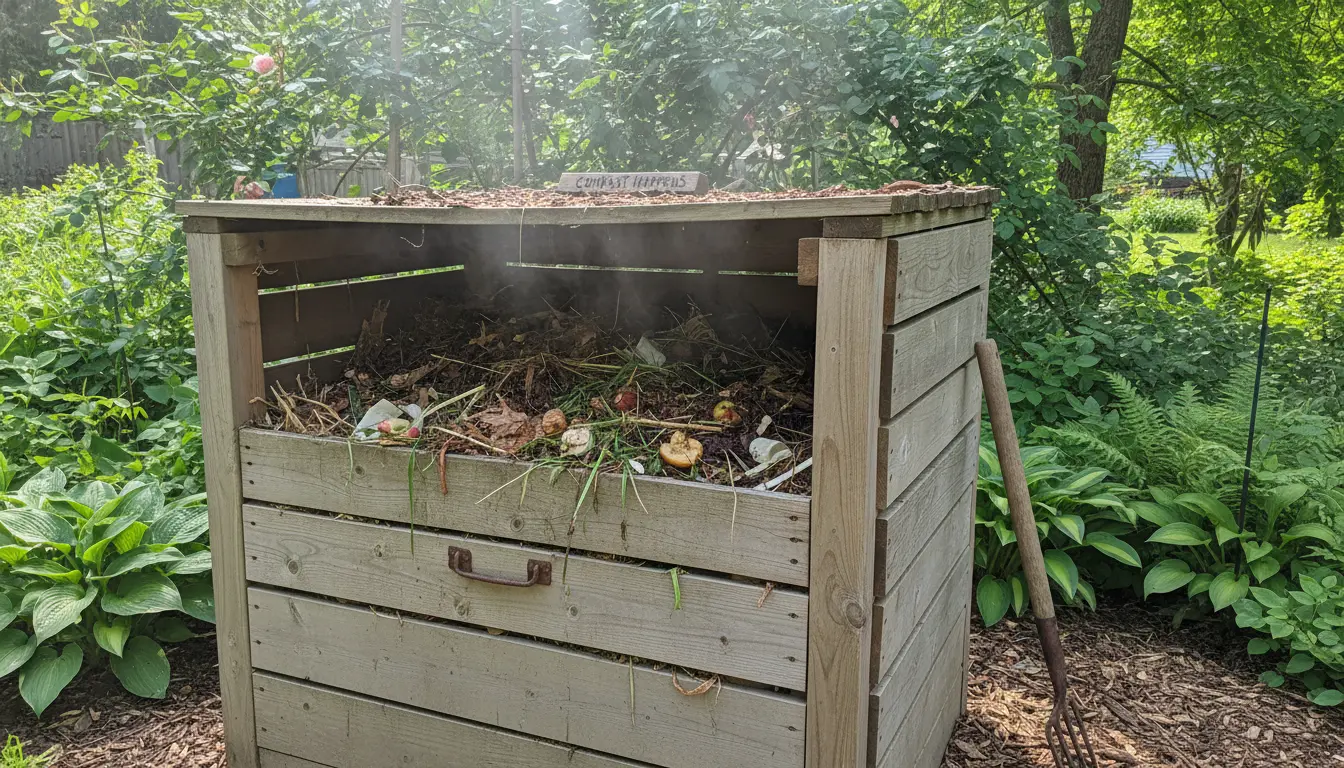
Backyard Compost Bin
Backyard bins are simple and inexpensive. They handle larger volumes of yard trimmings and kitchen scraps and work well for most households with outdoor space.
Compost Tumbler
Tumblers speed up turning and reduce pest problems. They fit small yards and require periodic rotation to aerate the pile.
Vermicomposting (Worm Bin)
Worm bins are ideal for apartments or those who want fast, high-quality compost (castings). They handle mostly kitchen scraps and require temperature control and feeding consistency.
Materials and Setup for a Home Composting System
Compost works best when you balance carbon-rich “browns” and nitrogen-rich “greens.” Aim for a rough 30:1 carbon-to-nitrogen ratio by volume.
- Greens: fruit and vegetable scraps, coffee grounds, fresh grass clippings.
- Browns: dry leaves, shredded paper, straw, wood chips.
- Carbon source additions: shredded cardboard or fallen leaves if your pile is too wet.
- Tools: pitchfork or compost aerator, garden hose or watering can for moisture control.
Choose a container and site: a level, partially shaded area close to water and the garden is best. For worm bins, keep them indoors or shaded and between 55–77°F (13–25°C).
How to Build and Maintain a Home Composting System
Start with a base layer of coarse browns to aid drainage. Alternate layers of greens and browns in roughly equal volumes.
Turn the pile every 1–2 weeks to add oxygen and speed decomposition, unless using a worm bin. Maintain moisture like a wrung-out sponge.
- Add small pieces of material rather than whole large chunks to speed breakdown.
- Cover fresh food scraps with a layer of browns to deter pests and reduce odors.
- Monitor temperature: a hot pile (120–150°F / 49–66°C) indicates active decomposition.
Troubleshooting Common Problems
If the pile smells, it is likely too wet or lacks air. Turn the pile and add more browns like dry leaves or shredded paper.
If decomposition is slow, increase aeration and add a handful of garden soil to introduce microbes. Chopping materials smaller also helps.
Pests can be deterred by burying food scraps in the center of the pile and avoiding meat, dairy, and oily foods in open bins.
When and How to Use Finished Compost
Finished compost is dark, crumbly, and earthy-smelling. It typically takes 3–12 months depending on method and management.
Use compost as:
- Soil amendment: mix 1–3 inches into garden beds before planting.
- Mulch: spread a 1–2 inch layer around plants to conserve moisture.
- Potting mix ingredient: blend one part compost with two parts other components for containers.
Small Case Study: Neighborhood Kitchen to Garden
One household in Portland started a 4×4 ft backyard bin and used a 10-liter kitchen pail for scraps. They added shredded leaves each week and turned the pile biweekly.
Within eight months they harvested about 0.5 cubic yards of compost and cut municipal trash by nearly 50 percent. Their vegetables showed improved growth and reduced watering needs.
Practical Tips for Success
- Keep a small sealed kitchen pail to store scraps; empty to the outside bin every 2–3 days.
- Chop large items before adding them to the pile to speed breakdown.
- Record additions and turning dates to understand what works in your climate.
- If space is limited, start with a worm bin or a small tumbler and scale up.
Food scraps and yard waste can make up about 30 percent of household garbage. Composting these materials returns nutrients to soil and reduces methane emissions from landfills.
Final Checklist to Start Your Home Composting System
- Choose a method: backyard bin, tumbler, or worm bin.
- Gather a balance of greens and browns and basic tools.
- Set up in a convenient, shaded spot near water.
- Maintain moisture, aeration, and turn as needed.
- Use finished compost in your garden and monitor results.
Starting a home composting system is a practical way to reduce waste and improve soil health. With basic materials and a small routine, most households can produce rich compost within a year.