
Why Start a Vegetable Garden
Starting a vegetable garden gives you fresh produce, saves money, and connects you with seasonal food. It is also a practical hobby that improves outdoor spaces and can reduce grocery trips.
This guide covers the key steps for beginners so you can start planting with confidence and avoid common early mistakes.
Choose the Right Site for Starting a Vegetable Garden
Pick a location that gets at least 6 hours of direct sunlight a day. Most vegetables need full sun to produce well.
Consider access to water, drainage, and protection from strong winds. A flat or gently sloped area simplifies irrigation and bed layout.
Sun, Water, and Soil Access
Locate your garden close to a water source to make watering easier. If the soil stays soggy after rain, choose a raised bed or amend soil to improve drainage.
Test and Prepare Soil
Healthy soil is the foundation of a productive garden. Test soil pH and nutrient levels with a basic kit or a lab test for more detail.
Most vegetables prefer a pH between 6.0 and 7.0. Add lime if soil is too acidic or sulfur if it is too alkaline.
Improve Soil Structure
- Work in 2–4 inches of compost to boost organic matter.
- Use loose, well-draining soil mixes for raised beds.
- Avoid compacting soil; use paths to prevent bed compaction.
Pick Easy Crops When Starting a Vegetable Garden
Start with vegetables that are forgiving and fast to harvest. Good beginner choices include lettuce, radishes, spinach, cherry tomatoes, bush beans, and zucchini.
Choose varieties labeled as “easy” or “for beginners” when browsing seed packets or plant tags.
Plan for Staggered Harvests
Use succession planting to get continuous harvests. Sow small amounts of lettuce or radish every 2–3 weeks rather than all at once.
Layout, Spacing, and Planting
Follow spacing guidelines on seed packets or plant tags. Overcrowding reduces airflow and raises disease risk.
Consider these layout tips:
- Use 3–4 foot wide beds so you can reach the center from either side without stepping on the soil.
- Plant tall crops (corn, trellised tomatoes) on the north side to avoid shading shorter plants.
- Group plants by water needs to make irrigation efficient.
Watering and Mulching
Water deeply and less frequently rather than shallow daily watering. Deep watering encourages strong root systems.
Apply 2–3 inches of organic mulch (straw, shredded leaves, or compost) to conserve moisture and suppress weeds.
Watering Best Practices
- Early morning watering reduces evaporation and fungal risk.
- Use a drip irrigation system or soaker hose for consistent soil moisture.
- Check soil moisture by feeling 2 inches below the surface; water when it feels dry.
Pest and Disease Management
Prevent problems by using crop rotation and good sanitation. Remove diseased plants and debris promptly to limit spread.
Use physical barriers (row covers) and hand-pick large pests. Introduce beneficial insects and use targeted organic controls when needed.
Simple Organic Controls
- Neem oil or insecticidal soap for soft-bodied pests.
- Diatomaceous earth around seedlings for slugs and snails.
- Companion planting: marigolds to deter some nematodes; basil near tomatoes to improve flavor and deter pests.
Harvesting and Ongoing Care
Harvest vegetables at peak maturity for best flavor and to encourage further production. Pick regularly—many plants produce more after harvesting.
Continue to top up mulch, replace spent crops, and add compost to beds each season to maintain soil fertility.
Small Case Study: First-Year Raised Bed Success
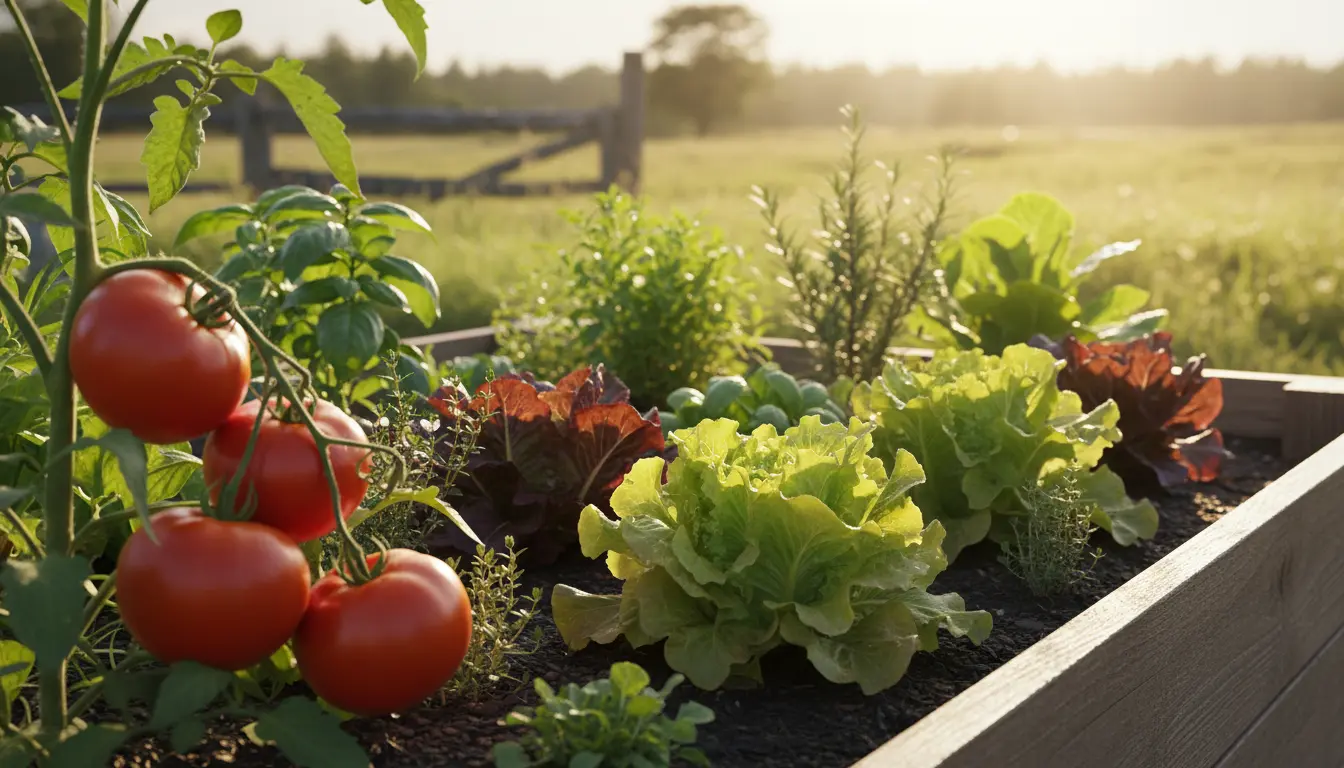
Emma, a city renter, built two 4×8 foot raised beds in spring and filled them with a store-bought vegetable mix and compost. She planted lettuce, radishes, cherry tomatoes, and bush beans.
By following a watering schedule, mulching, and spacing plants properly, she had continuous lettuce and radishes within a month and steady tomato harvests through late summer. She reported minimal pest issues after using row covers during early growth.
Many vegetables can be grown from kitchen scraps. Regrowing green onions, lettuce, and celery in water or soil can jumpstart seedlings and reduce waste.
Troubleshooting Common Problems
If seedlings are slow or yellowing, check for nutrient deficiency or too much water. Adjust feeding and drainage accordingly.
If you see uneven growth across a bed, reassess sunlight patterns and soil variability—amend or reposition beds as needed.
Quick Checklist for New Gardeners
- Pick a sunny site and test the soil.
- Start with easy crops and plan for succession planting.
- Water deeply, mulch, and follow spacing guidelines.
- Use preventive pest measures and compost annually.
Next Steps After Starting a Vegetable Garden
Keep a simple garden journal to track planting dates, varieties, harvests, and problems. This record makes each season easier and more productive.
Experiment with one new crop each season and learn from small trials. Over time you will develop a garden that fits your space, taste, and schedule.