
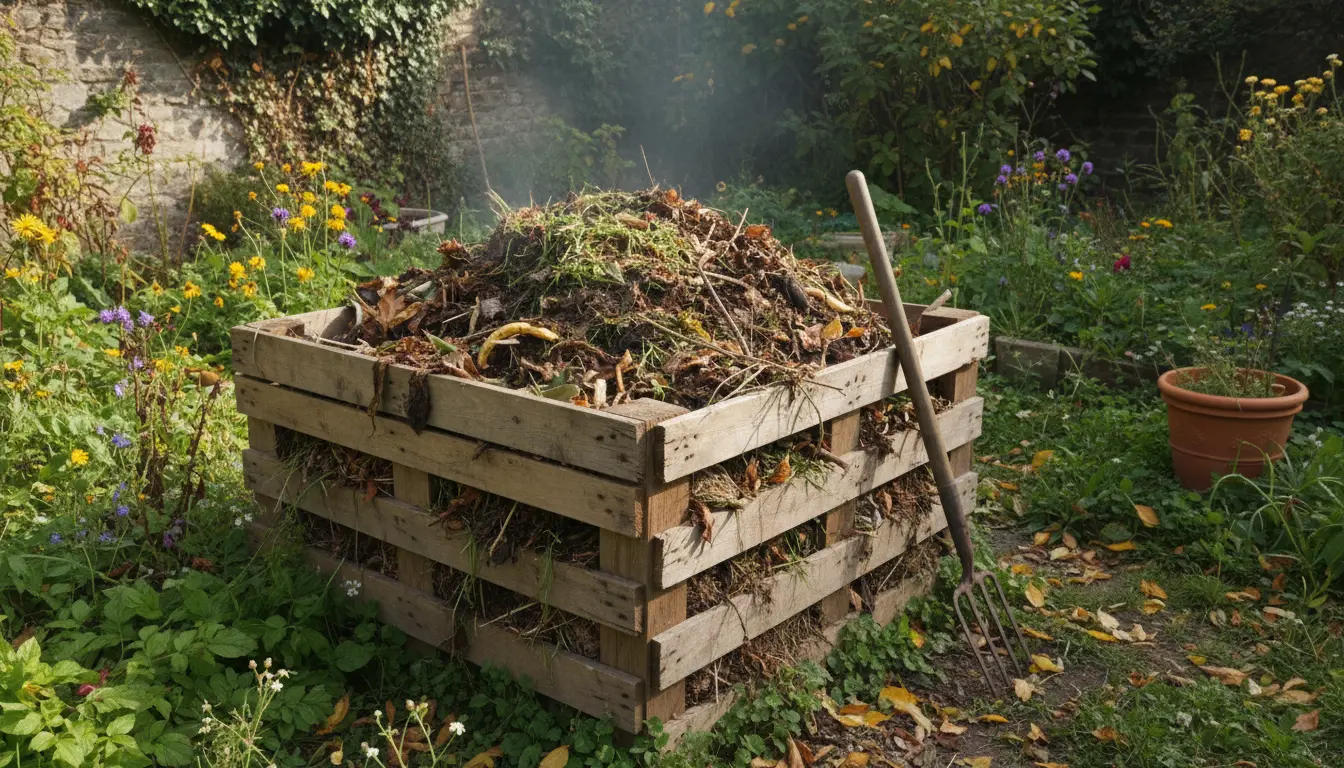
Why Composting at Home Matters
Composting at home turns kitchen and yard waste into nutrient-rich soil for gardens. It reduces household trash and lowers methane emissions from landfills.
For most households, a simple system is enough to process food scraps and yard trimmings. This guide focuses on practical steps you can apply this weekend.
Choose a Composting Method for Your Home
Selecting the right method depends on space, time, and the amount of waste you produce. Common options include backyard piles, bin systems, and vermicomposting.
- Backyard pile: Low cost and low maintenance for yards with space.
- Compost bin: Tidier and faster decomposition for small yards or balconies with enclosed models.
- Vermicomposting: Uses worms for apartments or small volumes of kitchen waste.
How to Set Up a Basic Compost Bin
Start with a 3-bin system or a single tumbling bin depending on budget. Place the bin on bare soil to allow worms and microorganisms to access the pile.
Layering is simple: alternate brown (carbon) and green (nitrogen) materials to keep the balance right.
Materials: What to Compost and What to Avoid
Knowing what to add will speed decomposition and avoid odors or pests. Follow this simple rule: mix browns and greens.
Good Materials (Greens and Browns)
- Greens: Fruit and vegetable scraps, coffee grounds, fresh grass clippings.
- Browns: Dry leaves, shredded paper, straw, small woody prunings.
Materials to Avoid
- Meat, dairy, bones, and oily foods — they attract pests and smell.
- Diseased plants and invasive weeds — these can survive and spread.
- Pet waste — contains pathogens unsuitable for garden compost.
Maintain Your Compost: Simple Routine
Maintain moisture, oxygen, and particle size. These three factors control decomposition speed.
- Moisture: Aim for a damp sponge consistency; add water or dry browns as needed.
- Oxygen: Turn the pile weekly or use a tumbling bin to introduce air.
- Particle size: Chop or shred materials to increase surface area for microbes.
Troubleshooting Common Problems
Smelly compost usually means too much green material or poor aeration. Add browns and turn the pile.
Slow decomposition suggests the pile is too dry, too cold, or too small. Increase volume, insulate, and keep it moist.
How Long Until Compost Is Ready?
Composting at home can take from 2 months to a year depending on method and maintenance. Active management produces finished compost faster.
Finished compost is dark, crumbly, and earthy-smelling. If you still recognize original materials, it needs more time.
Practical Uses for Finished Compost
Use finished compost to improve soil structure, retain moisture, and feed plants. It is safe for flowers, vegetables, trees, and lawns.
- Mix 1–3 inches of compost into garden beds before planting.
- Add a thin top dressing around established plants to refresh nutrients.
- Combine compost with potting mix for container gardens.
Case Study: A Small Household Cuts Waste with Composting
Example: A two-person household in a city apartment started vermicomposting in a 10-gallon bin. They collected kitchen scraps in a sealed counter container and emptied it into the worm bin twice a week.
After six months they produced about 20 liters of worm castings and reduced their weekly trash by one small bag. Their balcony plants were noticeably healthier and required less store-bought fertilizer.
Tips for Success with Composting at Home
- Start small and expand systems as you learn the rhythm of your household waste.
- Keep a simple measuring tool like a soil thermometer to monitor activity if you want faster results.
- Use a kitchen compost caddy with a tight lid and empty it regularly to avoid odors.
- Join a local community group to swap tips and get free bulking materials like shredded leaves or straw.
Final Checklist Before You Begin
- Choose a method that fits your space and schedule.
- Collect materials separately: greens in a small bin, browns in a dry container.
- Set a maintenance schedule: turning, watering, and monitoring odors.
- Plan how you will use finished compost in your garden or share it with neighbors.
Composting at home is a practical, low-cost way to reduce waste and nourish your soil. With basic setup and a little routine, most households see benefits in months rather than years.